 Skip to content
✨ New Year Offer: Up to 20% off ·
Begin 2026 with something handmade ✨
✨ New Year Offer: Up to 20% off ·
Begin 2026 with something handmade ✨

Why Waxed Cord? The Material Behind Every Knot | TibetanTwist

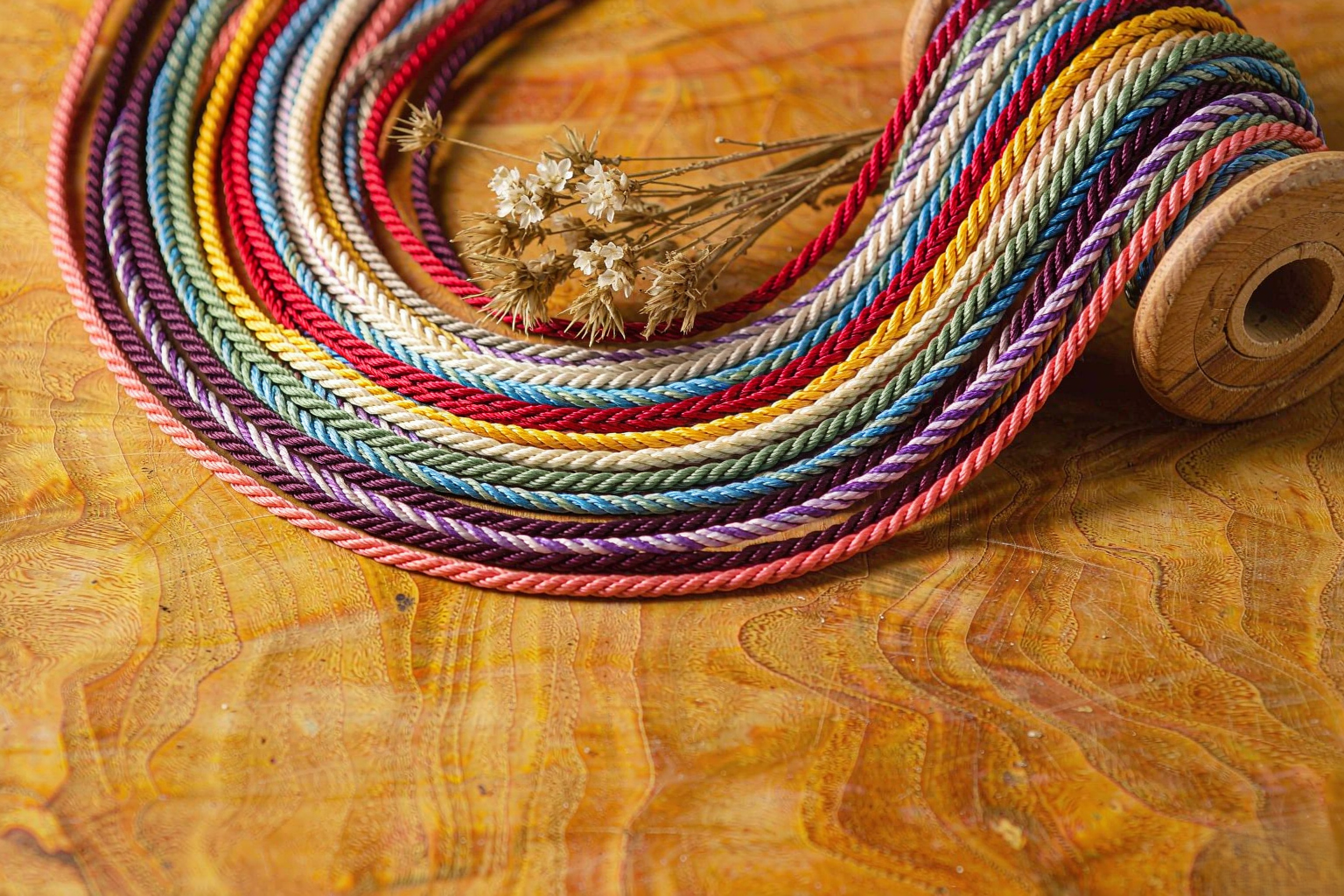
Every TibetanTwist piece begins with a length of cord. Not chain, not leather, not a factory strand cut to size — but waxed cotton cord, wound by hand onto small bobbins, then knotted one at a time. It is the quiet infrastructure of our handwoven jewelry: the thing that holds color close to skin, keeps knots from slipping, and lets a bracelet outlast a season of rain, sun, and daily motion. People sometimes ask why our work feels different in the hand. The honest answer usually starts right here, with the cord that every knot is tied around.
What Waxed Cord Actually Is
Waxed cord is exactly what it sounds like: cotton threads laid together and coated with a thin layer of wax. The wax is not a finish for shine; it is a working skin. It gives the cord a matte, slightly grippy surface, a little stiff at first, then softer as it moves. When we pull a length across the bench, we feel it catch the light differently than plain thread — less shimmer, more depth, like pine bark after rain.
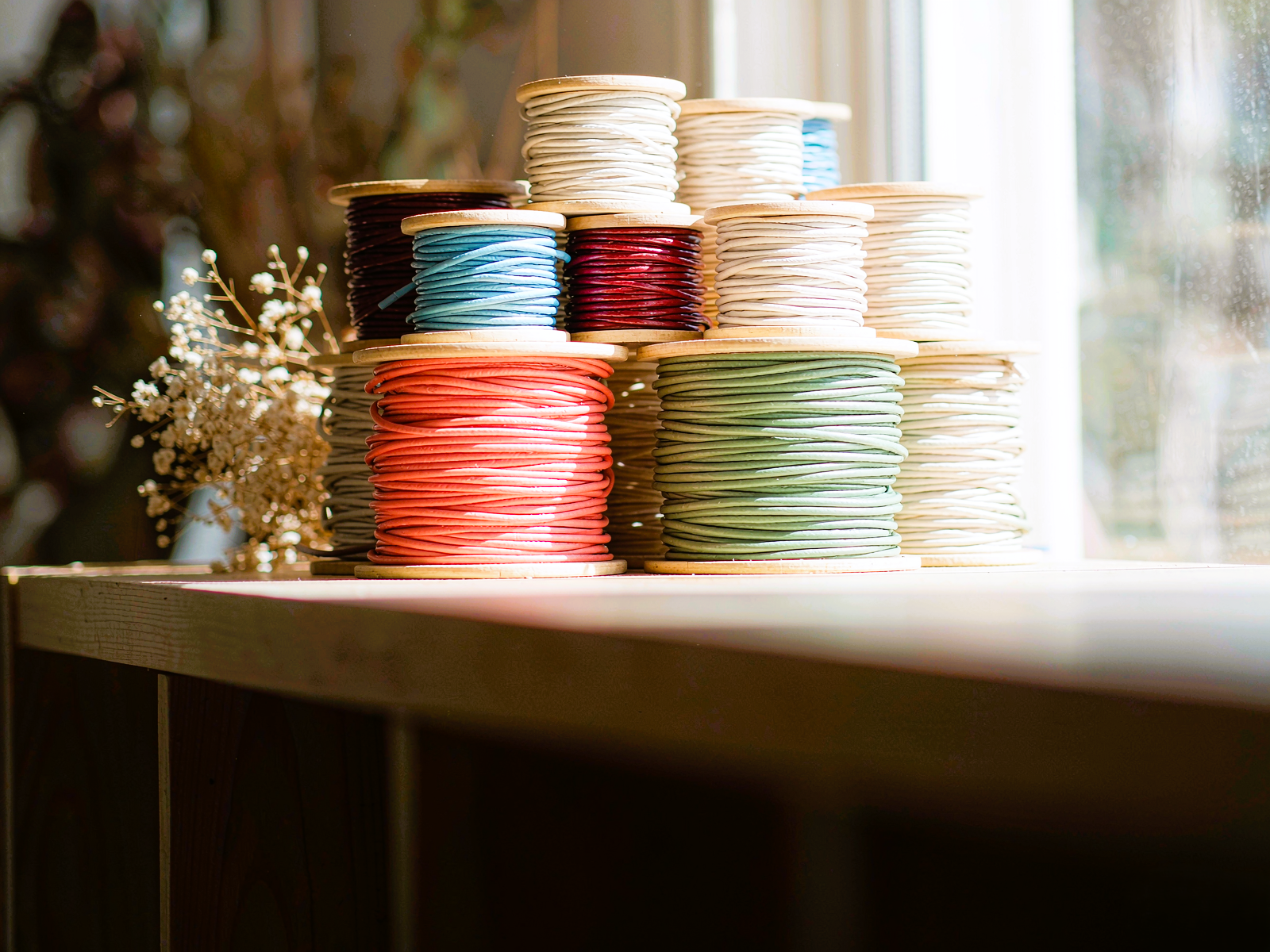
We work mostly with round braided cord and flat woven tape, each chosen for how it takes a knot. The round cord bites into itself when a knot is tightened, so the structure holds without glue. The flat tape lays smooth against the wrist and carries color in broad, clean bands. Both arrive in long spools — peony pink, pine green, oxblood red, monsoon sky blue, cream — and every color is tested against real material before it becomes a palette: a leaf, a shell, a stone, a scrap of sky.
Not all waxed cord is the same. We look for a specific ratio: enough wax to hold a knot, not so much that the cord feels plastic. If the wax is too heavy, the bracelet turns stiff and the color looks painted on. If it is too light, the cord drinks water and the knot slips. We test every batch by tying a square knot, wetting it, drying it, and untying it. If the cord has changed shape or lost its grip, the batch goes back. Only cord that keeps its word becomes part of our work.
The wax also changes how color reads. A thread without wax can look washed out or too bright under sunlight; the same dye under a thin wax coat sits deeper, more botanical, more like the thing it came from. That is why our palettes never feel like digital swatches. They feel like the garden, the plateau, the creek bed — translated into something you can tie around your wrist.
Why Knots Stay Put in Rain and Sun
Knots fail for one of two reasons: the cord stretches, or the cord slips. Waxed cord does neither easily. The cotton core gives it strength; the wax gives it friction. When we tighten a knot, the waxed surface locks against itself in tiny contact points, so the knot keeps its shape even after thousands of small movements. You can feel this the first time you put a bracelet on: it does not spin loose, and it does not collapse into a tangle.
Water is the usual enemy of natural fiber. Waxed cord does not pretend to be waterproof, but it resists water long enough to matter. A sudden rain, a splash from a sink, sweat on a hot afternoon — the wax slows absorption, and the cord dries stiff rather than soggy. Once dry, it returns to its shape. That is why we use it for pieces meant to be worn daily, not kept in a drawer.
This matters most in the pieces we wear hardest: the ones that go from desk to garden, from train commute to evening walk. A bracelet made in unwaxed thread might look the same on day one, but by day thirty the knots have loosened and the color has gone dull from moisture. Waxed cord asks for less fuss. You can shower with it — though we still suggest taking it off for a swim — and you can forget it on your wrist through a rainstorm without panic.
Sun and skin oils do their own work. Over weeks, the top layer of wax polishes down, the fibers settle, and the cord takes on a darker, mellower tone. It is not wear in the sense of damage; it is wear in the sense of settling in. A knotted bracelet that has been worn for a month looks more itself than it did on day one.
The Patina Woven Cord Earns Over Time
New waxed cord has a clean, almost papery feel. Worn waxed cord has a patina — a soft sheen where the hand has passed, a slight rounding at the edges, a deepening of color at the high points. No two pieces patina the same way, because no two wrists move the same way. One person’s bracelet may darken along the outer edge; another’s may lighten where the cuff of a sleeve rubs. That is the point: the cord records the wearing.
We do not try to speed this up or slow it down. Every knot is tied with the same tension, but tension is only the starting note. The wearer finishes the composition: your day, your climate, the way you roll a cuff, the hours you spend with your hands in water or dirt. When we say one of a kind, we mean the making and the wearing both. No two alike, even when the pattern is the same.
We have wearers who photograph their bracelets every month to watch the shift. We love that. The cord does not fade so much as settle, like a wool blanket after its first winter. The knots become slightly less geometric, more rounded, more personal. It is the difference between a print and a painting: one stays identical, the other keeps becoming. Wax cord jewelry is not about arriving at a perfect state. It is about starting with honest material and letting time make it unmistakably yours.
There is a small honesty to this. Waxed cord will not look factory-perfect forever, and we do not want it to. The slight shift in color, the softening of the knot silhouette, the way a bracelet learns the curve of a wrist — these are signs that the piece is alive in the world, not frozen in a display case.
How to Style Waxed Cord Pieces
If you are ready to wear the material, start with what already exists in our collections. You do not need to send a story or request a special order; every piece is finished and waiting. Here are a few ways we reach for waxed cord most often.
Start with a quiet everyday palette. The gold, cream and earth-brown single-strand bracelet borrows its colors from late-summer fields. The single cord keeps the knot pattern visible without shouting, and the waxed finish means you can put it on and forget about it.
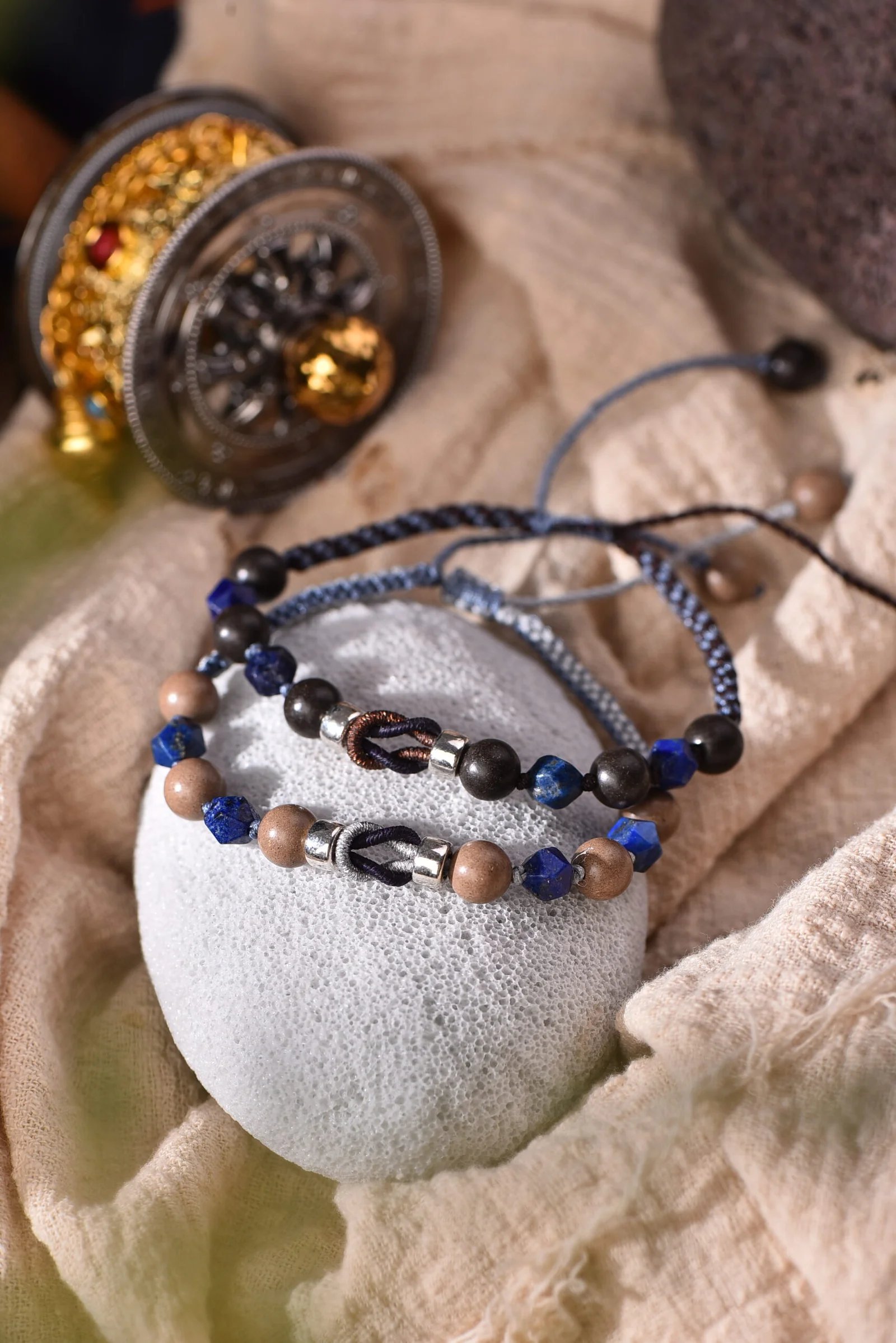
Layer two skies on one wrist. The monsoon-sky-and-indigo dual-tone knotted bracelet stacks deep blue against soft grey. The infinity knot is there because waxed cord can hold a complicated shape without bulk. It wears like a whole afternoon of weather on one wrist.
Add a warm metallic thread. For a brighter, sun-facing piece, our golden-thread and citrine cord bracelet lets the waxed cord carry a warm metallic strand alongside the stone. It is the same handwoven structure, but the color tells a different story — more meadow at noon, less creek at dusk.
Stack, but keep one thing consistent. Waxed cord plays well with metal bangles and leather watches because it is matte. Let one bracelet be the color note and the others be texture. The waxed surface will not scratch metal, and it will not steal light from a favorite watch face. It just holds its place, quietly.
You can see more of how we work in our Craft & Process journal, or browse the full range of handwoven pieces already in the shop. Either way, the cord is the beginning — and the cord is what stays.
Nature, woven by hand. Color, woven into stories.
Want new palettes and studio notes in your inbox? Join the TibetanTwist newsletter.
