 Skip to content
✨ New Year Offer: Up to 20% off ·
Begin 2026 with something handmade ✨
✨ New Year Offer: Up to 20% off ·
Begin 2026 with something handmade ✨

Wax Cord Jewelry: The Material Behind Every Knot

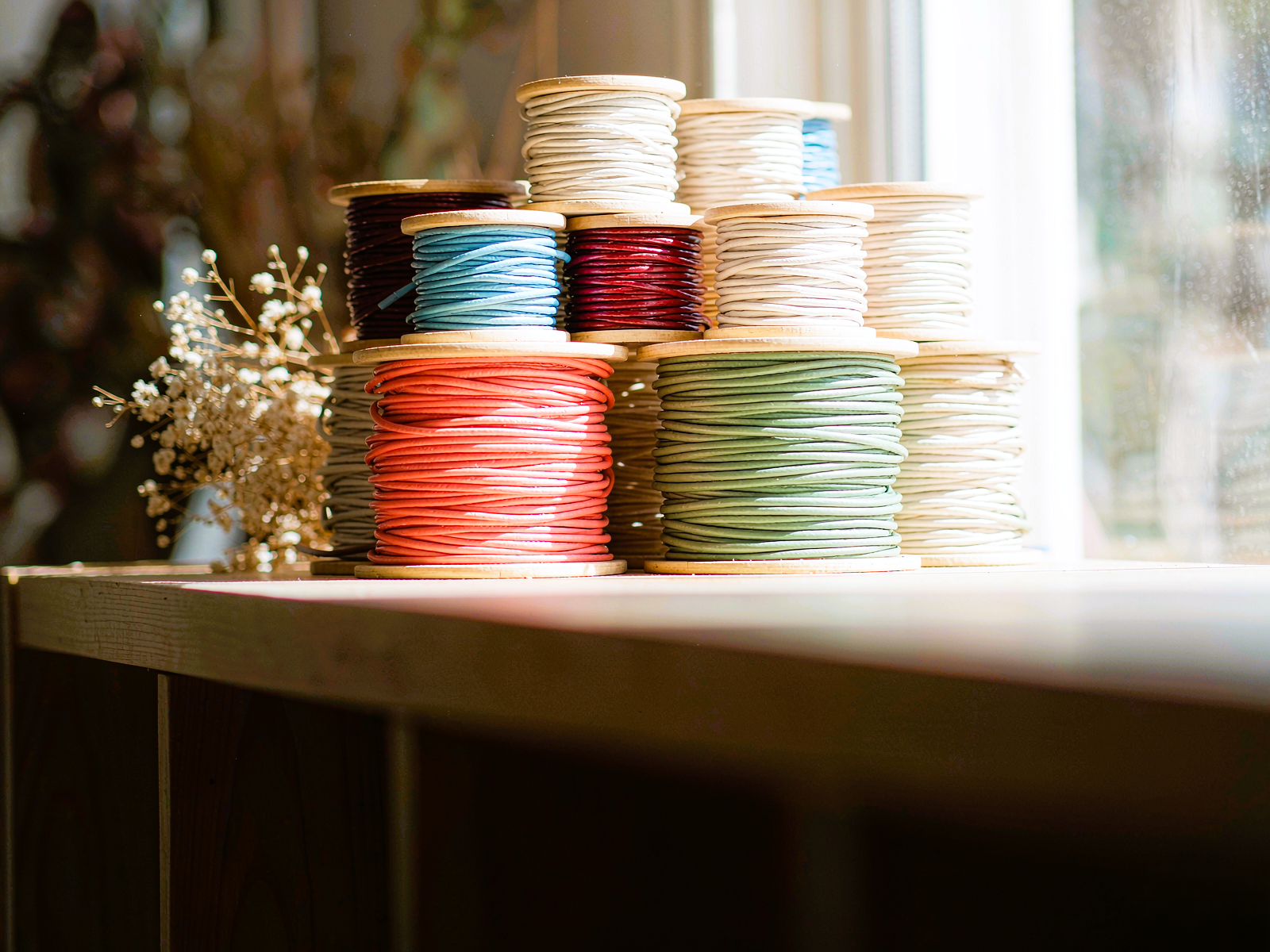
Pull a spool of waxed cord from the shelf and the first thing you notice is the feel — slightly tacky, supple, alive between your fingers. It carries a faint scent of beeswax. Before a single knot is tied, the material is already telling a story: where it came from, what it will become, and how many hours of handwork will pass before it turns into a bracelet. This is where every piece of handwoven jewelry in our studio begins — not with metal findings or machine-pressed clasps, but with a simple cord, a pair of hands, and a slow rhythm of wrapping, pulling, and tightening.
What Is Waxed Cord, and Why Does It Matter?
Waxed cord is exactly what it sounds like: cotton or polyester thread coated with a thin layer of wax. That wax coating does three things ordinary thread cannot. It grips. It holds its shape. And it keeps the cord from fraying at the ends, so every knot stays exactly where you put it.
When you knot a bracelet from waxed cord, the wax acts like a quiet handshake between strands. Pull a knot tight, and the threads grip each other instead of sliding apart. Over time, as the cord is worn against skin, the wax gradually settles in. The bracelet softens, molds to the wrist, and keeps its structure. That is why a well-knotted piece of wax cord jewelry can last for years — not because the material is indestructible, but because every knot was designed to hold.
Think about what happens when you wear an ordinary cotton thread bracelet. Within a week, the knots loosen. The ends fray. The color fades where soap and water touch it. Waxed cord solves all three problems at once. The wax coating means the thread grips itself under tension, so knots do not slip. The sealed surface means fraying stays minimal — you might see a few stray fibers after months of wear, but the overall structure holds. And because the wax seals the dye into the fiber, the color holds up far longer than untreated thread.
We work with cord in dozens of hues, but the ones we reach for most often come straight from the garden: peony pink, pine green, monsoon sky blue, oxblood red, saffron gold, storm grey. Each spool on our shelf is a different piece of the landscape, translated into thread. When a new color arrives, the first thing we do is hold it up to the window and see how the light moves through the wax. That tells us more than any color chart ever could.
Why Knots Hold: The Craft Behind Every Wrap
A machine can crimp a clasp in under a second. A hand takes longer. Every macramé bracelet we make passes through our fingers knot by knot — sometimes two hundred wraps for a single piece. That slowness is not nostalgia. It is the reason the bracelet holds.
The wax coating on the cord means each knot grips the strand beside it. Pull one tight, and the wax compresses slightly, creating friction that locks the knot in place. The cord does not rely on glue, solder, or metal wire to keep its shape. The structure lives in the knotting itself — the way each wrap presses against the next, building a fabric that is flexible but firm, soft against the skin but rigid enough to hold a pattern.
This is what makes handwoven jewelry different from cast or stamped pieces. A metal bracelet is shaped once, then finished. A knotted cord bracelet is built cell by cell, knot by knot. If you look closely at a finished piece, you can trace the path of the thread — where it doubled back, where it crossed, where the artisan’s fingers pulled tight. That visible process is the point. The bracelet shows its own making.
There is also a practical reason we prefer knots to findings. Metal clasps break. Glue fails. Solder cracks under stress. But a knot that has been pulled tight into waxed cord does not come undone unless you deliberately unhook it, strand by strand. I have pieces I knotted five years ago that are still structurally sound — the cord has softened, the color has mellowed, but the knots have not budged. That is the quiet promise of wax cord jewelry: it ages with you, not against you.
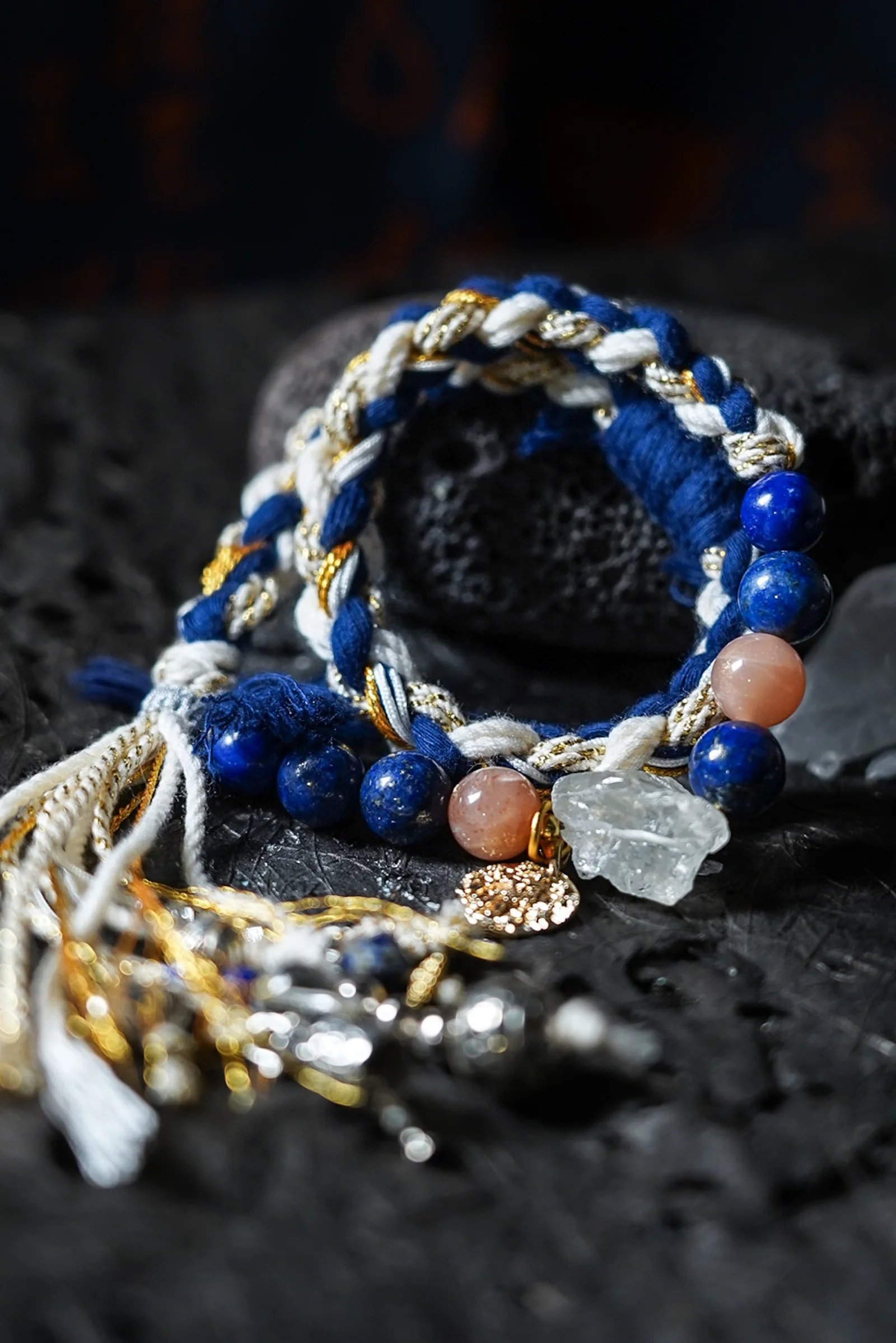
You can see this craft in our white-and-sky-blue woven bracelet. Each knot sits flush against the next, building a pattern that follows the curve of the wrist. The cord carries its wax coating through every wrap, which is why the pattern stays clean even after months of daily wear. The technique behind this piece is the same one we use across every series we make — the cord changes, the palette changes, but the knotting logic stays the same.
A Palette From the Garden, Not the Factory
Most jewelry cord comes in factory-mixed colors — flat, uniform, and lifeless. We chose waxed cord because it takes dye the way natural fibers take dye: with depth, variation, and a slight unevenness that makes each shade feel alive rather than printed.
Peony pink is never just one pink. It shifts from blush to rose depending on the light. Pine green darkens at the center of a knot and lightens at the edges where the wax catches the sun. Oxblood red carries a brown undertone that flat red thread never has. Saffron gold leans warm in morning light and cool in afternoon shade. These are not color numbers on a chart. They are hues pulled from real gardens, real skies, real mountainsides — and the wax gives each one a surface that plays with light in a way bare thread cannot.
When we pair cord with natural stones, the palette gets richer. A moss-green cord beside aventurine. A coral cord beside red agate. A storm-grey cord beside moonstone. The stone and the cord speak to each other — one solid and cool, the other woven and warm. Together, they build a color story that no single material could carry alone. The stone brings weight and permanence. The cord brings pattern and movement. The wax brings a subtle sheen that ties them together.
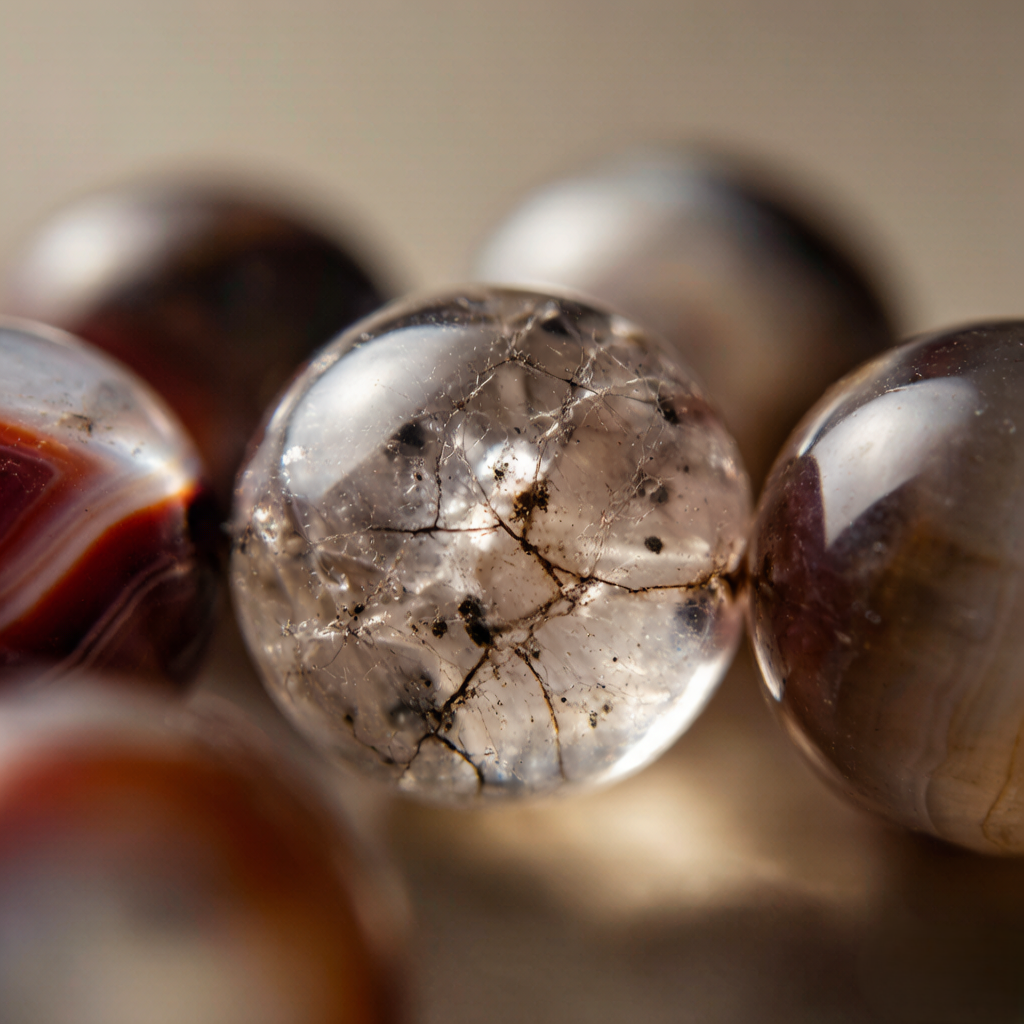
This is why we never describe our pieces by color code. A bracelet is not “light pink with green accents.” It is peony pink wrapped around pine green — a garden in two threads, knotted by hand, one piece at a time. Each color choice starts with a walk through a garden, a glance at the sky, or a memory of a mountain trail. The cord is our notebook. The knots are our handwriting. And because every spool takes dye slightly differently, no two batches of the “same” color are truly identical — which means no two bracelets are, either.
Which Cord Piece Is Yours?
If you are choosing your first handwoven piece, start with the cord color that pulls you in. Not the stone — the cord. The cord is the backbone of the bracelet. It sits against your skin, holds the pattern together, and softens over time into something that feels like it was always yours.
For a garden-fresh look: our green-and-brown handwoven bracelet brings pine and earth together in a quiet, grounded palette. Explore the Five Elements Wood bracelet →
For sky and water tones: the white-and-gold-blue woven bracelet pairs sky-blue cord with pale beads — a palette borrowed from monsoon skies and morning mist. See the woven sky bracelet →
For warmth and boldness: the orange-and-gold woven bracelet takes its palette from saffron fields and coral sunsets. Discover the flame-woven bracelet →
Browse the full handwoven bracelet collection → to find the cord color and knot pattern that speaks to you. Every piece is made by hand, one at a time — no two are exactly alike.
And if you already own a piece, our wax cord care guide → walks you through the simple steps that keep cord jewelry looking vivid for years — how to clean it, how to store it, and what to do if a knot loosens.
Nature, woven by hand. Color, woven into stories.
Join our studio letter for new pieces, color stories, and behind-the-knots updates. No noise — just the slow-made work of our hands, sent now and then.
