 Skip to content
✨ New Year Offer: Up to 20% off ·
Begin 2026 with something handmade ✨
✨ New Year Offer: Up to 20% off ·
Begin 2026 with something handmade ✨

Tibetan-Inspired Jewelry: Oxblood, Saffron, Indigo | TibetanTwist

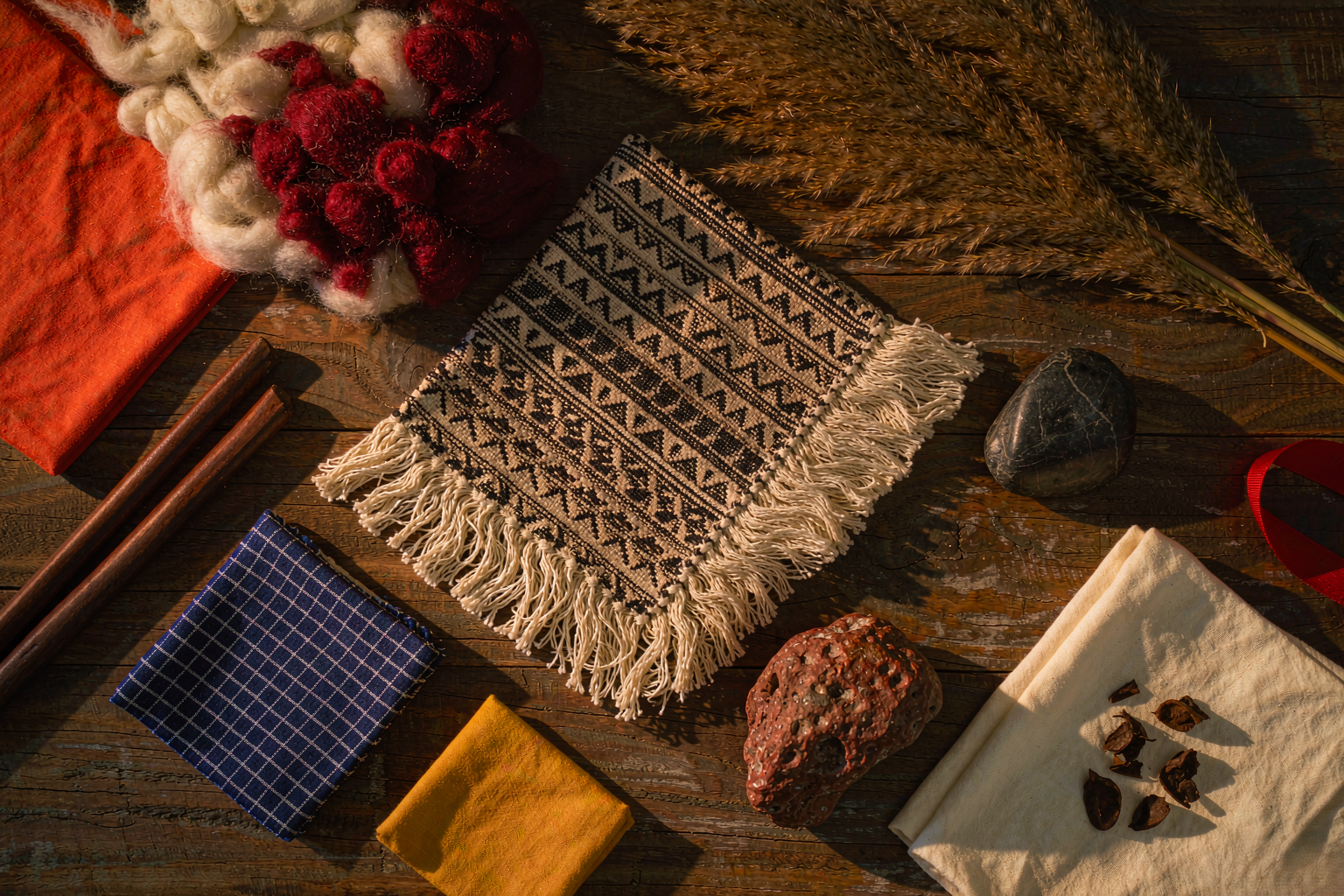
The plateau does not whisper. It speaks in saturated reds, deep blues, and golds that have to carry across open valleys and sharp light. At TibetanTwist, when we design Tibetan-inspired jewelry, we are not copying flags or costumes. We are learning how a landscape teaches color to behave. The same red that looks gentle in a garden must shout at altitude. The same blue that feels soft by the sea must turn deep enough to hold shadow. This is the logic behind our oxblood, saffron, and indigo palettes: three colors that learned to survive the mountain air, then traveled down into thread and bead.
Why Plateau Color Has to Be Bold
High places demand a different kind of color. At sea level, a muted pink can read as romantic. On a plateau, under clear sky and direct sun, that same pink disappears. The eye needs something with more weight. That is why Tibetan textiles, wall paintings, and painted wood often reach for oxblood red, saffron yellow, and indigo blue. They are colors that hold their own across distance.
We think about this when we choose waxed cord for a Tibetan-inspired bracelet. A pale thread would look lost. A thread the color of dried pomegranate, of marigold wool, of night water, keeps its character in daylight and in photographs. We call this color honesty. The plateau does not apologize for saturation, so neither do we.
The effect is not loud for its own sake. Loudness on a plateau would feel thin, like a shout into wind. Boldness there is a kind of clarity: the color is simply itself, unsoftened by haze. We try to keep that same clarity in our knots. A bracelet should not compete with the room. It should hold its place in it.
The knot structure does the same work. A complex knot in a quiet color would look like a small shadow on the wrist. The same knot in oxblood red or indigo blue becomes a mark you can read from across a room. This is why our Tibetan-inspired pieces often pair one bold cord color with smaller beads in cream, bone, or brass. The cord carries the landscape. The bead gives the eye a place to rest.
Three Colors, Three Sources
We treat oxblood, saffron, and indigo as a small glossary. Each word is a color, but also a place, a material, and a mood.
Oxblood is iron-rich earth. It is the color of clay walls after rain, of old wool dyed with madder root, of the dust that rises behind a walking figure. In our work, oxblood becomes a waxed cord strand that sits close to the skin and warms as it ages. It is not a shout. It is a low, steady note.
Saffron is sun on wool. It is the color of marigold-dried cloth, of late afternoon light against a white wall, of the yellow that appears where ochre and gold meet. Saffron in our pieces usually shows up as an accent: a single thread, a small brass bead, a knot pulled tight in yellow cord. It catches light the way a plateau catches sunrise.
Indigo is shadowed water. It is the color of deep valleys where the sun arrives late and leaves early, of leaf-dyed cloth left in the vat until it turns almost black, of the moment just before the sky goes fully dark. Indigo cord behaves like depth. It makes other colors around it feel brighter without trying to be bright itself. We often use indigo next to saffron or bone, because the contrast feels like mountain light: sharp, clean, true.
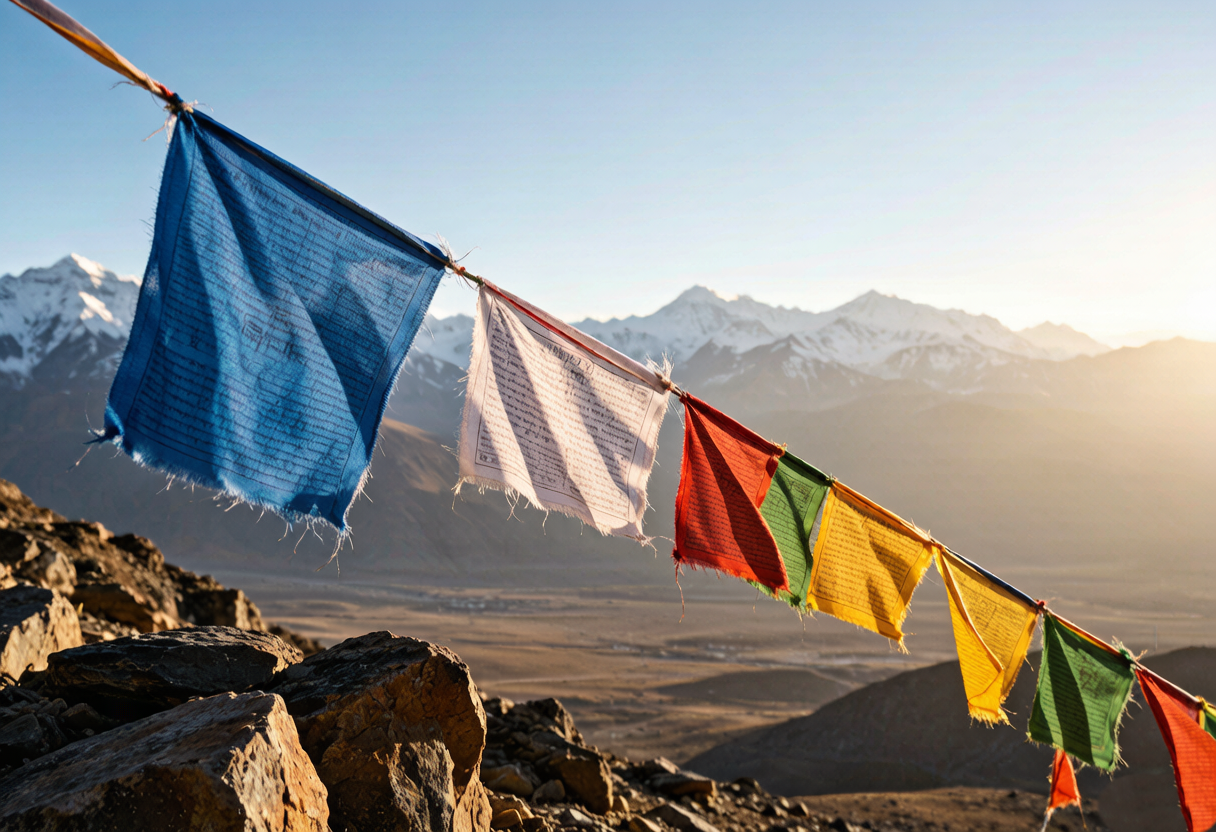
These three colors are not random. They appear together again and again across the plateau because they solve the same problem: how to be seen, how to last, how to feel grounded in a place where the ground itself is vast. When we knot them into a bracelet or a charm, we are not decorating. We are translating a visual language that already existed.
How We Read a Palette Before We Knot It
Before any piece is made, we lay out the colors and ask what they are saying together. Oxblood, saffron, and indigo have a conversation. Oxblood grounds. Saffron lifts. Indigo deepens. Remove any one of them and the story changes. Add too much cream and the palette softens into something else. Add bone or brass and the palette returns to its source: earth, sun, shadow, metal.
Sometimes the translation takes days. We lay cords out on the bench and walk away. When we come back, one color has taken over the conversation and another has gone quiet. Then we adjust: less saffron, more bone, a darker indigo. The plateau does not rush, and neither do we.
This is the work of designing Tibetan-inspired jewelry. We are not matching a flag. We are reading a place and then deciding how much of that place a person can wear on one wrist.
Our earth-and-bone handwoven charm carries this logic in miniature. Yak bone beads give the piece a quiet, weathered base. Glass beads in oxblood and indigo add the saturated notes. The knot between them is simple, because the color is already doing the talking. Our brass-and-wool handwoven charm works the same way: brass for saffron, dark cord for indigo, a small brass form for the shape a prayer flag might take.
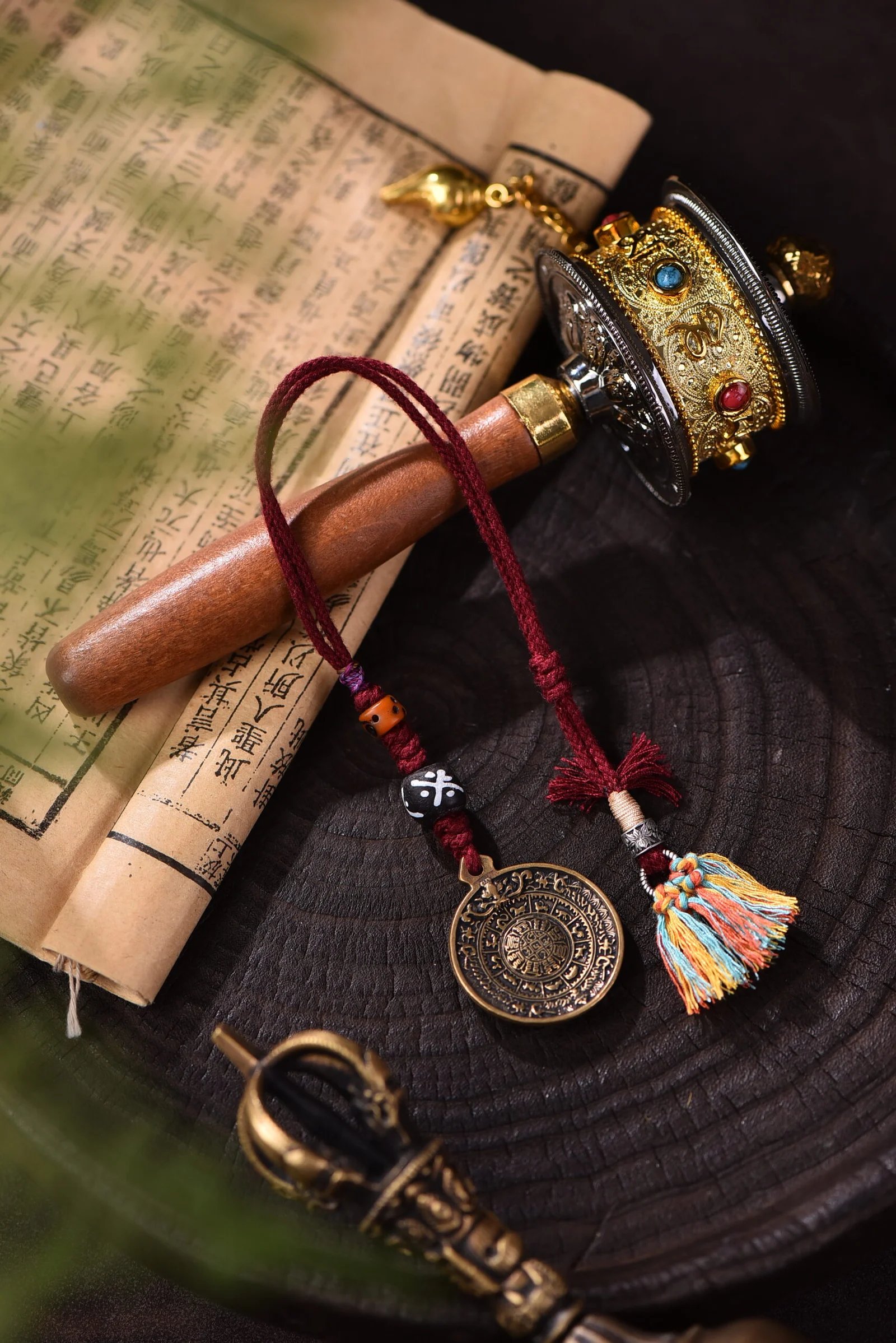
We also borrow from neighboring palettes. Our saffron-and-gold handwoven bracelet is not labeled as Tibetan, but its orange-gold thread reads like saffron light against skin. It is a reminder that color does not need a passport. It just needs to be true to its source.
Which One Is Yours?
Choosing a Tibetan-inspired piece is simpler than it looks. Start with the color that feels like weather you have walked through.
If you are drawn to oxblood, you probably like weight, history, and things that do not need to explain themselves. Look for a piece with deep red cord and bone or brass details. If saffron is the color that stops you, you like warmth, edges, and the kind of brightness that comes from dry air. Choose a piece with yellow-gold accents or a brass focal bead. If indigo is the one, you like depth, dusk, and the feeling of looking into something larger than yourself. A bracelet with dark blue cord and a single light bead will feel like the right translation.
Gifting works the same way. Pick the palette that sounds like the person. A friend who rises early and likes stillness will usually understand indigo. Someone who collects stories and keeps tickets in a box will gravitate to oxblood. The sun-seeker in your life already knows saffron by name.
You do not need to understand the plateau to wear its colors. You only need to find the palette that matches your own landscape. Browse the Tibetan Culture collection to see how we have translated oxblood, saffron, and indigo into pieces you can choose from today.
Nature, woven by hand. Color, woven into stories.
Stay close to the studio. Subscribe to our newsletter for new palettes, behind-the-knot notes, and first access to fresh drops.
