 Skip to content
✨ New Year Offer: Up to 20% off ·
Begin 2026 with something handmade ✨
✨ New Year Offer: Up to 20% off ·
Begin 2026 with something handmade ✨

Oxblood, Saffron, Indigo: A Tibetan Color Glossary — TibetanTwist


The first time I sat with a spool of waxed cord in our studio and tried to name the red in my hand, I came up empty. Crayola red was wrong. Wine was too purple. Brick was too brown. The color I was looking at was none of those — it was the iron-oxide stain on a cliff face I had seen years ago, baked under thin air and low sun. That is when I realized the palette of the plateau is not a list. It is a working vocabulary, and the words in it deserve their own definitions.
Here is the glossary we use when we build our Tibetan-inspired jewelry. Three colors, each with a source, a cord, and a way of being worn.
Oxblood Red: The Iron in the Earth
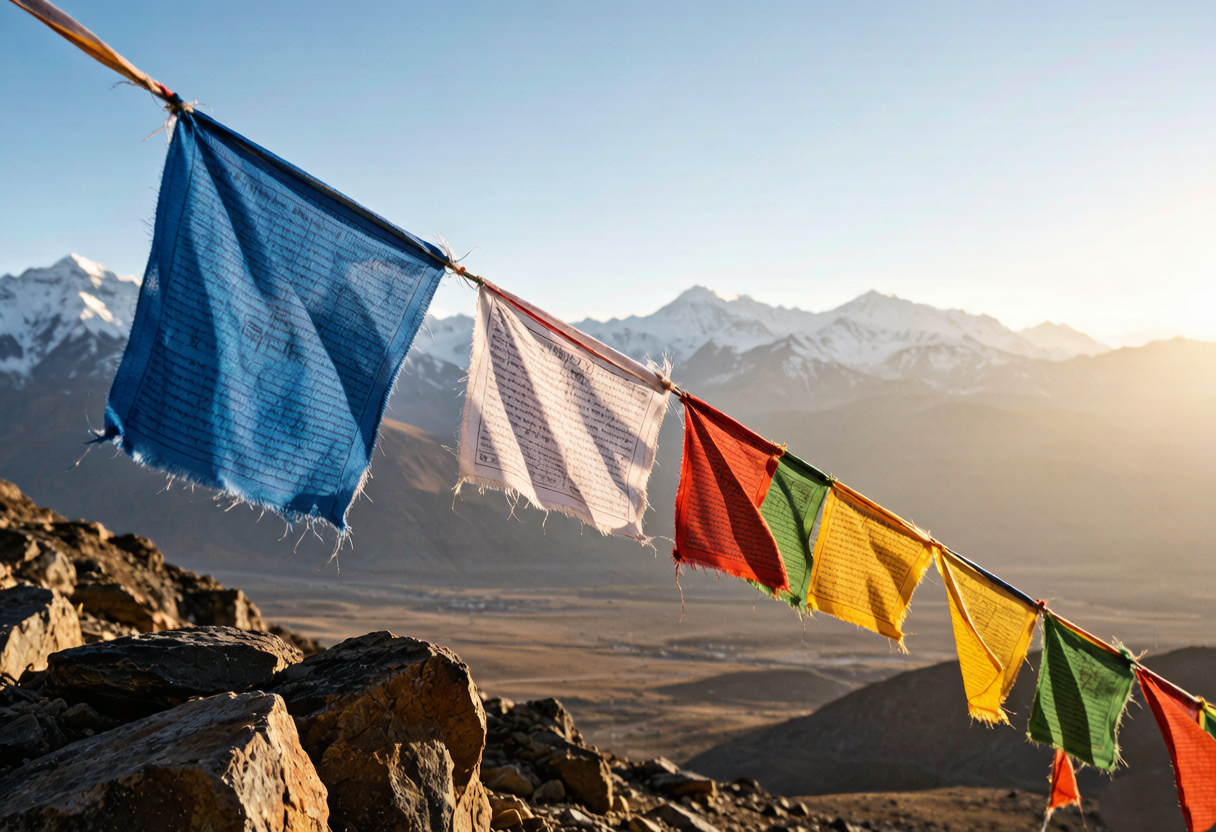
Oxblood is not a fashion color. It is a geological one. Walk a high-altitude trail at dusk and you will see it in the soil — a deep, dense red that looks like it could stain your boots. The iron content in plateau earth is unusually high, and when the sun drops low, the ground throws that iron back as a saturated, almost edible hue. We named our red thread for that exact moment.
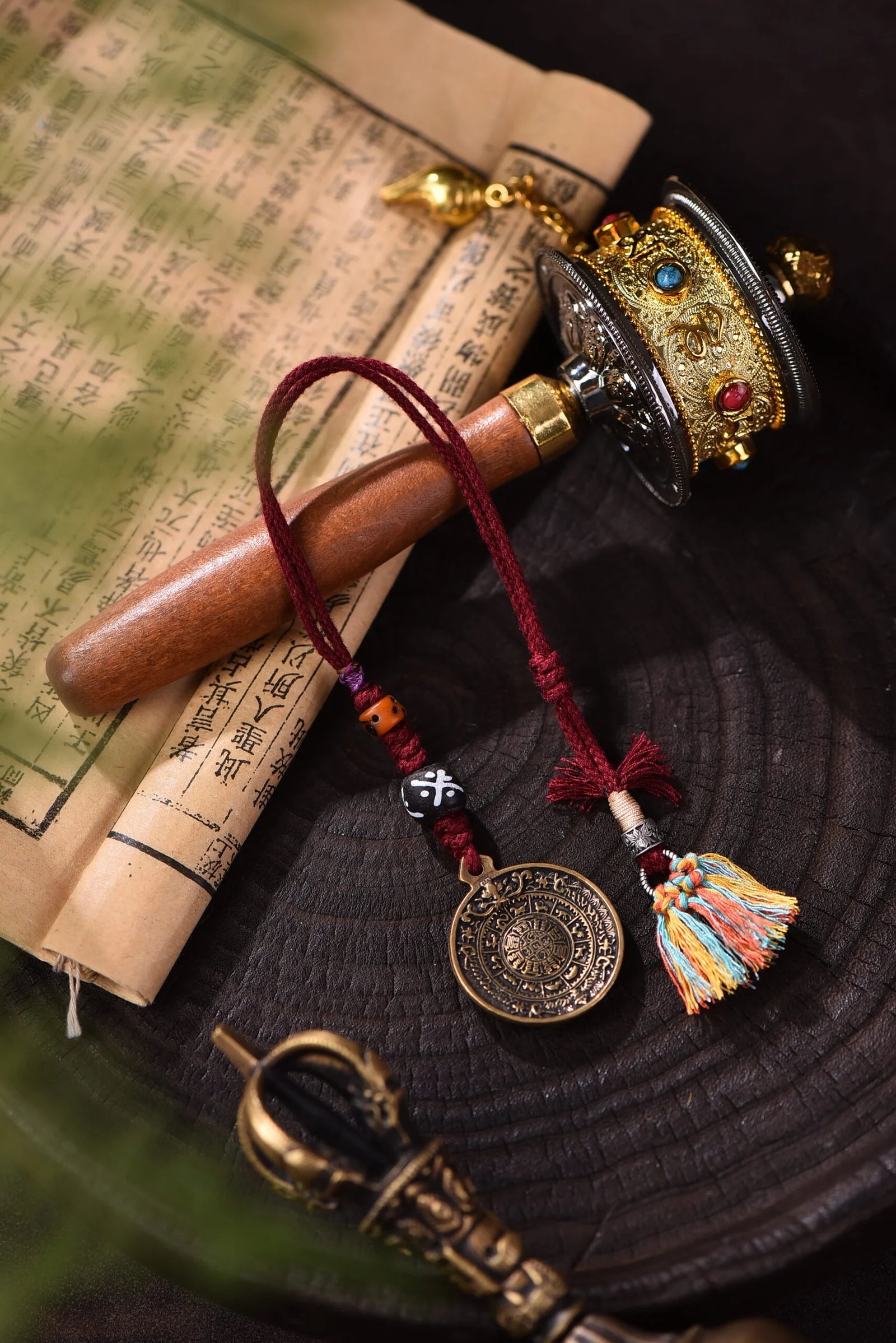
In our studio, oxblood is the anchor. We use it on bands and charms that need to hold weight in a composition. The cord reads serious against pine green and cream, and it sings when paired with saffron gold thread. Against pale linen or a soft white shirt, it does not shout — it sits with a kind of held-in presence, like a person who has decided where they want to be in a room and does not need to announce it.
Why the knot holds this color well: oxblood is dense in pigment, which means the dye does not lift off the waxed fiber during knotting. You can pull a strand tight again and again without lightening the tone. That matters when a piece has fifteen or twenty knots in a single length. The first knot and the last knot sit at the same depth, the same temperature. A paler red would streak under that pressure.
Pairs with: pine green, cream, slate grey, antique brass, deep umber.
Wears well on: denim, dark wool, charcoal knits, natural linen in autumn tones.
Saffron Gold: The Color of Late Light
Saffron gold is the color that fooled me longest. From a distance, it reads yellow. Up close, it leans orange. In shadow, it flirts with amber. It is the color of late-season marigolds left on a stem, of dried turmeric, of the thread used to mend old monastery curtains. It is warm, muted, and never glossy.
Our saffron-gold cord is the most temperamental in the studio. The dye has to rest at the right depth — too pale and it loses its glow, too saturated and it tips into artificial. When the batch is right, it flickers. Place a strand of saffron gold next to oxblood red, and the red looks deeper. Place it next to indigo blue, and the blue looks cooler. Saffron is the color that makes its neighbors more themselves.
We rarely use saffron as a base thread. It is too loud to carry a whole band without overwhelming the wrist. Instead, we run it as an accent — a single line of gold knots bisecting an oxblood field, or a wrap of brass-toned thread anchoring a clasp. The eye finds it, the hand remembers it, but the band stays balanced. This is what makes saffron a working color rather than a statement one.
Pairs with: oxblood red, indigo blue, deep forest green, cream, charcoal.
Wears well on: olive, camel, slate, white linen, faded indigo denim.
Indigo Blue: The Breath Between Bolder Hues
Indigo on the plateau is not the indigo of a city dress shirt. It is the blue that pools in a mountain cleft at twilight, the blue of shadowed snow, the blue that looks almost black until the sun hits it sideways. It is a quiet, dense, thinking color — the one we reach for when a composition needs a pause.
In our handwoven pieces, indigo acts as the resting tone. We use it as a base layer beneath oxblood and saffron, or as the foundation of a whole band when the design wants to feel grounded. The thread has a slight violet undertone that you only notice in certain light. Against a window, it reads blue. Against a candle, it reads plum. This shift is part of what makes indigo such a useful third color in the plateau palette — it carries the warmth of the other two without competing with either.
One thing to know about indigo: it changes the room. A bracelet in indigo looks almost black under fluorescent light and opens up to deep blue outdoors. If you wear it to a dinner under warm lamps, the beads will lean toward plum. We dye our indigo cord in small batches specifically because the variation between lots is part of its character. We do not chase a single lab-perfect blue.
Pairs with: saffron gold, cream, oxblood red, dusty rose, weathered bronze.
Wears well on: grey, white, soft black, sage green, oat, natural canvas.
Which Palette Is Yours?
If you are drawn to presence, reach for oxblood red. It is the grounding note of the plateau palette and the one that holds the eye when everything else around it is muted. Look for it in pieces that use yak bone beads or earth-toned glass — the matte texture keeps the red feeling organic rather than costume. The color reads strongest when it is the only saturated thing on your wrist.
If you lean warm, saffron gold is your color. It glows under window light, throws small flashes when you turn your wrist, and looks especially alive against olive and camel layers. It is the color to choose on a day when you want to feel sunlit. Best in pieces where the gold runs as an accent rather than the whole band, so the warmth of it does not tip into busy.
If you want something that shifts with the hour, choose indigo blue. It reads near-black by lamplight and brightens to violet at golden hour. It is the most versatile of the three and pairs with nearly every neutral in a wardrobe. If you are buying your first handwoven piece and feel unsure about which color to start with, indigo is the one we recommend. It forgives small wardrobe experiments and rewards close looking.
Browse the existing collection and pick the palette that matches the landscape you want to carry. All three are woven by hand, one at a time, in our small studio — no two pieces identical, no two knots landing with the same tension.
- Start with our oxblood-and-amber handwoven charm in yak bone and glass bead for a palette rooted in cliff and cord.
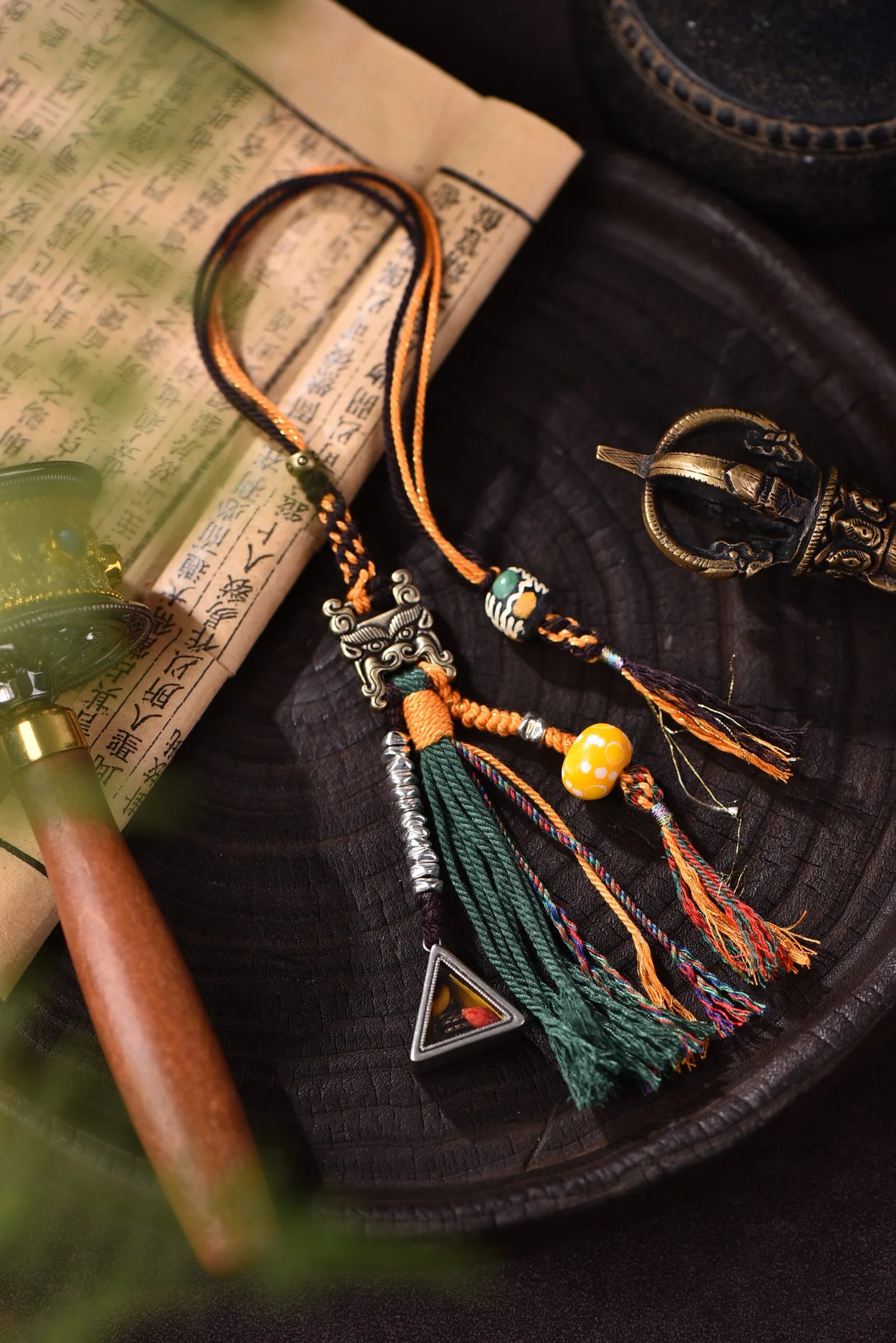
- Or choose our brass-detailed earth-tone charm with handwoven finish for a compact take on the same vocabulary.
- See the full handwoven bracelet collection for pieces that carry these colors every day.
Nature, woven by hand. Color, woven into stories.
Want first look at new palettes as we release them? Join our email list — no daily clutter, just color notes worth reading.
