 Skip to content
✨ New Year Offer: Up to 20% off ·
Begin 2026 with something handmade ✨
✨ New Year Offer: Up to 20% off ·
Begin 2026 with something handmade ✨

Pine Needles After Rain: Why Green Is Never Just One Color — TibetanTwist


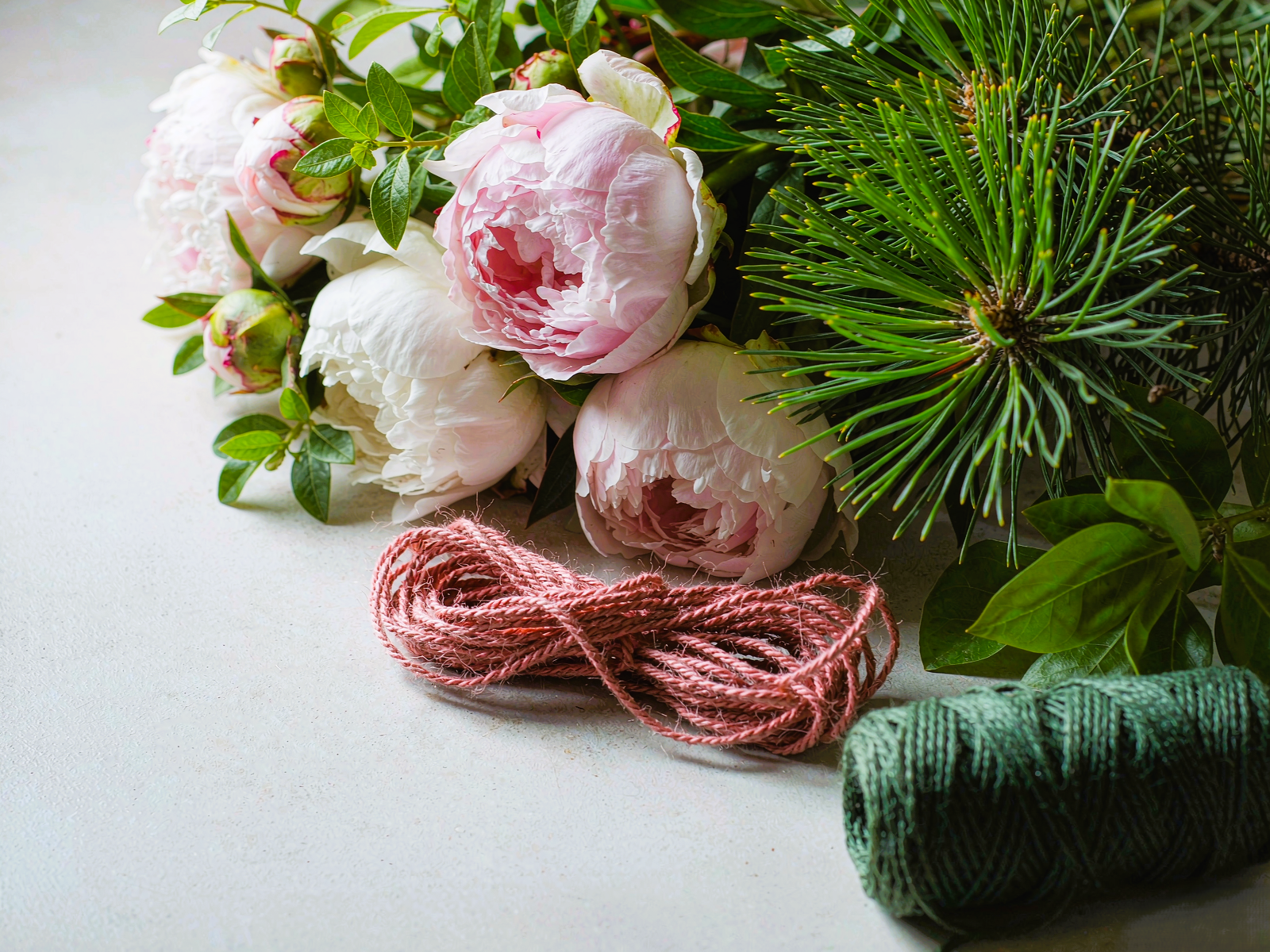
Last Sunday I walked home from the studio through the pine ridge behind the gate. Two days of rain had just ended. The needles were heavy with water, and every cluster caught the light differently. Some looked almost black against the wet bark. Some threw off thin streaks of silver. Some turned the color of moss on a fallen branch. I stood still and thought: we call all of it green, and none of it is the same green. That is what botanical jewelry tries to hold — not one shade, but the many shades a single tree can carry at the same moment. The piece we are trying to weave is the whole ridge, not the single needle.
Pine Green, Forest Green, Sage Green — Three Threads From One Walk
One walk behind the studio gives me most of the green I will weave for the season. Pine green is the clean, slightly cool shade on the tips of new needles in spring. Forest green is the deep almost-black color that lives near the bark after a wet morning, where the underbrush has had no sun for hours. Sage green is the dusty cool hue that hides in the inner branches, where the rain cannot quite reach.
When I sit down at the table to knot a botanical bracelet, I lay those three skeins of waxed cord side by side and try to translate the whole walk into one small piece. Green from three distances. Green from three lights. Green from one tree.
That is also why two of our green pieces look so different even though they belong to the same studio. The Capricorn Earth-Weaved Steadfast Bracelet in deep brown and forest green leans toward that deep forest green you find near the bark — quiet, weighty, almost black at the edges. The Five Elements Wood Single-Strand Bracelet in green and brown leans lighter, toward pine green and a softer sage. Same week, two different walks.
After Rain: How Light Changes a Single Shade
This is the part that surprises friends picking out a first botanical piece. A green that looks flat and dull at noon will glow at four in the afternoon, especially right after rain. Droplets on pine needles split the light into thin threads of silver and jade. The same waxed cord that reads as a quiet forest green at midday becomes a layered color story by dusk: a hint of jade, a streak of moss, a touch of cool grey.
That is why we always suggest looking at a botanical piece in two lights before deciding. Daylight by a window. Then a lamp at home. Two pieces that look almost identical in our product photos are not identical in person. The cord carries the light the way the pine needles do.
If you want the cleanest test, lay the Five Elements Wood Single-Strand Bracelet next to a houseplant on a sunny shelf and watch the green for ten minutes without moving it. It will shift. The pine green is doing its work — borrowing the rain, the sun, the air around it, and returning a different shade each time you glance over. That is why we say a botanical piece never finishes its color journey at the studio. The wrist completes it.
Forest green behaves the same way. Hold the Capricorn Earth-Weaved Steadfast Bracelet in deep brown and forest green next to a stack of brown books and watch what happens. The brown lifts the green out of the page, so to speak. The same color that looked almost black on its own now reads as a soft forest floor.
Woven Greens: How Knots Carry Color
The way a color finally lands on the wrist is not only about the thread. It is about how the knot sits. A tight knot swallows light and reads darker. A looser weave lets light pass between the cords and reads lighter. The same cone of forest green can show up as two different shades on a single wrist, depending on where the knots draw tight and where the thread rests. That is something we learned the slow way, watching how the same thread reads differently on a wood table, on linen, on skin.
For botanical pieces in particular, we love mixing two greens in one bracelet — sage green threaded through forest green, or fresh pine green paired with a single strand of cream that lifts the whole weave. The Five Elements Wood Single-Strand Bracelet does this with green held by brown. The Capricorn Earth-Weaved Steadfast Bracelet does this with deep brown holding the forest green in place. Both pieces feel grounded in plant life rather than in any one stone.
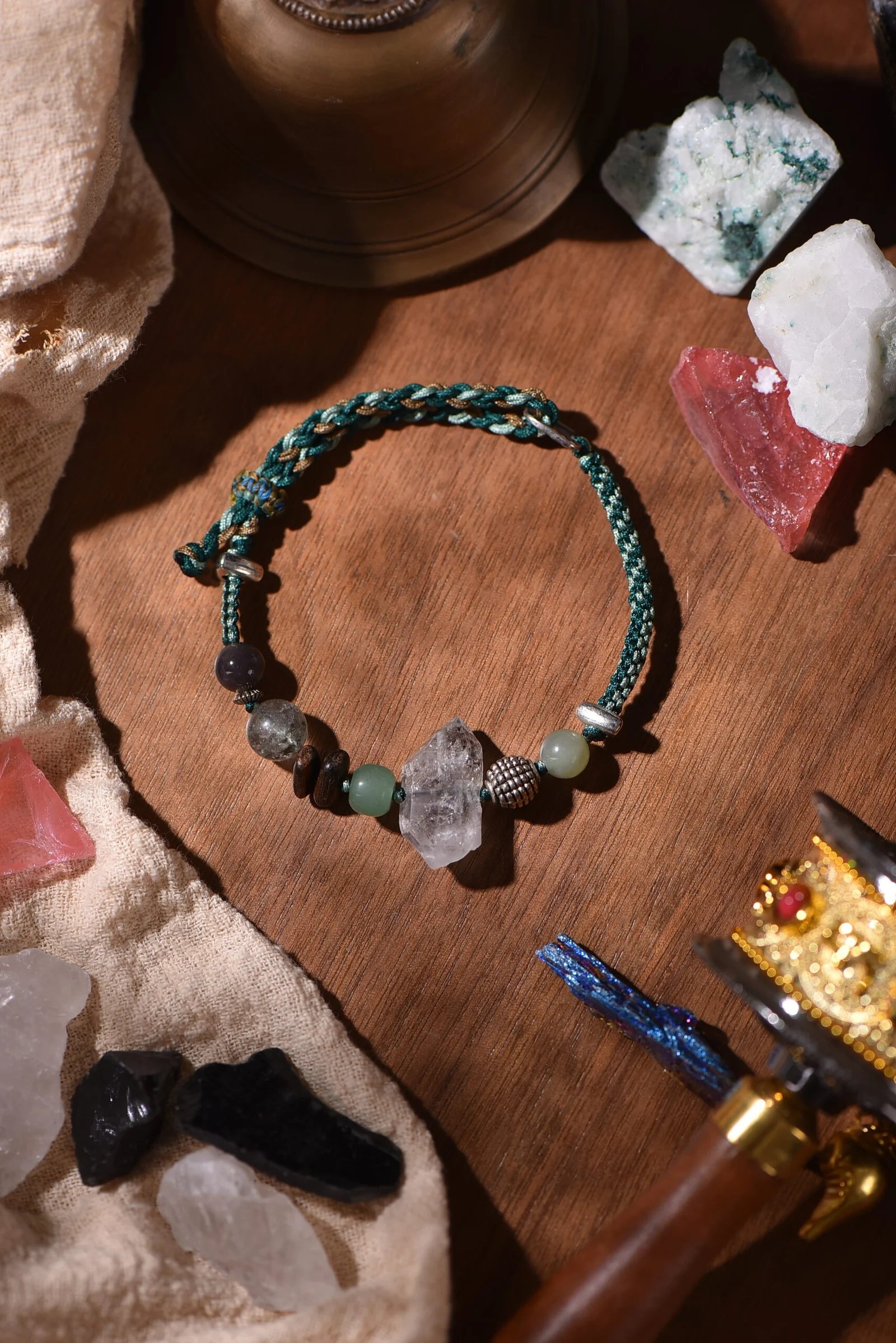
A botanical bracelet does not have to be all green. Sometimes one strand of cream, or a single rust-colored knot, is what makes the green read as green at all. Without that contrast the eye flattens it.
The waxed cord we knot with — the wax cord jewelry material we use in every piece — also changes how the color reads. A fresh piece of waxed cord has a slight sheen that catches light in long highlights. After a few weeks on the wrist the wax softens into the threads, and the color reads more matte. The piece itself will tell you which green it wants to become.
Which Green Is Yours?
If you love green for its quiet, earthy mood — the green that belongs to bark and fallen needles — start with the Capricorn Earth-Weaved Steadfast Bracelet in deep brown and forest green. Its deep greens and browns sit close to the floor of a pine forest.
If you prefer a lighter, more open green — the green of new needles in spring — the Five Elements Wood Single-Strand Bracelet in green and brown is the softer read.
If you want to walk through every shade of green we have ever woven, browse the botanical-leaning pieces in our bracelets collection and look for names like pine, forest, sage, jade, moss. We sort by palette now, so it is easy to follow the trail.
If you already own one of our pieces, the test we use most is this: hold it next to a leaf from your garden or a sprig from the park. If the bracelet and the leaf agree on green, the piece is yours. If they disagree, return to the studio page and try a different thread.
We make every piece by hand, one at a time. No two are exactly the same, because no two greens under a real pine tree ever are. That is the whole point of botanical jewelry — not a perfect green, but the green your branch of the tree is holding today. It is also why we keep walking back to that same pine ridge behind the studio. The green there is never the same green twice, and neither are the pieces that come out of it.
Nature, woven by hand. Color, woven into stories.
Want our next palette first? Join the slow letter — once a fortnight, no selling, no pressure — to read what is on the table this season.
