 Skip to content
✨ New Year Offer: Up to 20% off ·
Begin 2026 with something handmade ✨
✨ New Year Offer: Up to 20% off ·
Begin 2026 with something handmade ✨

Nature-Inspired Jewelry: Color Specimen Box | TibetanTwist

The Color Specimen Box: How Nature-Inspired Jewelry Gets Its Palette — TibetanTwist
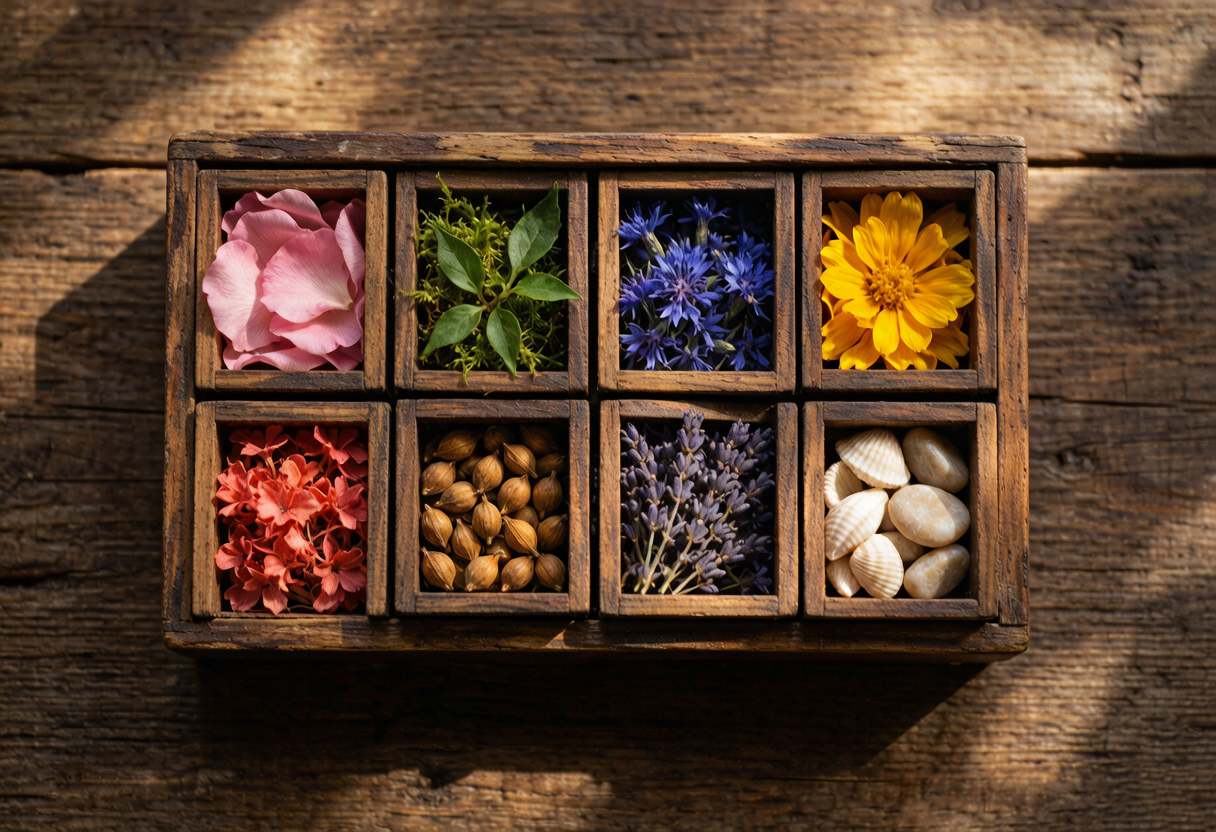
On the shelf above our worktable sits a wooden box with eight small drawers. Inside each one: a knotted test swatch in waxed cord, a dried petal, a pebble, sometimes a leaf that kept its shape. It is the plainest object in the studio — and nearly every piece of nature-inspired jewelry we make passes through it before it becomes real.
How a Color Earns a Drawer
We do not pick colors from a chart on a screen. We collect them the way some people collect leaves: by walking, stopping, and looking twice. A color earns a drawer in our box only after we have seen it three times out in the world — once in morning light, once in shade, once in rain or at dusk. Two sightings might be a coincidence. The third is a color worth keeping.
When a color passes that third look, we knot a short test swatch in waxed cord, write the date on a paper tag, and lay the two together in a drawer. The swatch matters more than any memory could. Light shifts by the hour. Weather rewrites everything. A swatch simply holds still and tells the truth.
Some drawers fill quickly. Monsoon sky blue filled in one stormy week, when the whole sky seemed to be showing off. Others wait half a season. The clay terracotta drawer sat nearly empty through spring, because the right earth tone only shows itself when the ground has dried out and the light comes in low.
The labels are plain: a date, a place, a few words. “Garden wall, after rain, June.” “Ferry deck, morning fog.” We write them in pencil because ink feels too certain. Half the pleasure is rereading a tag months later and trying to place where we stood. The box remembers more than we do, which is exactly why it exists.
Eight drawers, dozens of dated paper tags, one rule: nothing goes in until it has been seen three times. Some entries take a morning to earn. Some take a whole season. That patience is the quiet beginning of every colorful handmade jewelry piece that leaves this room.
What the Box Taught Us About Pairing
Open any two drawers side by side and the box starts giving advice. Colors pair the way good neighbors do — related, but never identical. That single lesson has shaped more of our pieces than any chart ever could.
Our favorite example is the pair of blues. Monsoon sky blue is the blue of air just before rain: lighter, greyer, holding its breath. Deep indigo is the blue of the storm itself. Woven side by side in one strand, they read as weather — the exact moment a sky changes its mind. You can see that conversation in our monsoon-sky-and-indigo handwoven bracelet, where the two blues repeat in an infinity knot, so the line where one ends and the other begins never lands in quite the same place twice.
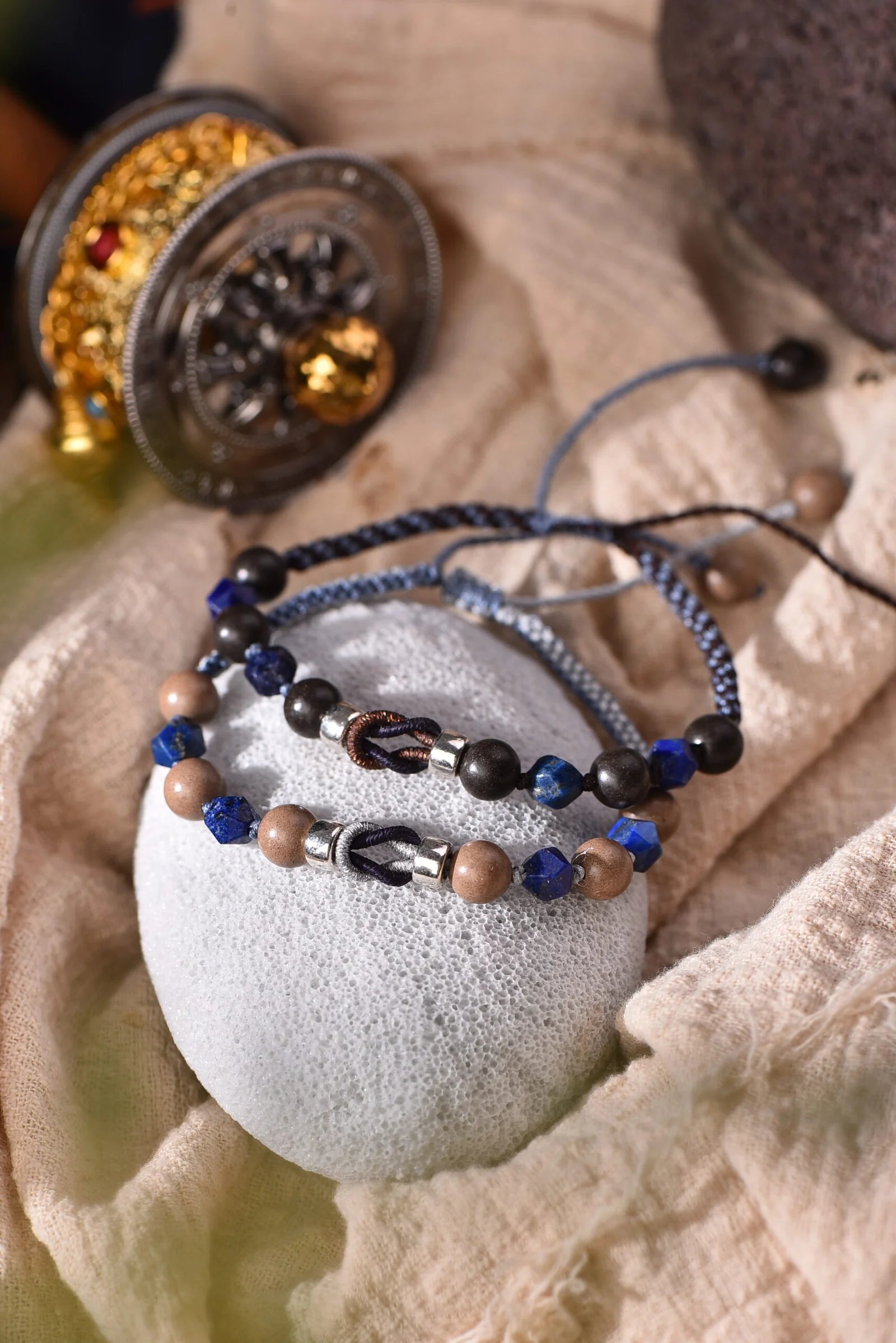
Look closely at the piece above: monsoon sky blue meeting deep indigo, knot after knot, with no fixed border between them. On a grey day the sky blue leads. Under bright sun the indigo answers. A two-color piece is never one thing all day, and that is the point.
The same rule holds for warm colors. Saffron gold set against chalk white behaves like low sun on a pale wall. Add one thread of bark brown and the gold stops glowing on its own and starts warming everything near it. We reach for that trio, drawn from the metal drawer, whenever a design needs light without loudness — it is the palette you will find in our saffron-gold, chalk-white and bark-brown handwoven bracelet.
Not every pair works. We once tried to force plum purple next to monsoon sky blue because both were deep; on the wrist they cancelled each other out, going muddy where they met. Both went back to their drawers, unoffended. That is the other half of what the box teaches: a drawer is also where a color waits until the right neighbor shows up.
The Drawer We Open Most in September
A specimen box is also a calendar. As the garden turns, our hands drift to different drawers without anyone deciding it. Spring belonged to peony pink and fresh green. Summer went to coral and sunflower gold. This month, the drawer that keeps opening is the terracotta one.
Clay terracotta, cream, and bark brown: the palette of dry seed heads, cracked earth, and the last warm bricks of the season. It is not a loud group of colors. It is the palette of things that held on all summer and are now allowed to rest — and it wears beautifully in autumn light, against wool as well as linen.
Swatches age honestly. Compare a three-year-old terracotta swatch with a fresh one and the difference is small but real: the wax has mellowed, the red has settled a shade deeper, like a brick that has weathered its first winters. We keep the old swatches on purpose. They are proof that a palette is not a decision made once but a living thing that keeps developing on the wrist.
Our clay-terracotta-and-cream handwoven bracelet comes straight from that drawer. The terracotta does the anchoring, the cream gives each knot room to be seen, and the whole piece looks the way a late-September afternoon feels: warm at the edges, cool underneath.
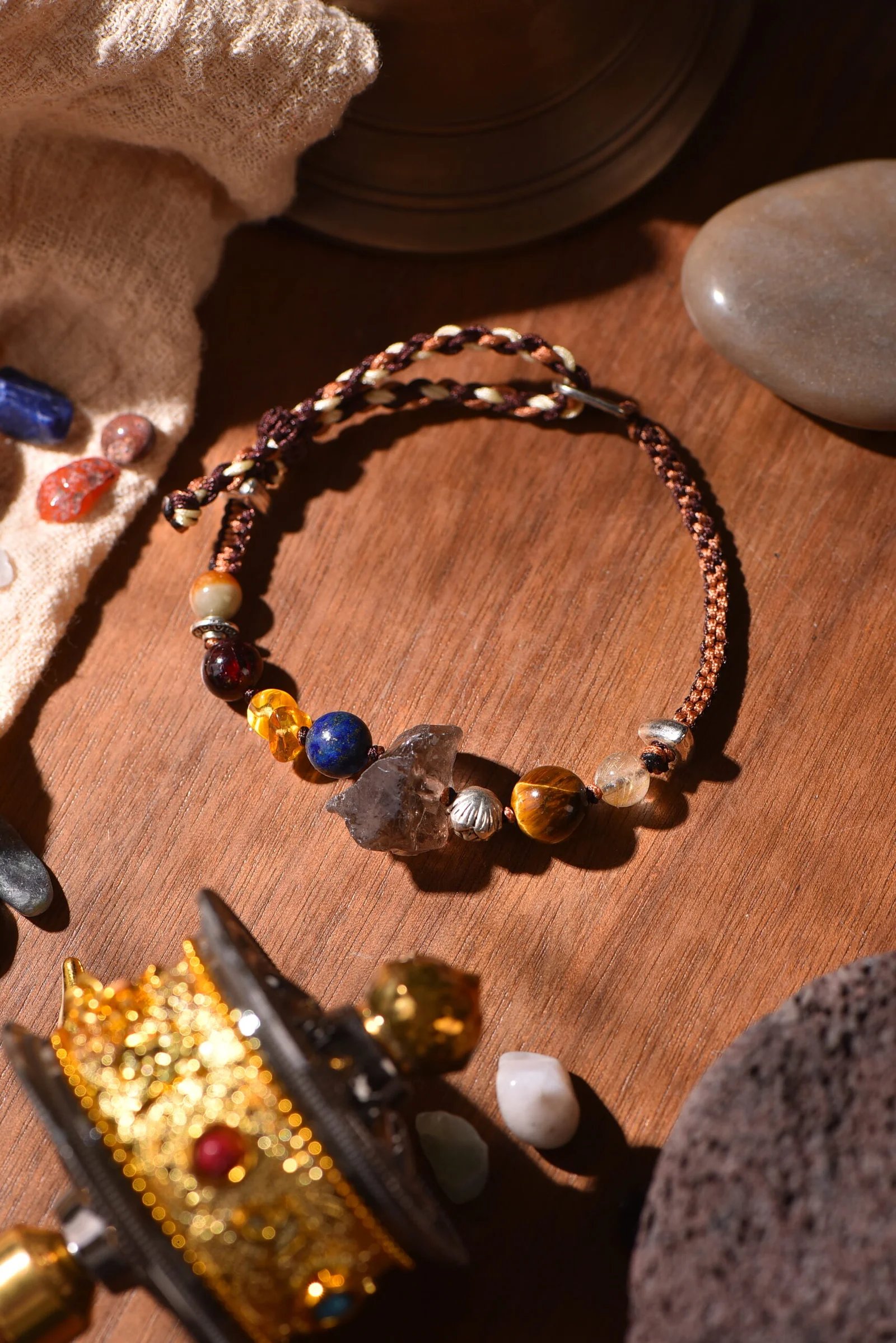
Colors do not go out of style in our studio; they go in and out of season. When a drawer goes quiet, we do not retire its swatches. The box keeps them, dated and labeled, until the light comes back around and the drawer opens again.
Start a Specimen Box of Your Own
You do not need a studio to keep one. A tin, a matchbox, an empty tea box — any small container with a lid will do. Three rules from ours: see a color three times before it counts; keep a swatch instead of a memory (a thread, a fabric scrap, a paper tag); and date everything, because a color is a moment, not a constant.
Most people start with what is already in their pockets: a train ticket, a cinema stub, the paper band from around a bunch of herbs. All of it counts. Within a month you will notice you are seeing color differently — checking the sky twice, holding a leaf up to the light, pausing at a market stall because two vegetables happened to sit together in the right way. That shift in attention is the real collection. The box just holds the receipts.
Then wear your box. A colorful handmade jewelry piece works the way a pressed flower does: proof that a particular light, in a particular place, was worth keeping. When someone asks where the color came from, you get to say something better than a brand name. You get to say where you were standing when you found it.
Which drawer would you open first? Browse the full bracelets collection and find the palette that matches the sky outside your own window. Every piece there was knotted by hand, one at a time, from colors that earned their keep.
Want the next color story before it reaches the box? Subscribe to our newsletter for studio notes, new palettes, and a first look at fresh pieces.
Nature, woven by hand. Color, woven into stories.
