 Skip to content
✨ New Year Offer: Up to 20% off ·
Begin 2026 with something handmade ✨
✨ New Year Offer: Up to 20% off ·
Begin 2026 with something handmade ✨

Keepsake Jewelry: Carry a Little Garden | TibetanTwist

Keepsake Jewelry: Carry a Little Garden — TibetanTwist
There is a week in late spring when the peonies open all at once, and the whole garden turns pink and green in the same breath. Then the week ends. Our handwoven keepsake pendants begin where that week ends: a small woven chamber on a waxed cord, sized for a petal, a seed, or a folded slip of paper — sized, really, for the days you are not ready to file away.
This is the quiet side of keepsake jewelry. Not a locket with a photograph behind glass, not a bloom printed onto a bezel — a real piece of a real season, dried by hand and carried against the skin. Below is how we think about that idea, how a garden keeps its trace after the stems are gone, and a ten-minute ritual for changing what you carry four times a year.
A Garden You Can Carry, Not a Print of One
Florals are everywhere in jewelry, but most of them are pictures of flowers — enamel petals, carved stone buds, a blossom stamped into metal. A keepsake pendant works the other way around. The flower is not pictured; it is present. A petal from your own walk, pressed flat between the pages of a heavy book, slides into the chamber and becomes the only image the piece needs. The garden is not referenced. It is worn.
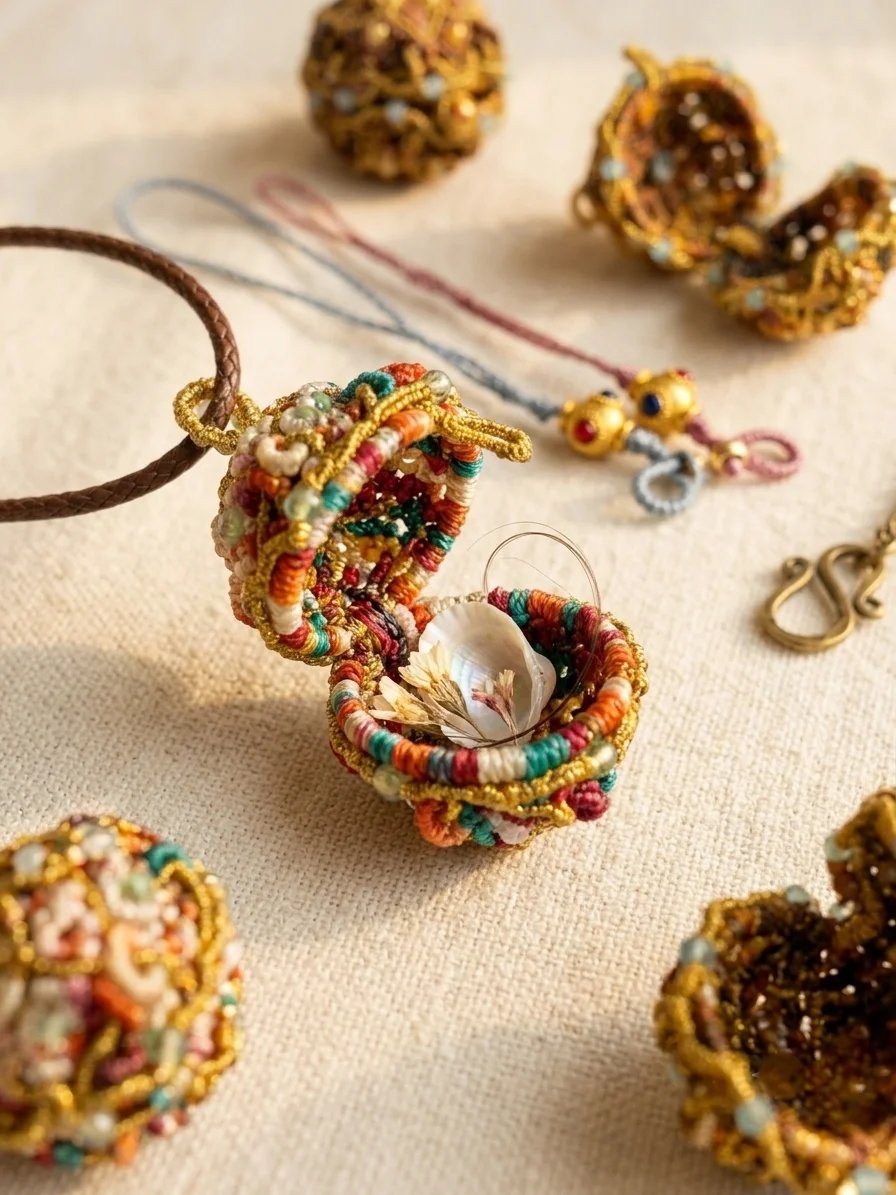
We build the frame for that petal by hand. The collar is waxed cord knotted in colors pulled from the same world the contents come from — moss green, oat cream, husk brown, the palette of a hedgerow in October. An openable pendant has a shallow brass bowl at its center, a threaded back, and that woven collar wrapped around it, so what you carry sits safe without being hidden. Because every piece is knotted one at a time, no two collars twist the same way. Even before you put anything inside, your garden will not look like anyone else’s.
The collar can also echo what goes inside. A blush-pink weave suits a May petal; deep pine green flatters a winter needle; monsoon sky blue sets off a sea-worn shell, if shells are what your summers are made of. We keep the palettes botanical on purpose. The frame should feel like it grew in the same soil as the contents — two halves of one season, one seen, one held.
A printed flower says, “I like this design.” A carried one says nothing at all — which is why it says more. The person across from you sees a woven pendant in garden colors. Only you know that under the threaded cap is the peony that opened the week your daughter was born, or the fern from the trail where you finally caught your breath.
The Quiet Trace of Dried Botanicals
Now for the part that does not photograph: the trace. A thoroughly dried petal, a pinch of lavender, a leaf of sage holds a low, quiet version of the scent it had in the garden. Not the loud first hour — the memory of it. Inside a closed chamber, that trace stays close to you and goes nowhere else. No one across the table notices it. You do — on the train, at your desk, when you lift the cord over your head. It is the most private thing we make, precisely because it does not announce itself.
There are no bottles anywhere in our studio. The trace we work with comes from the plant itself, and it fades the way the season faded — slowly, and in order. A rose petal keeps its sweetness longest. Lavender holds for months, then settles into something drier and greener. Pine needles keep the low resin note of a winter walk better than almost anything else. When the trace thins out, that is not the piece failing. That is the season leaving — and the signal that it is time for the next one.
We think of that quietness as a feature, not a shortfall. Color can be seen from across a room; a trace like this belongs to the wearer alone. A bracelet in monsoon blue will earn compliments. A chamber holding last June earns something rarer — a private pause, two seconds long, every time the thought crosses your mind.
The Refill Ritual: Four Openings a Year
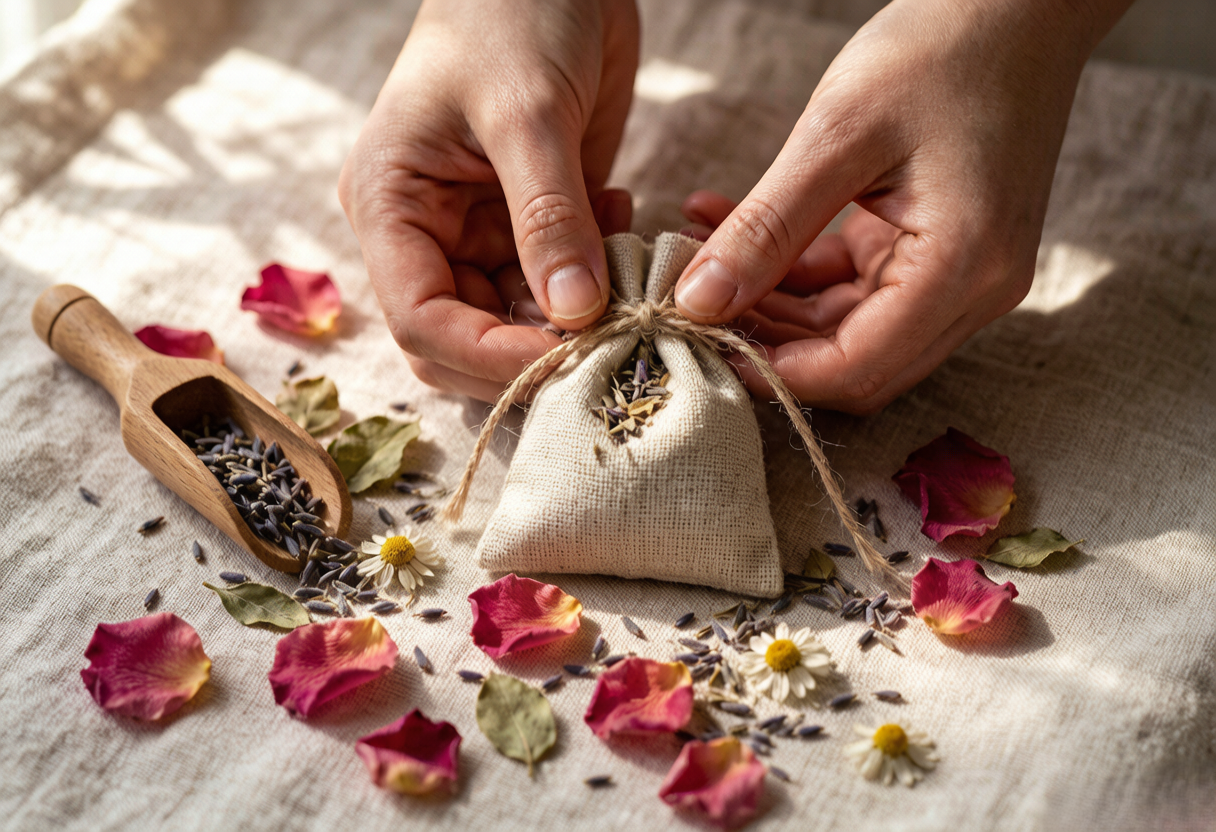
The openable design earns its keep four times a year, and the ritual takes about ten minutes. First, gather the season while it is happening: a peony petal in May, a chamomile head in July, one leaf gone copper in October, two pine needles and a small bud in January. Press or air-dry your gathering for roughly a week, until it feels like paper. Dryness is the only real enemy a keepsake chamber has — a damp petal darkens and curls, while a dry one keeps its shape for years. Then open the latch, let the old season out, and set the new one in. Close the cap, knot the cord, wear.
What to do with the season you remove is up to you. We compost ours at the studio window. Other people slip the old contents into a paper envelope, write the month on the flap, and start a small archive of worn-out springs. Either way, four openings a year turn the pendant into a calendar you wear against your chest. Time stops being measured in deadlines and starts being measured in what the fields and window boxes are doing. May and July turn out to be nothing alike — and neither are the chambers that carry them.
There is a sound to the ritual, too. The small click of the threaded cap. The dry tick of a seed settling against the brass. Two seconds of ceremony, repeated four times a year, quietly keeping count of a life. That is more than most jewelry ever asks to hold.
Which Season Would You Wear First?
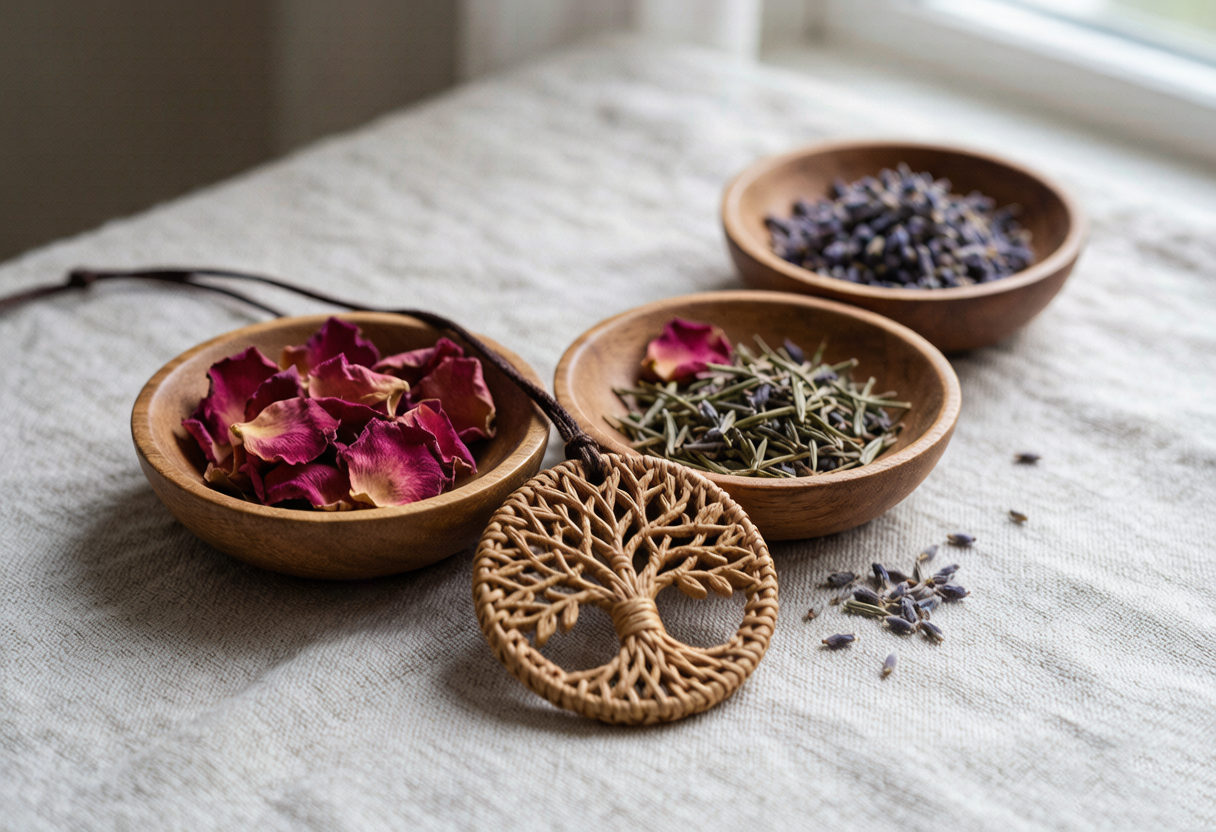
Start with the season you would most like to hold, then pick the shape that fits it. For flat petals, pressed ferns, and thin slips of paper, our botanical openable pendant opens like a flower, its shallow bowl keeping the color partly in view. For seeds, pine needles, sand, and thicker scraps, the pine-green-and-cream keepsake box closes with a threaded cap and keeps its contents private until you choose to open them. Both hang from hand-knotted waxed cord, and both are one of a kind — no two alike, made by hand, one at a time. If no single season claims you, start with the one you are standing in; the first refill will tell you what you have been walking past.
Care, in one breath: keep the contents bone-dry, open the chamber now and then to let the air move, wipe the brass with a soft cloth if it deepens in color, and keep the cord out of harsh soap and long soaks. The knots are waxed to survive daily wear; a little attention keeps them clean and the color vivid for years.
If you are still choosing, browse the rest of our keepsake and memory stories — or simply wait for your season. The garden is already keeping the first one for you.
Nature, woven by hand. Color, woven into stories.
Join our email list for new palettes, studio notes, and first access to seasonal drops.
