 Skip to content
✨ New Year Offer: Up to 20% off ·
Begin 2026 with something handmade ✨
✨ New Year Offer: Up to 20% off ·
Begin 2026 with something handmade ✨

How We Match Thread Colors to Real Flowers — TibetanTwist

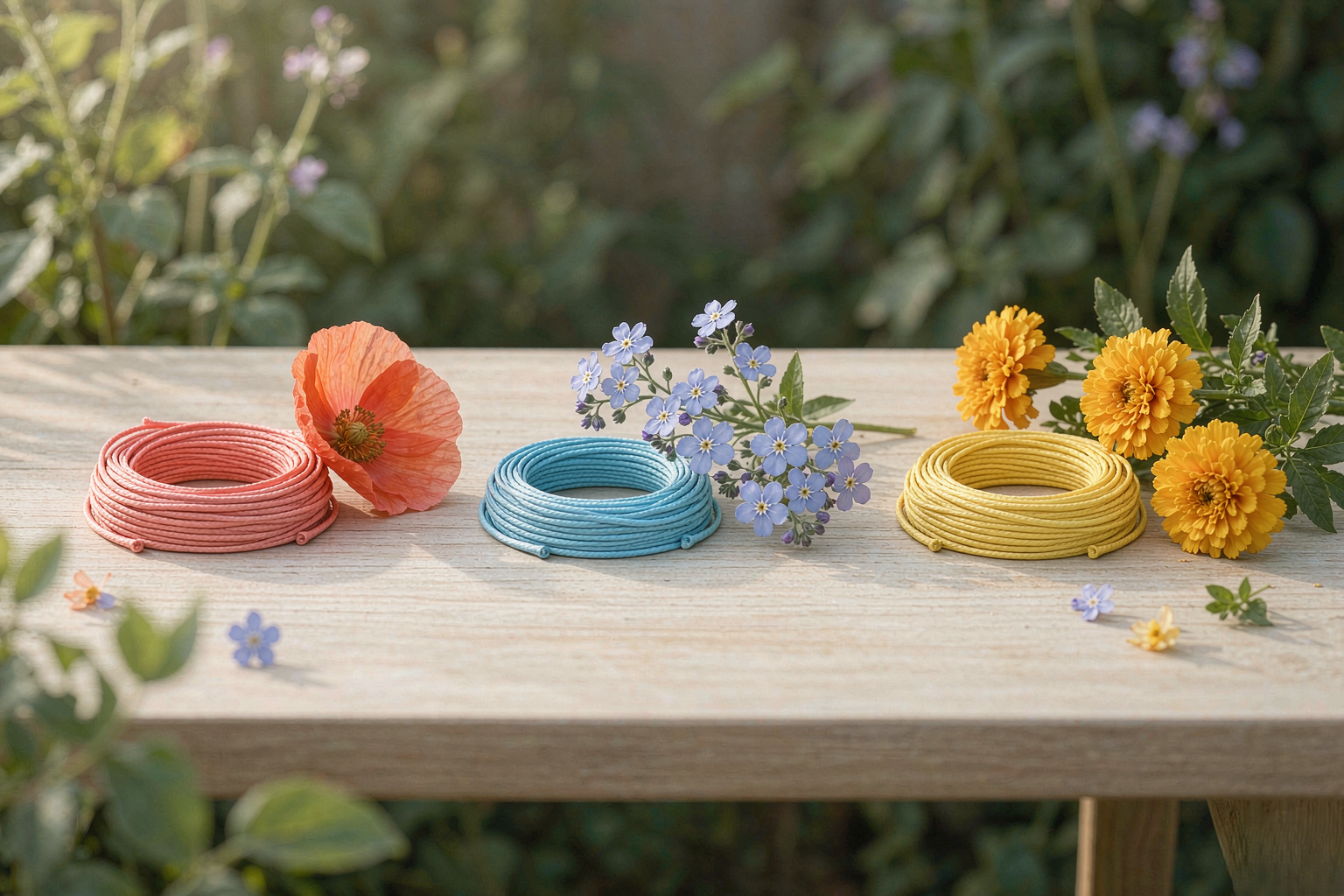
Every morning in the studio starts the same way: the thread waits, and the flowers do not. Before we knot a single strand, we carry the spools outside and hold them against whatever is blooming. A length of coral cord pressed to a poppy in full sun tells us more than any color chart ever could. This is how our colorful handmade jewelry begins — outside, in daylight, with a petal for a reference and patient hands.
Why We Match Color in Daylight, Never on a Screen
A screen is a liar with good manners. It glows from behind, so every color on it is lit from within instead of lit by the sun. The same poppy red that burns in the flowerbed goes flat and faintly orange on a monitor. A pine green that reads deep and cool under the trees comes out louder than true in a photograph. Match thread on a screen, and every bracelet becomes a portrait of a portrait.
So we do it the slow way. The spools go into a basket; the basket goes into the garden. Morning is our judging light, because it is even and honest — late-afternoon gold flatters everything, and flattery is useless when you are matching. We press a strand of waxed cord right up against the petal, then step back a full arm’s length and look. If the thread disappears next to the flower — if the eye cannot find the line between them — the color is right. If the thread shouts, it goes back on the shelf.
Indoor light muddies the test too. Under a warm bulb, cream goes butter and grey goes blue; under a cool lamp, every pink leans violet. Daylight is the only witness that does not take sides. So the studio keeps a long table by the window, and the matching always happens there, in the first half of the day.
It takes longer this way. It also means that when we say a bracelet is poppy red, we mean the red of an actual poppy that actually grew — not a number on a chart. That is the quiet difference you can feel in colorful handmade jewelry made like this: every shade on the wrist has a stem, a season, and a day it was picked.
A Palette Borrowed from the Garden
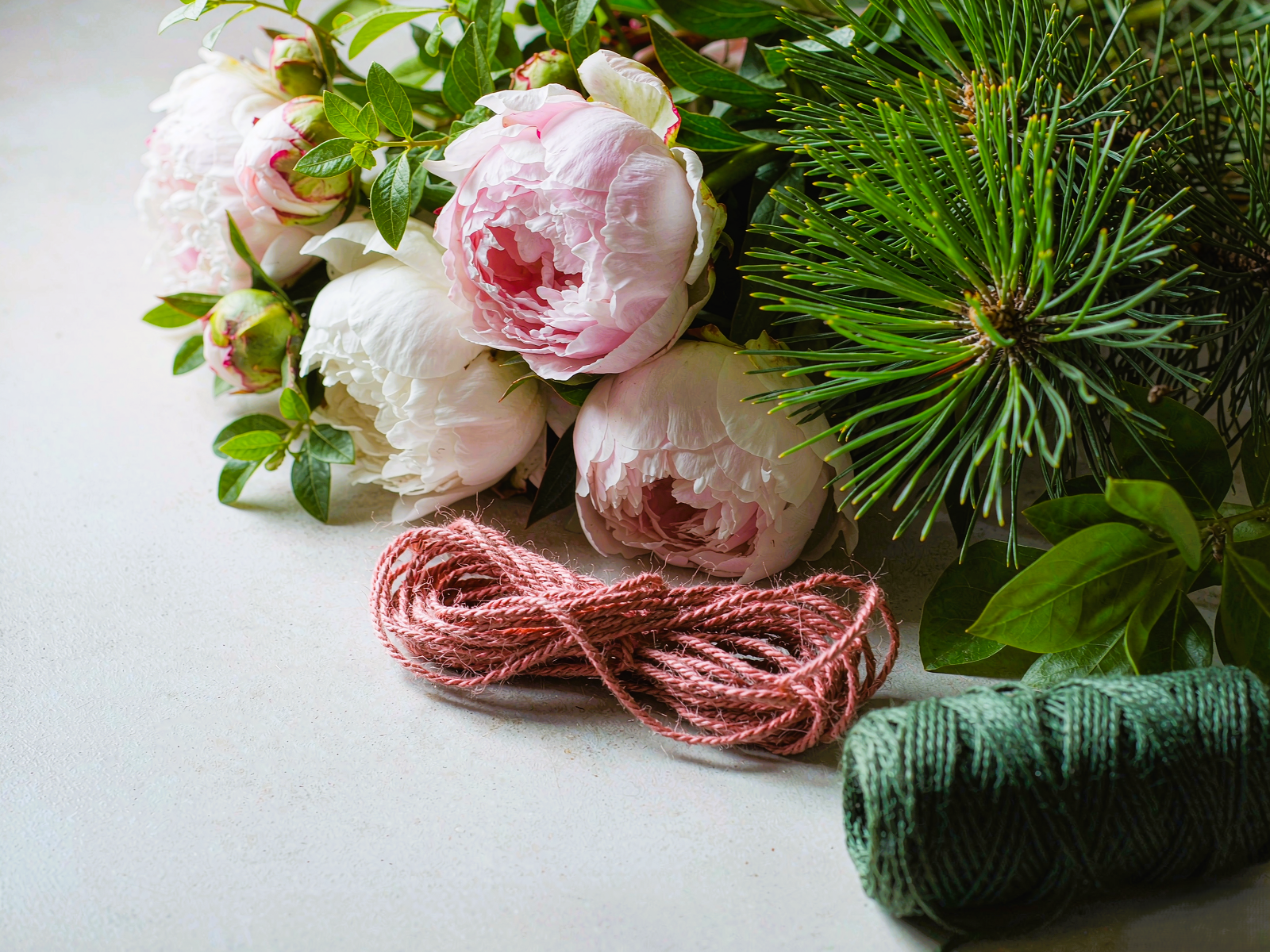
Our thread shelf reads like a field guide. Peony pink, taken from the heavy old-fashioned peonies that open for one reckless week in late spring. Pine green, from needles that keep working all winter. Monsoon sky blue, the exact grey-blue of rain walking in over the hills. Marigold gold, poppy coral, oxblood red, the cream of wild oats gone dry in August. None of these names came from a trend report. They came from looking, and from looking again.
Guests at the studio table always ask which shade is our best seller, and the answer surprises them: it is usually whatever is blooming that week. When the roses peak, wrists ask for rose pink. When the hydrangeas open, the blues move. The garden sets the season’s order of work, and we follow it the way you follow weather.
We keep one rule about the shelf: if we cannot point to the real thing outside, the shade does not get wound onto a spool. Botanical-inspired jewelry only means something when the botanical half is real — a flower we grew, a leaf lifted off the path, a sky we actually stood under. If a color cannot be found out there, we read that as the palette telling us it does not need it.
The garden turns, and the shelf turns with it. Spring brings leaf-out green and blossom blush. Summer crowds the spools with coral, gold and deep violet. Autumn slides everything toward ochre, russet and seed-pod brown. Winter is the quietest shelf we run — pine, frost cream, the blue of long shadows on snow — and it is the one we love knotting with most, because every color on it has to be certain of itself. Nothing hides.
From One Stem to a Finished Strand
Here is something a flower taught us: nothing in nature is only one color. Look closely at a single poppy and you will find four or five reds — the petal edge darker where the light goes through it, the base shading toward plum, the stem carrying a grey-green that keeps the whole flower honest. A leaf is two greens at once, top and underside. A peony holds pink and cream in the same cup.
So a finished strand is almost never a single thread. We layer two or three shades from the same stem: a deep one for the backbone of the pattern, a lighter one for breath, sometimes a third for the surprise. Between rows of knots we carry the half-made bracelet back out to the flower and check. Wrist to petal, petal to wrist, until the two belong to each other.
Our multi-color herbal bracelet in garden greens came straight out of this exercise: moss green, sap green and a thread of pale jade knotted around smooth beads, like the layered greens of one border in June. Because every strand is knotted by hand, one at a time, no two come out alike. The second bracelet from the same palette always leans a shade differently — the way two flowers on the same plant never open identical.
Which Flower Would Your Wrist Wear?
Choosing is simpler than it sounds. Start with the flower you always stop for — the one you lean over at the edge of the path every single time, even when you are late. That flower is already your color. The bracelet only confirms it.
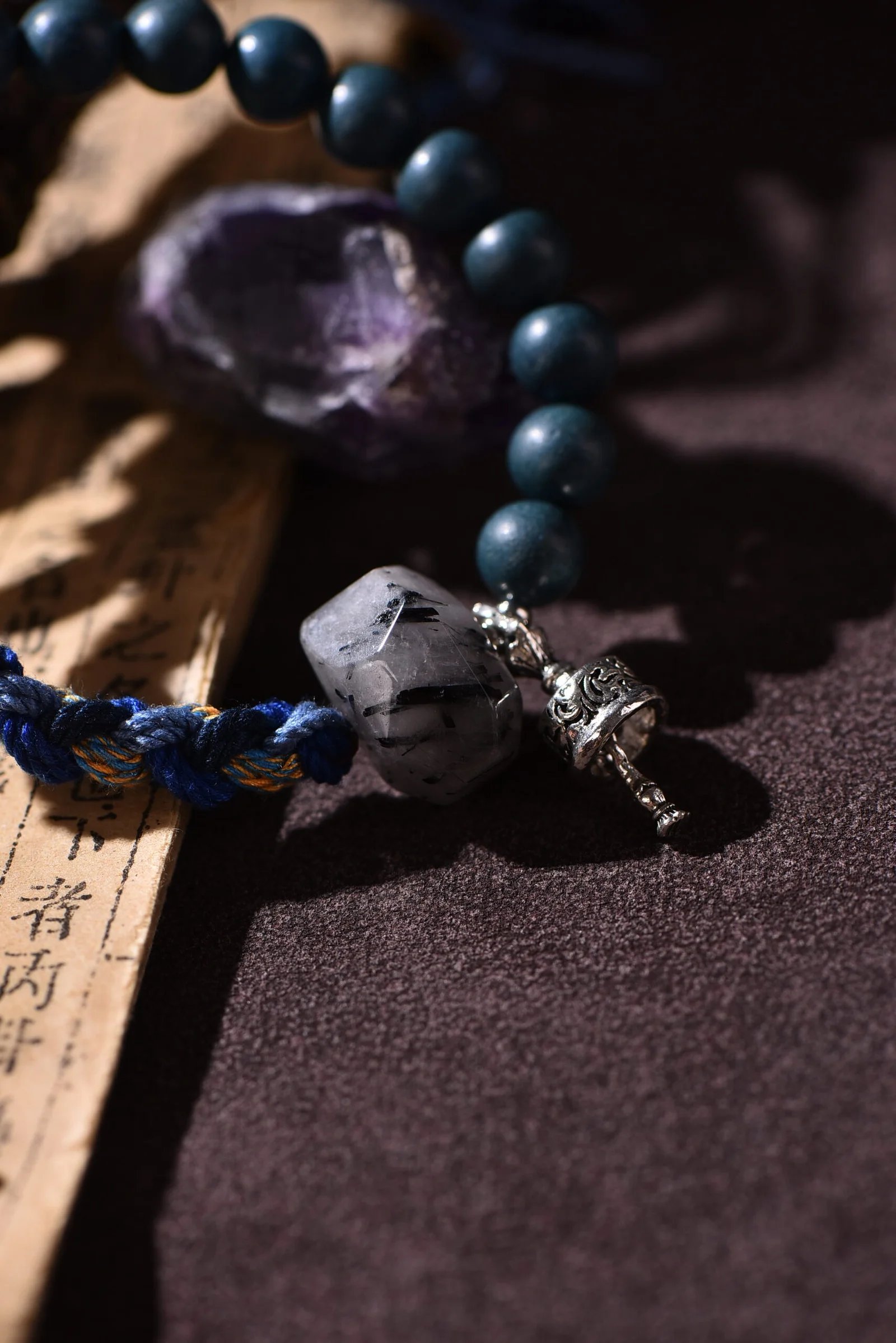
Or choose a season to carry with you. If your heart lives in late spring, a strand in blossom blush and leaf green keeps the season close all year: our blush-and-soft-blue tide-woven bracelet reads exactly like May — pale sky, first roses, the morning still cool. If you are a pine-forest person, our pine-green-and-bark knotted bracelet carries the deep end of the garden, the shade under the trees where the flowers thin out and the moss takes over.
You can also wear two strands the way a border plants two beds. A warm one beside a cool one — coral against monsoon blue — gives the wrist the same spark a garden gets from contrast. Sizing is quick: wrap a strip of paper around your wrist, mark where it meets, and measure it flat. Or wear it slightly loose, the way we do, so it moves when you type.
The cord itself keeps the palette honest. Waxed cord takes color deeply and holds it — the same coral on day one and year five, softened in feel but still true in hue. That is why we build color stories on it: a palette should outlast the season that inspired it.
Everything linked here is ready to ship and one of a kind — choose from the pieces that exist, and yours will be the only one like it. For the full shelf of palettes side by side, wander through the bracelets collection and see which flower your wrist has been waiting for.
Nature, woven by hand. Color, woven into stories.
If this way of choosing color sounds like you, join the slow letter — once a fortnight, no selling, no pressure — to read what is on the weaving table this season.
