 Skip to content
✨ New Year Offer: Up to 20% off ·
Begin 2026 with something handmade ✨
✨ New Year Offer: Up to 20% off ·
Begin 2026 with something handmade ✨

Caring for Handwoven Jewelry: The Two-Minute Ritual | TibetanTwist

Caring for Handwoven Jewelry: The Two-Minute Ritual | TibetanTwist
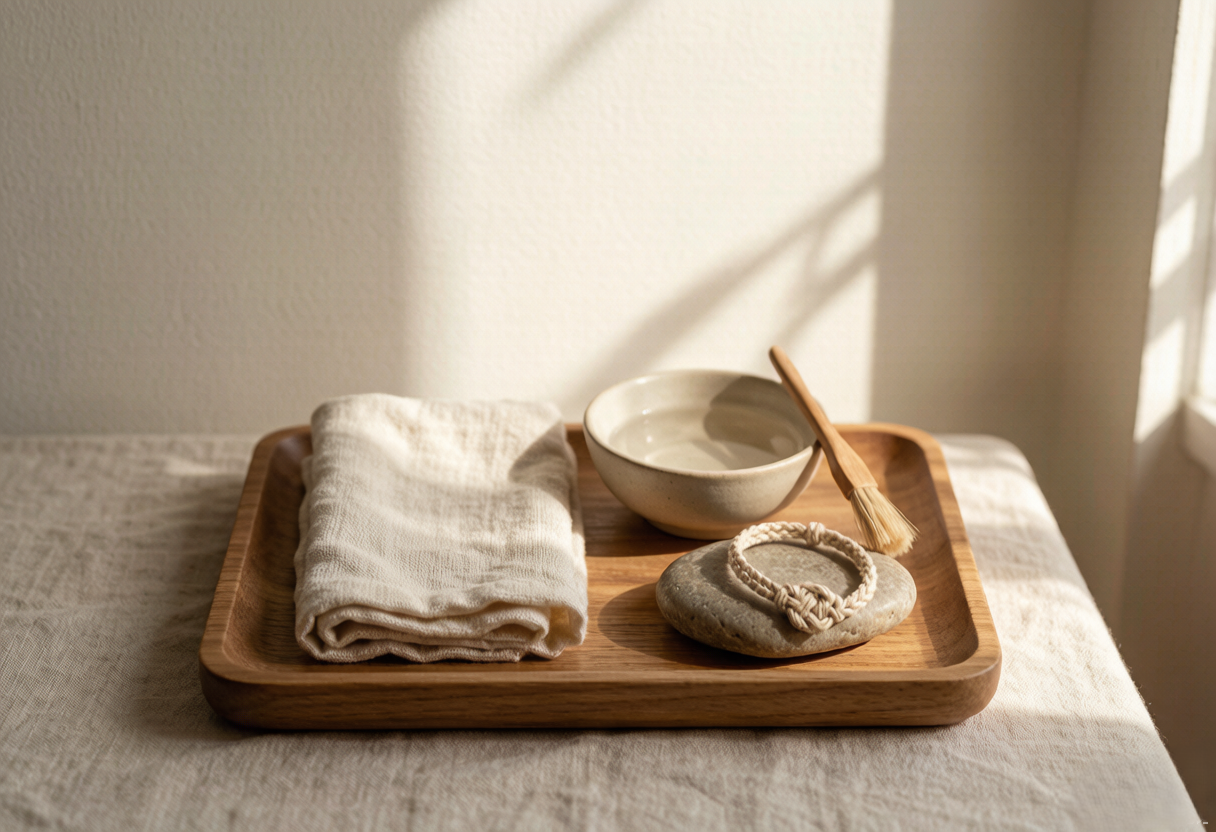
Morning light reaches the studio bench before I do. On the shelf above it sits a shallow wooden tray where my own bracelets spend their nights — monsoon sky blue, pine green, a strand of oxblood that has traveled with me for three summers now. Before the kettle boils, I lift each piece, turn it once in my hands, and set it back down. Two minutes, no more. The light shows everything: the matte sheen of the cord, the small shadows inside each knot, the dust of yesterday before it settles in. That small habit is the quiet reason a piece of waxed cord jewelry can look alive years after its first knot was pulled.
Why a Ritual Beats a Rescue
Most jewelry care is reactive. A chain tangles, a stone goes cloudy, and only then do we hunt for a cloth. Handwoven pieces invite the opposite approach: tiny, regular attention instead of one dramatic intervention. Waxed cord is an honest material. It records how you live with it — dust settles where two cords cross, skin oils sit on the high points of the knots, and month by month the surface keeps a diary of your days. Rain, sunscreen, city air, the inside of a coat pocket: the wax takes all of it and keeps a copy.
That diary is worth keeping legible. A bracelet glanced at each morning never reaches the state that needs an hour of triage. A bracelet forgotten in a drawer, or left on a damp bathroom ledge, grows a film that takes real work to lift. The difference between the two is not effort — it is timing. Two minutes a day is smaller than two hours once a season, and it is kinder to the cord.
There is a slower idea underneath, too. We knot each piece by hand, one at a time, and we would rather the things we make grow old gracefully than be rescued badly. Slow-made objects deserve slow attention. The ritual below asks almost nothing of you — no special products, no chemicals, no equipment beyond a soft brush and two cloths.
The Two-Minute Morning Check, Step by Step
Here is the exact sequence I follow, and the one I suggest to anyone who takes home one of our pieces. It fits inside the time it takes tea to steep.
One — look before you wear. Hold the piece up to window light and turn it slowly once. You are reading, not fixing: where dust has gathered, where the cord has gone dull, whether any knot looks pressed or soft. Ten seconds. Most mornings you will see nothing worth changing, and that is the point.
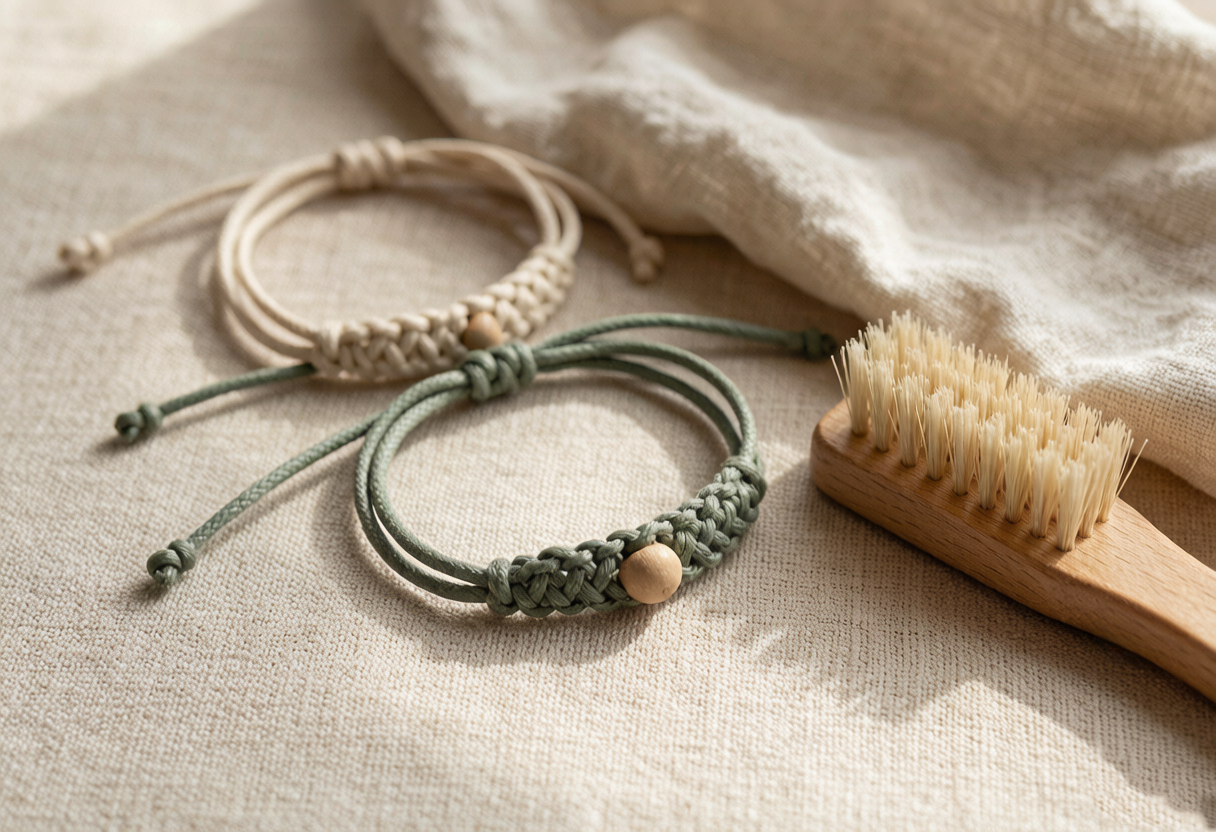
Two — dry brush the knots. A soft toothbrush or a clean makeup brush, swept gently across the surface. Give extra attention to the crossings — the places where two cords overlap — and to the tiny valleys where a bead sits against thread. Dust hides there first. Thirty seconds, and the piece looks sharper at once.
Three — one pass with a barely damp cloth. Wring it until nothing drips, wipe the cord once in a single direction, then follow at once with a dry cloth. Water is not the enemy; sitting water is. This lifts the faint film of skin oil that dulls color over time.
Four — give stones their own cloth. A dry microfiber square brings back the soft glow of wood, glass and ceramic. If a bead looks cloudy, breathe on it and wipe — the fog of your breath is usually enough.
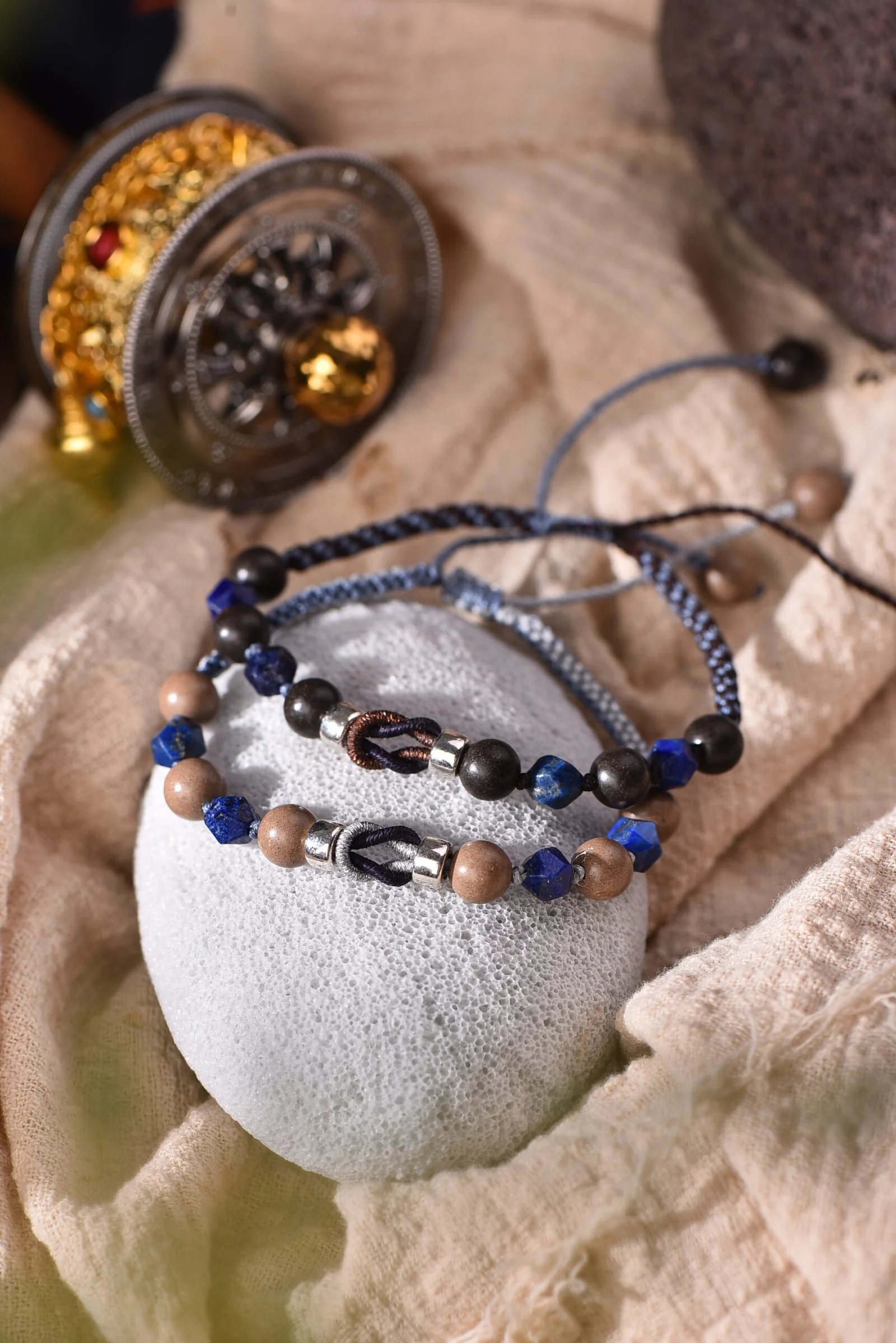
Five — put it back properly. Coil the piece loosely on a tray, flat, not crumpled and not hanging under tension. The piece I wear most in this rotation is our monsoon-sky-and-indigo infinity-knot bracelet, knotted in two tones of blue to be lived in — years of mornings later, the double tone still reads even. See the infinity-knot bracelet here.
Reading the Signs: What Your Piece Is Telling You
After a few weeks of this ritual, you start to notice the material answering back. Waxed cord gives clear signals, and each one has a plain response.
A dull, slightly grey surface means oil and dust have built a film. The damp-wipe step handles most of it. For a piece worn daily, add a monthly re-wax: rub a little beeswax along the cord, then buff with a soft cloth until the sheen returns. Two minutes, once a month, and the color sits deep again.
Flat, pressed knots are the signature of sleeping in a bracelet. Sheet friction rubs the wax off the high points night after night. The fix is not more wax; it is a bedside tray. Take the piece off before bed and the knots stay proud for years.
A stiff or kinked cord means the piece got soaked or stored crumpled. Pat it dry, lay it flat, and let it air-dry away from heat — never near a radiator and never under a hairdryer, because heat melts the wax that gives the cord its grip.
Stretching at the loop comes from sharp tugs. Waxed cotton rarely un-stretches, so work sliding knots slowly with both hands from the very first wear, and the fit will hold.
And one sign to ignore: the soft patina that gathers at the knots after months of wear — a slight darkening, a matte sheen. That is not damage. That is the record of the days the piece spent on your wrist, and it is one of the quiet pleasures of waxed cord jewelry: it ages like a well-read book, not like a machine.
How to Build the Habit Into Your Week
Rituals stick when they have a place and a rhythm. Give the habit both.
Rotate two or three pieces. A cord that rests between wears keeps its shape longer and its color deeper. A small rotation also means every piece gets checked several times a week without any single one being overworked.
Anchor it to a tray. One shallow tray by a window, pieces coiled side by side. You cannot skip a check you can see. If you are starting a rotation, choose pieces that already want to be lived in: our terracotta-and-cream handwoven bracelet carries the palette of dry riverbeds and late light, see it here, and our white-and-gold-blue handwoven bracelet reads like gulls over a cold sea, see it here.
Add one deeper minute on Sundays. Brush every piece in the tray, re-wax the one that lived hardest that week, and check that every sliding knot still moves smoothly. Once a season, look at the tray itself: dust it, and give any tired piece a proper rest.
Keep three things out of the routine. Perfume, sunscreen and hand sanitizer all strip wax, so spray first and dress your wrists second. Soaking is out — a splash is fine, a swim is not, because chlorine and salt dry the cord brittle. And skip polishes and sprays of every kind; the wax already is the finish.
Bend with the seasons. Summer asks for more wipes — sunscreen and salt — while winter asks for patience: cold stiffens wax, so warm the piece in your hands before you flex it.
More care notes and gentle buying guides live in our care and buying journal. Which piece will start your rotation — monsoon sky blue, terracotta cream, or gull-white and gold-blue?
Nature, woven by hand. Color, woven into stories.
Join our email list for new palettes, studio notes, and care rituals straight from the workbench.
