 Skip to content
✨ New Year Offer: Up to 20% off ·
Begin 2026 with something handmade ✨
✨ New Year Offer: Up to 20% off ·
Begin 2026 with something handmade ✨

Five Elements Jewelry: Five Palettes You Can Wear | TibetanTwist

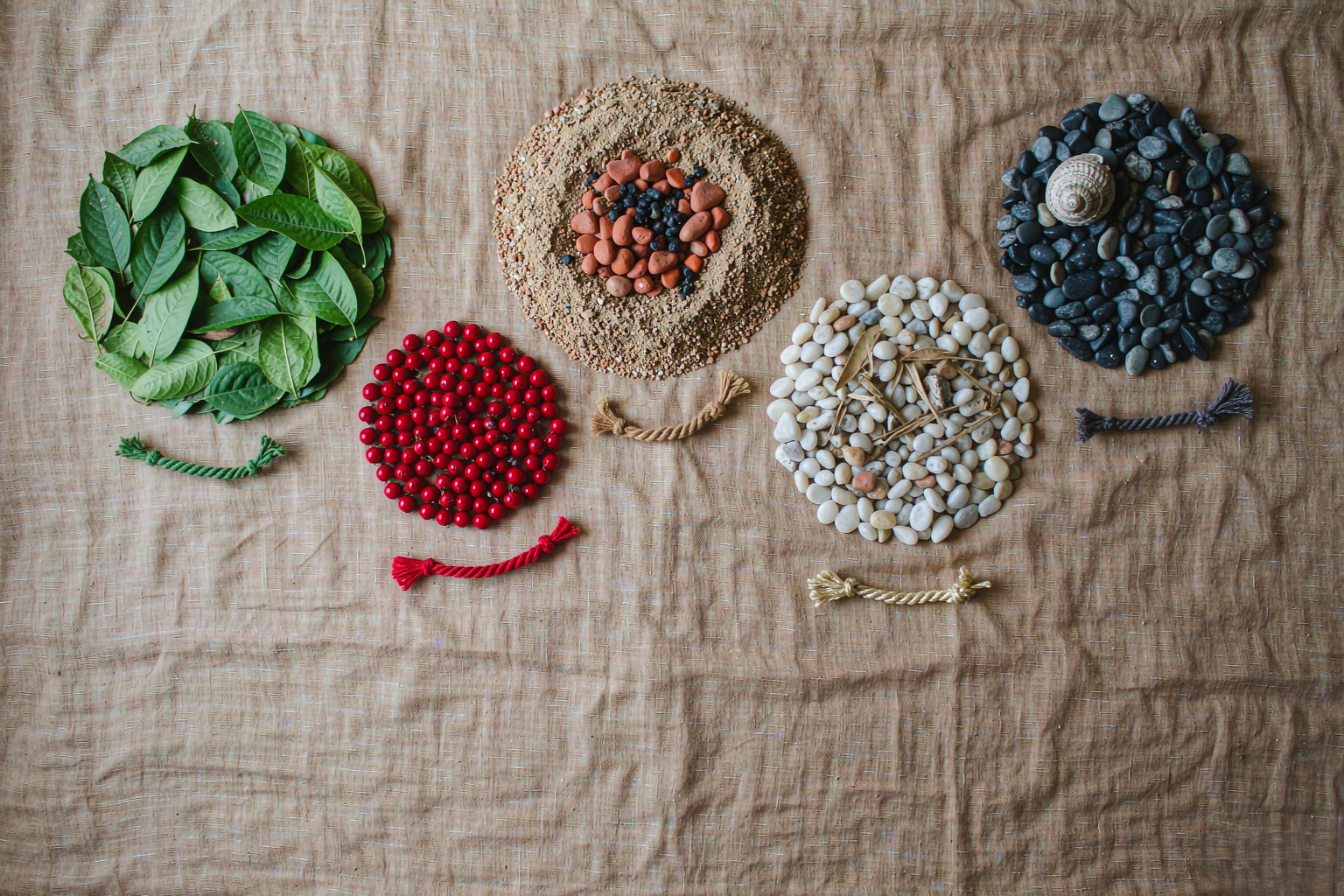
One valley, walked slowly, holds all five. Pine shade at the trailhead, a bank of ember-red berries in the flat noon light, a clay field cracked into terracotta plates, pale stones that flash when the sun drops low, and at the bottom of the path the deep green-black of a river pool. Our five palettes were not invented at a desk. They were walked first, one terrain at a time, and only then knotted, one piece at a time, into waxed cord.
Five Elements Jewelry Starts With Five Terrains
Ask us what Five Elements jewelry means, and we will not start with a chart. We start with ground. Wood is a terrain before it is a word: the streamside half of the walk, where ferns unroll in the shade and the light arrives already sieved green through the needles. Fire is the exposed bank where red berries burn in a crowd of leaves. Earth is the field above the trail, terracotta and cream, baked hard until it cracks. Metal is the scatter of pale stones that sits unnoticed all day, then catches the last slant of sun like a slope of frost. Water is the pool at the end, the blue that keeps holding the sky after the sky itself has moved on.
This is why we describe the line as five palettes you can wear rather than five meanings to memorize. A chart asks you to find yourself in it. A terrain asks nothing at all — you simply notice where your feet slow down. It is also why the palettes shift a little each season. The valley changes; so does the thread. What stays fixed is the mapping — wood always green and brown, fire always red against cream, earth always terracotta, metal always pale gold, water always river blue — while the exact hues follow the year’s own light.
Wood, then, where the walk begins. Stand ten minutes in pine shade and you stop seeing one green. There is the bright, almost yellow green where the sunbeams land, the gray-green of lichen on the shaded side of the trunk, the deep bottle-green under the ferns. Green is also the sternest color to knot: two greens too close in tone read as mud, so we set fern green against brown instead of against green. Our fern-green-and-earth-brown handwoven bracelet carries that streamside pairing — one green off the fern, one brown from the oak leaves pressed flat along the path.
Waxed cord earns its keep on this stretch of the walk. Dye sits deep in a waxed thread, so the green you see at the trailhead is the green that stays — through rain, through sunscreen, through a whole summer of daily wear. That is the practical promise of wax cord jewelry: the color keeps the terrain, not a memory of it. And the knots hold each color in its own stretch of strand, the way the path itself holds forest and field apart.
The Warm Half of the Walk: Fire and Earth
Midway, the valley opens and the light turns warm. Fire shows up first as berries — oxblood, rowan red, a thin rind of orange where the skins go translucent — and our fire palette borrows exactly that: a deep ember red set against a breath of cream, so the red burns instead of shouting. It is the most outgoing of the five, and it keeps noon hours: worn outside at midday, our ember-red single-strand piece reads bright and quick, while under evening bulbs it settles into something darker and slower, like coals after the flame.
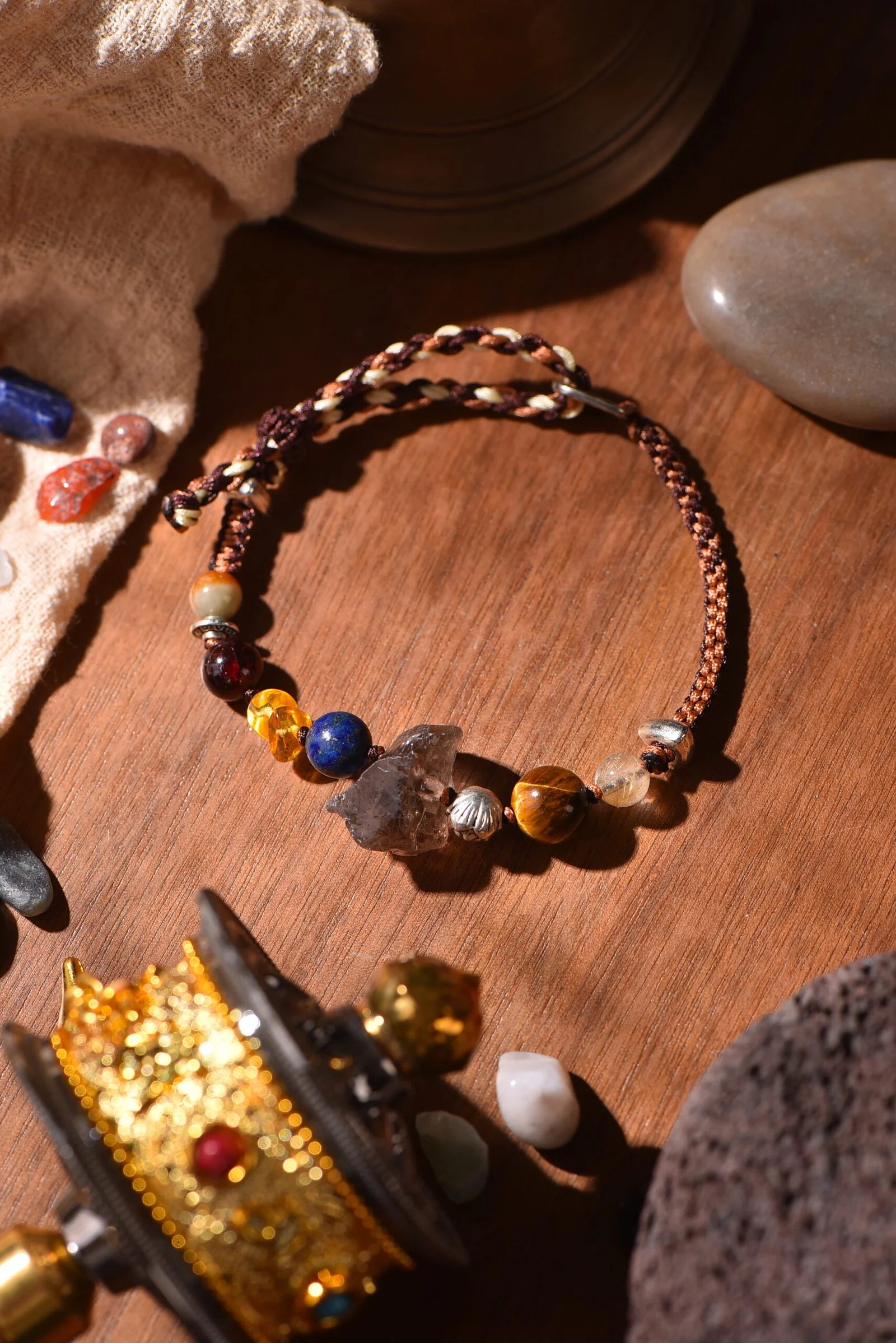
Earth begins just past the berry bank, where the trail climbs into clay. Terracotta, cream, a soft matte brown — colors that have already done their burning and settled into the ground. If fire is the hour, earth is the ground under the hour. It is the steadiest palette we knot and the easiest to live with: our terracotta-cream-and-earth-brown single-strand bracelet sits as comfortably against denim as against linen, and it does not argue with anything else on the wrist. Nothing about it asks for attention. It asks only to be worn often, and it repays that.
The Cool Half of the Walk: Metal and Water
Past the field the path drops back into shade, and the light cools by degrees. Metal is the hardest of the five palettes to photograph and the easiest to recognize in person, because metal is not a color so much as a glint. Pale stones sit unremarkable for hours; then the sun drops, and the whole slope flashes gold-white for a minute. Our metal pairing — pale gold, white, and one warm strand of earth-brown to keep it from floating away — is knotted for exactly that minute. Against skin it brightens. In a crowd it is the wrist that catches the window light as it passes.
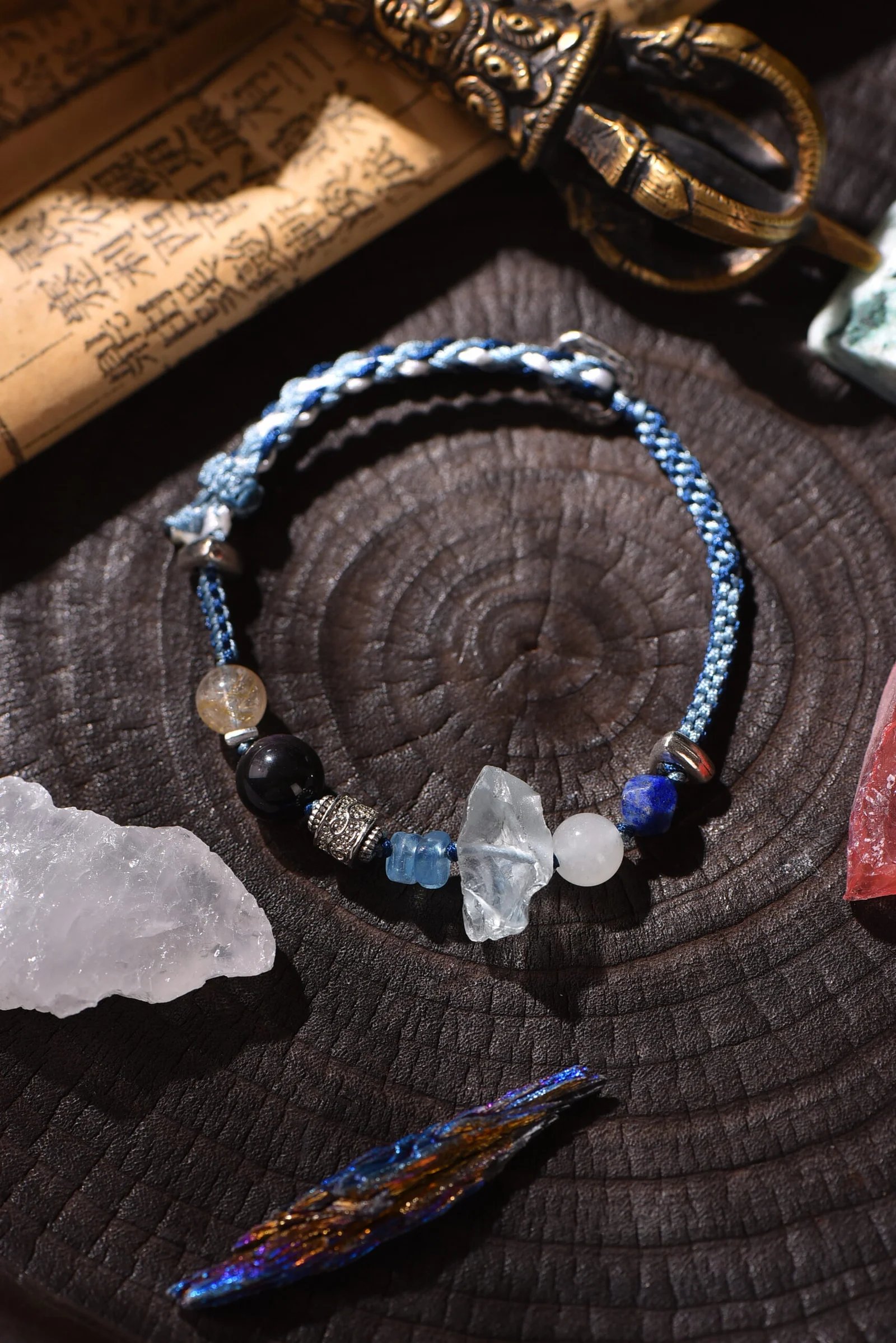
The walk ends at the pool, and the pool is water: river blue laid over white, the palette of the hour when the sky gives up its glare and leans into the current. Where fire wants noon, water wants dusk. Our river-blue-and-white single-strand bracelet is the piece we reach for in that last hour of light — the blue reads deeper as the day dims, and the white holds a little brightness back, the way foam does. Worn alone it is still water; stacked beside wood greens or earth browns it becomes the river running through the valley, and every other palette starts to read as bank and bed.
Which Terrain Do You Keep Returning To?
Five palettes, and most people love one the way they love one room in a house — without needing a reason. Three questions sort it faster than any chart. When you save a photo of landscape, which is it: forest, a fire-red field, cracked clay, frosted stones, or open water? Which mug do you reach for first in the morning? And which hour of the day would you keep, if you could keep only one? The answers rarely agree, and they do not need to. The palette your eyes keep finding is the one your wrist has been waiting for.
A few honest pairing notes from the bench, for whoever wants them: wood loves cream and unbleached linen; fire loves denim; earth gets along with nearly everything; metal lifts navy; water carries gray. And if two terrains keep pulling at you, start with the quieter one — the louder palette is easier to add later than to subtract.
Everything in this line is made by hand, one at a time, and no two pieces are alike, so choose from the palettes already on the shelf and let the small differences be part of the point. Wander the terrain notes in our Five Elements journal to see all five side by side, then pick a single strand — wood, earth, or water — and let it do the walking for you. If one palette keeps calling after a week, that is your answer.
And when you want the next valley before you have finished this one, our studio letters bring new palettes and workbench notes by email. Join the TibetanTwist newsletter and walk it with us.
Nature, woven by hand. Color, woven into stories.
