 Skip to content
✨ New Year Offer: Up to 20% off ·
Begin 2026 with something handmade ✨
✨ New Year Offer: Up to 20% off ·
Begin 2026 with something handmade ✨

Memory Jewelry From the Keepsake Drawer | TibetanTwist

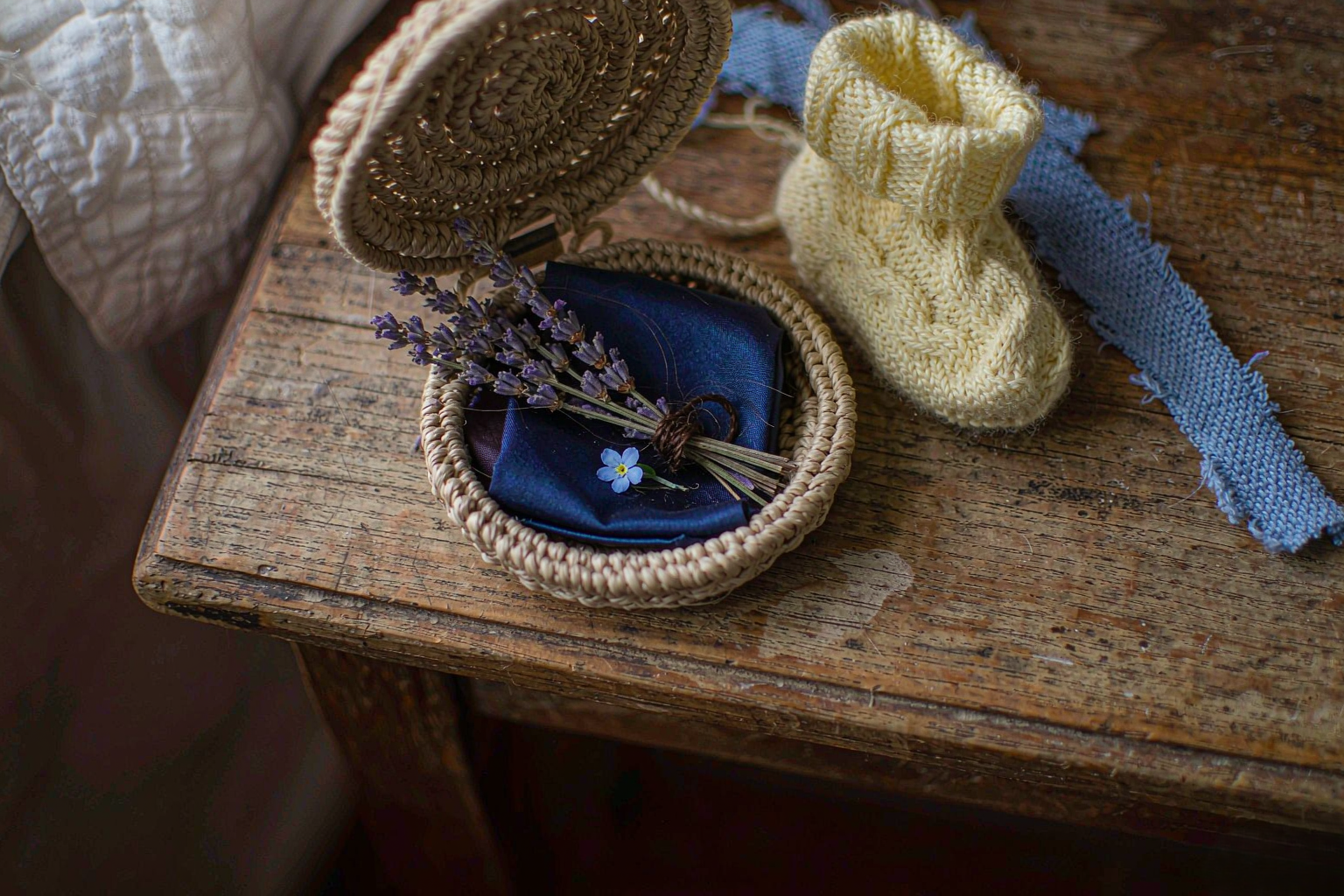
There is a drawer in almost every family home that holds almost nothing and means almost everything. A square of silk. A pressed flower between two sheets of paper. One small knitted sock that fit a foot that has long since grown past it. Nobody uses these things. Nobody throws them away either.
At TibetanTwist, we think about that drawer a lot. It is the reason our handwoven keepsake pendants open. Memory jewelry, for us, is not a pendant that reminds you of something. It is a pendant that holds something — a small, flat piece of the day itself.
The Drawer Every Family Has
Ours held a square of indigo silk, a sprig of lavender gone grey-green with dryness, two pressed peonies the color of early sunset, and a pair of cream knitted baby shoes no bigger than a fist. Every family’s version is different. The pattern is the same.
The drawer does not organize by value. The silk is not silk worth anything. The shoes are not rare. What sits in that drawer survived because of a decision someone made in a single moment: this, out of everything, I am keeping.
That moment is the most honest form of choosing we know. No list, no logic, no reason written down. A hand touches three things and lifts one. Years later the drawer opens and the choice still makes sense, in a way no explanation could match.
When we knot a keepsake pendant by hand — one at a time, waxed cord pulled tight and trimmed and pulled again — we are making the container for that kind of choice. We do not know what will go inside. We do not need to know. Our hands only prepare a small room for something a person already loves.
Why Small and Flat Things Survive
Look closely at any keepsake drawer and a pattern appears. The survivors are almost always small and almost always flat.
Silk squares. Ribbons. Pressed flowers. Ticket paper gone soft at the folds. A length of embroidered trim cut from a dress. Flat things slide between the years instead of breaking against them. They need no box, no shelf, no special care. They wait.
Ask anyone what they would rescue from that drawer and the answers rhyme. Not the gold watch. Not the documents. The silk, the paper, the petal. The flat and quiet things.
There is a second pattern hiding inside the first: flat things carry color better than anything else. A pressed peony holds its peony pink for decades in the dark. A scrap of festival silk keeps its indigo so deep you could dip a pen in it. Color is how a kept thing still speaks after the words around it are gone. Open the drawer and the palette of a whole afternoon comes back at once — the blue of that sky, the red of that paper lantern, the green of a garden path walked on small legs.
That is why our keepsake pendants are built the way they are. Inside each handwoven piece there is a small open space, sized for exactly the kind of thing drawers keep: a fold of fabric, a pressed petal, a slip of paper with handwriting on it. The woven exterior — in pine green, in monsoon sky blue, in whatever palette the piece carries — frames what you place inside the way a mat frames a picture.
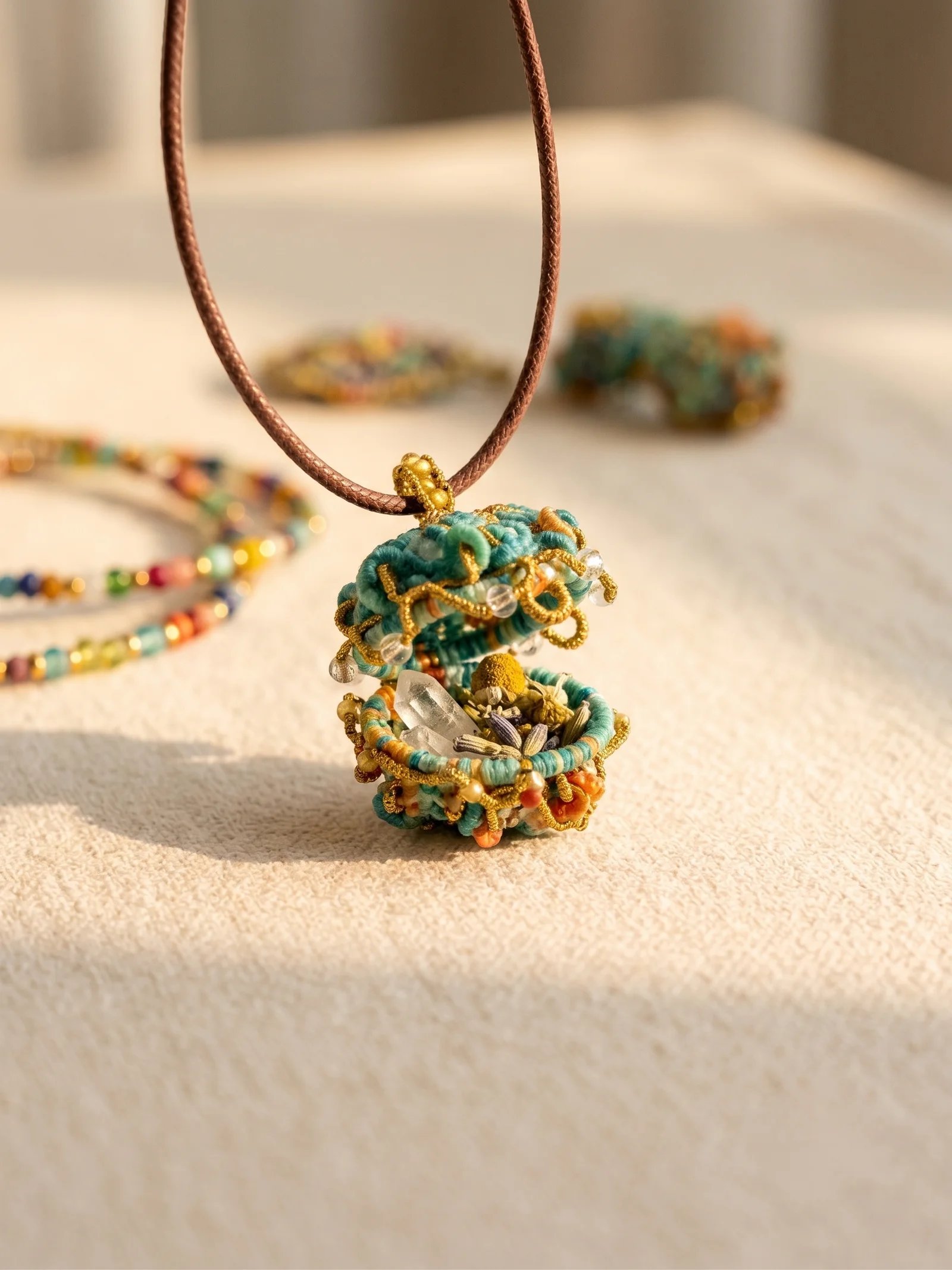
A Pendant That Opens, and a Hand That Fills It
Here is the part we care about most. We do not fill the pendant for you.
Every handwoven keepsake piece leaves our hands empty inside. That is deliberate. What goes in has to be your flat survivor — the square of silk from your own drawer, not ours. We could not choose it even if we tried, because memory jewelry made by a stranger is just a pendant. Memory jewelry finished by your own hands is a day you are wearing.
So the pieces in our keepsake collection are one of a kind twice over. First, no two woven the same — our hands knot each cord slightly differently, the way handwriting slants. Second, no two filled the same. Two people could buy the same handwoven pendant in the same oxblood and cream palette, and after an afternoon at the kitchen table with their drawers open, they are wearing two entirely different things.
We have heard what goes in. A strip of a grandmother’s apron. A petal from a wedding bouquet, pressed flat in a book for a year first. The paper band from a child’s first wristband at a fair. A thread pulled from a scarf someone wore every winter. None of it valuable. All of it irreplaceable.
And the filling changes how the piece is worn. A pendant that held a square of wedding silk gets worn on the day it marks. A pendant holding a scrap of a grandmother’s apron gets worn on ordinary days, the ones she would have been part of. The same woven piece, two lives.

How to Choose What Goes Inside
If you are holding a pendant of ours and facing your own drawer, here is how we suggest choosing. These are the same questions we ask ourselves.
One: palm rule. If it fits in a closed palm, it fits the pendant’s inner space. Bigger is not better. The things that survived your drawer already passed this test once.
Two: flat and dry. Fabric, paper, pressed botanicals — flat things sit well against the glass and stay legible for years. Anything thick fights the closure. If it is three-dimensional, cut or press a piece of it instead. You keep the survivor whole; the pendant carries its flat messenger.
Three: color test. Hold the piece against the woven palette of the pendant. If the colors belong to each other — a scrap of sky-blue silk inside a monsoon-blue weave, a dried lavender sprig against grey-green cord — the whole piece reads as one memory. If they clash, do not force it. That is a sign the item belongs to a different day, and maybe to a different pendant.
Four: one thing. The drawer is a drawer because it holds many. The pendant is a pendant because it holds one. Choose the single piece your hand lifted first — that first instinct is the same honest choice that filled the drawer years ago.
When you are ready, browse our handwoven keepsake pendants and choose from the existing collections — the lotus keepsake pendant with its layered petals, the classic keepsake nest in woven earth tones, or a handwoven bracelet in river blue and white if your memory fits better around a wrist than at a collarbone. Every piece is made by hand, one at a time, and every piece leaves the filling to you. You can see the whole series in our keepsake and memory collection.
The drawer will always be there. But one small flat thing, sealed inside a pendant you wove your mornings around, stops waiting in the dark. It travels. It shows. It turns a memory into something you can touch on a Tuesday.
Nature, woven by hand. Color, woven into stories.
If this made you think of your own drawer, subscribe to our newsletter — one letter a week, on color, knots, and the small things worth keeping. Take your time with it. Nothing in the drawer is in a hurry, and neither are you.
