 Skip to content
✨ New Year Offer: Up to 20% off ·
Begin 2026 with something handmade ✨
✨ New Year Offer: Up to 20% off ·
Begin 2026 with something handmade ✨

Caring for Handwoven Jewelry Through the Seasons

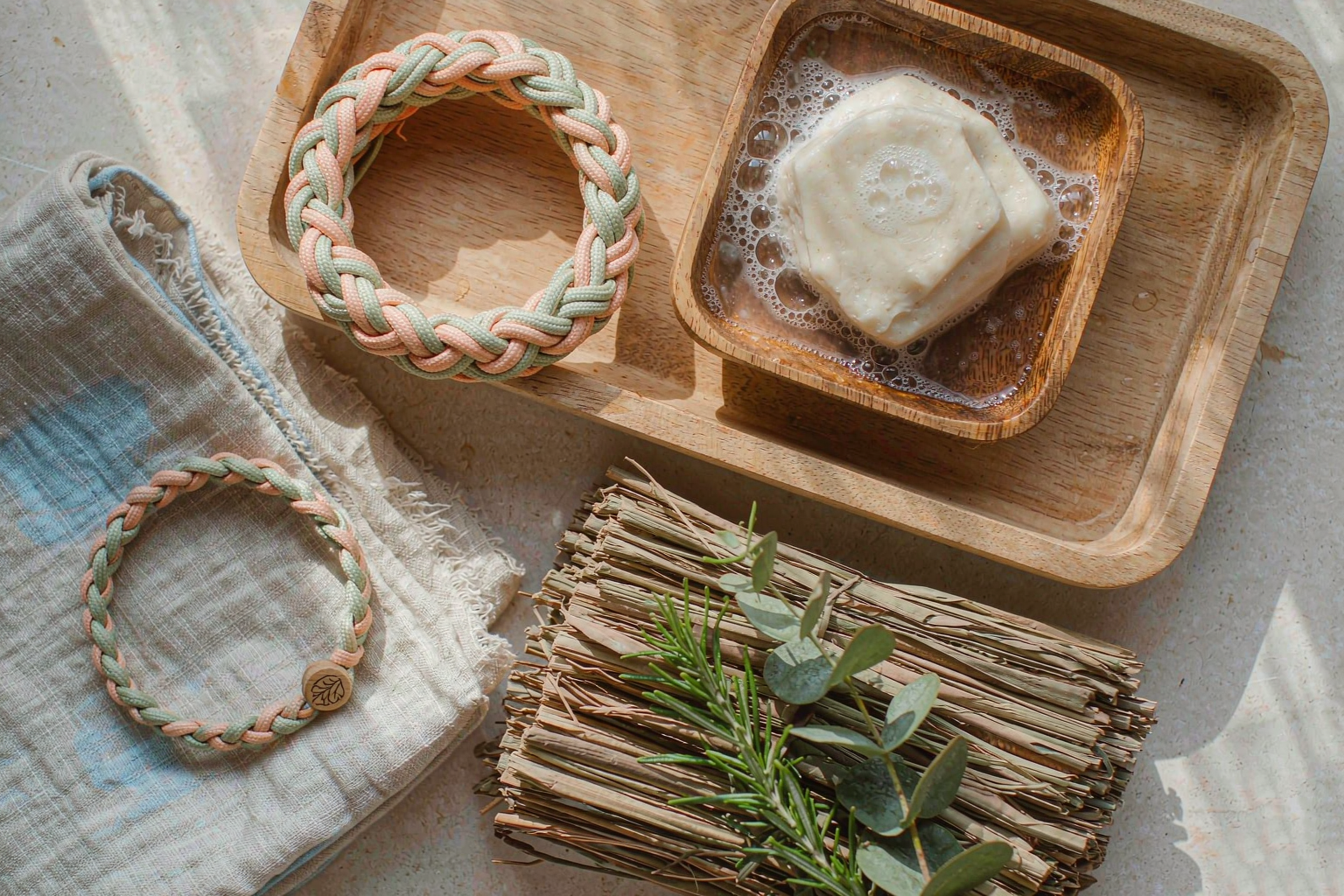
A handwoven bracelet does not live in a display case. It lives on a wrist — through summer sweat and sudden rain, through dry winter rooms and long days outdoors. Waxed cotton cord is a forgiving material, but it is still a natural one, and the weather it meets changes how it ages. Caring for handwoven jewelry is not one fixed routine; it is a rhythm that shifts with the seasons. Here is the year as I live it in the studio, season by season, with the small habits that keep a piece of waxed cord jewelry looking and feeling right for years.
Summer: Salt, Sunlight, and Long Days Outdoors
Summer is the season a handwoven bracelet earns its keep. It also asks the most of the cord. Sweat carries salt, and salt sits in the twist of the thread, dulling the surface a little at a time. Days at the beach add salt spray and fine sand, which settles wherever two knots meet.
My summer habit is simple: a fresh-water rinse after heavy wear, then a full day of drying somewhere airy and shaded. Lay the piece flat on a cotton cloth — never on a radiator, never in direct sun on a windowsill. Direct sun is the one thing I guard against most, because hours of it will pale even a well-dyed cord. Peony pink softens first; deep oxblood holds longest. If you own a pale palette piece, give it the shaded side of the tray.
A quick rinse does no harm to a properly waxed cord — the wax coating sheds water — but leaving a damp piece balled up in a beach bag does. Air is what the cord needs after water. If the bracelet went into the sea, rinse it; if it only met sunscreened wrists, a barely damp wipe is enough.
The Rainy Months: Humidity Is the Quiet Test
Where I live, the rains arrive with their own calendar, and the cord notices before I do. Humidity does not ruin waxed cotton, but it changes its feel: the knots grow slightly softer, the cord a touch heavier, the wax a little tacky. Left damp in a closed drawer, a piece can develop a flat, musty smell that no quick wash removes.
The habit that matters most in wet months is airflow. I store finished pieces in an open tray, not a sealed box, with space between them so air can move through the knots. If a bracelet comes in from a downpour, I pat it dry with a cloth, open the loop gently, and let it sit out overnight rather than hanging it from a hook — hanging a wet cord stretches the loop over time.
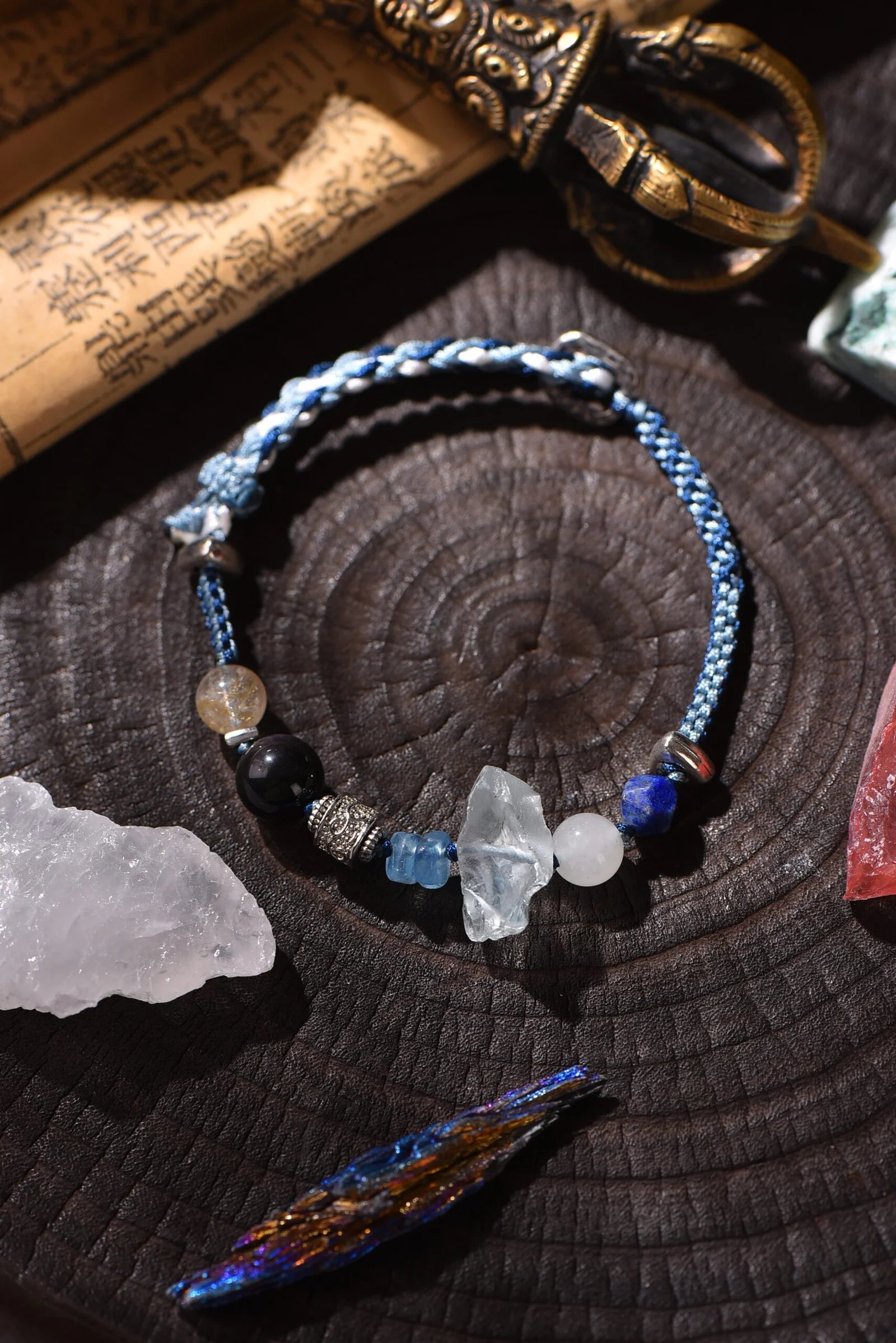
This is also the season I re-check the knots. Damp fibers swell, and a knot tied very tight may set differently as it dries. Nothing needs redoing; I simply press each knot flat between thumb and finger while the cord is dry, and it settles back into shape. Our blue-and-white handwoven bracelet lives on my own wrist through most of the rainy season, and two years of monsoons have left it softer in the hand and no less vivid.
Winter: Dry Air, Dark Days, and the Wax Layer
Winter works in the opposite direction. Heated rooms pull moisture out of everything, cotton included, and a cord that spent autumn slightly damp can turn dry, light, and a little stiff by January. The wax coating is the material’s own answer to this: it holds what moisture the fiber has and keeps the surface supple.
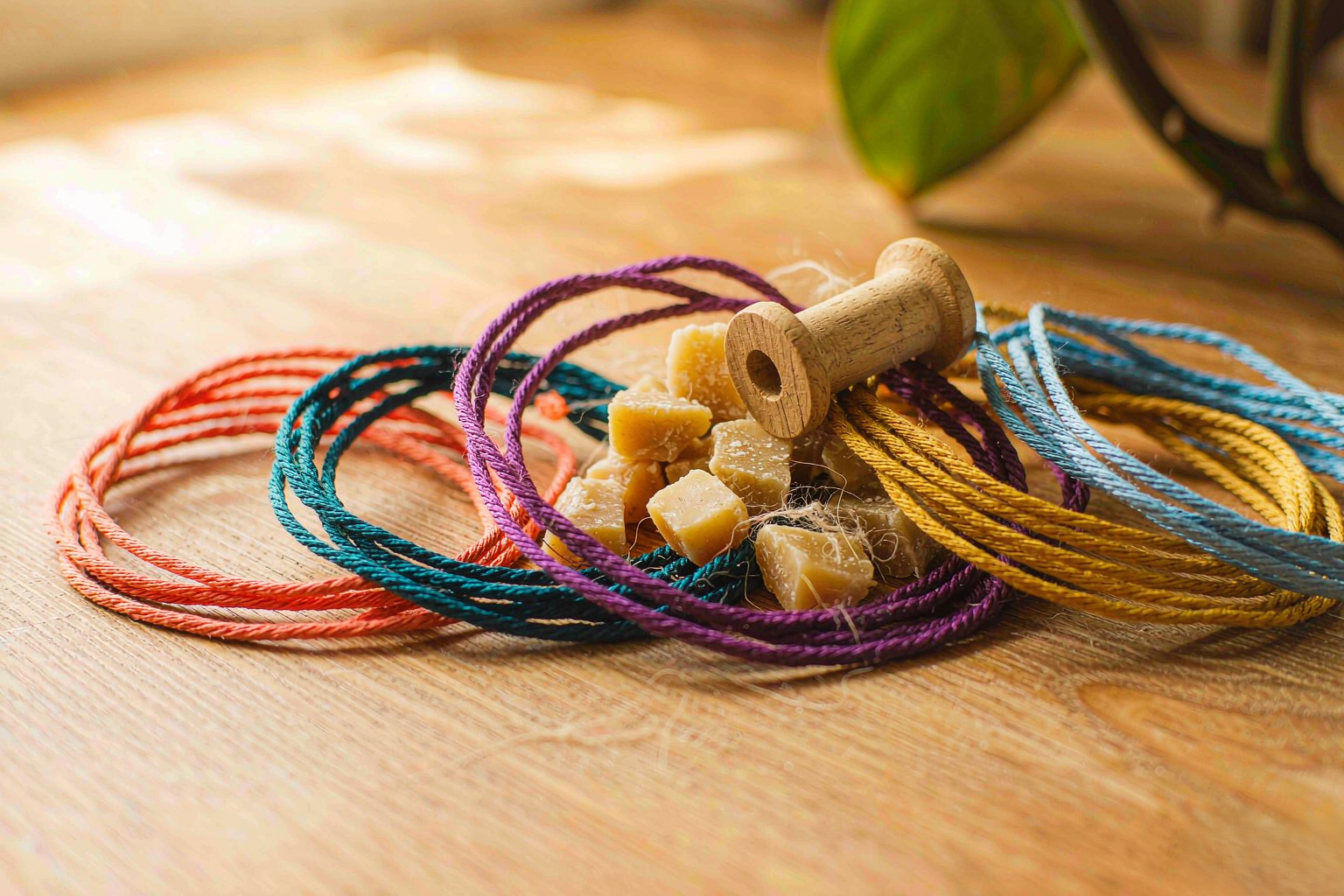
When the cord starts to look matte and feel dry, that is the signal to re-wax. I rub a small amount of beeswax along the cord with my fingertips, working it into the twist, then buff with a soft cloth until the surface turns from chalky to quietly lustrous. Ten minutes, once or twice a winter, and the piece is ready for another year. The wax goes on thin — the goal is a fed cord, not a glossy one.
Winter is also the season of sweaters and coat linings, which means pilling fibers and snagged threads. A snag is not a flaw. I never cut one; I ease the loop back through the weave with a needle tip, working from the surface until the thread sits flush again. Cutting leaves a weak point that no knot can fully hide.
How to Style, Store, and Choose a Piece That Travels With You
The last habit is the one you make on the day you pick a piece. Some cords and colors suit a full-time, year-round life better than others. A deep palette — pine green, oxblood, indigo, earth brown — hides the honest marks of daily wear and keeps its depth through sun and rain. Our pine-green-and-brown handwoven bracelet and our deep-blue-and-gold handwoven bracelet are both pieces I would hand to someone who never takes their jewelry off. A paler palette is just as lovely; it simply asks for the shaded tray and the beach bag in summer.
Travel folds every season into a single bag, so it deserves its own note. A handwoven bracelet is an ideal travel piece — it weighs nothing, never sets off a security scanner, and pairs with everything you packed — but luggage is hard on cord. Zippered compartments press knots flat against rough linings, and a week inside a closed pouch traps whatever humidity the bag picked up along the way. I loop my pieces around the strap inside the bag, or slip them into a small cloth pouch with the drawstring left loose. Air moves, knots keep their shape, and the piece arrives looking the way it left.
Storage, through every season, follows three rules. Open air, not sealed plastic. Flat or gently coiled, not hung tight. Away from direct sun and away from the radiator. A wooden tray on a shelf does more for a handwoven piece than any product ever will.
If you are choosing your first piece, browse our blue-and-white handwoven bracelet for a light, open palette, the pine-green-and-brown handwoven bracelet for an earthy, all-season tone, or the deep-blue-and-gold handwoven bracelet for a piece that loves long days outdoors. Every piece is knotted by hand, one at a time, and no two are alike. Pick the one that looks like your kind of year, and the care habits above will carry it a long way.
You can read more guides like this in our care and buying guide, or browse the full range in our handwoven bracelet collection. And if you would like a short note when something new leaves the worktable, join our mailing list below.
Nature, woven by hand. Color, woven into stories.
