 Skip to content
✨ New Year Offer: Up to 20% off ·
Begin 2026 with something handmade ✨
✨ New Year Offer: Up to 20% off ·
Begin 2026 with something handmade ✨

Two Handwoven Bracelets, Side by Side | TibetanTwist

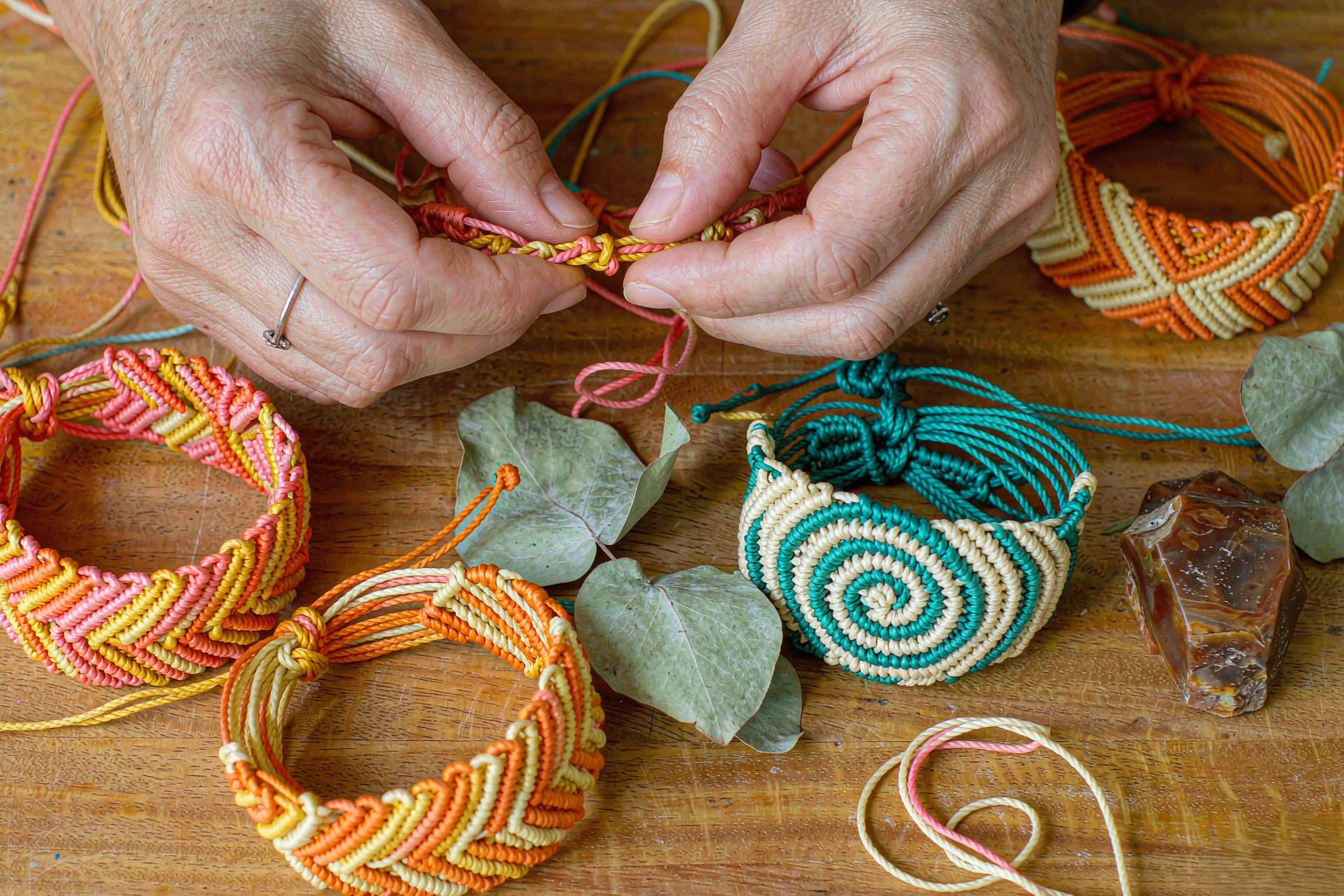
Two bracelets came off the bench this morning from the same plan, the same spools, the same knot family. Before they went anywhere, we laid them side by side on the packing table and set a steel ruler across both. This is a habit we never dropped, and this morning it reminded us, again, why no two handwoven pieces ever come out alike.
The ruler is not there to catch mistakes. It is there to read the day. And every time we do this small ritual, the two “identical” bracelets tell us exactly where the differences live.
The Ruler Doesn’t Lie
This morning’s pair: two single-strand bracelets in terracotta, cream and earth brown, knotted from the same spool rack within two days of each other. Side by side on pale wood, they agree at a glance. Same palette. Same rhythm. Then the details start to part ways.
One measures two millimeters longer. One carries a single extra knot before the color hands over from cream to brown, so the handover point sits a hair higher on the strand. The beads disagree too: one bracelet’s center bead runs a fine grey vein, the other a wider band of rust. Neither is wrong. Neither is a defect. Each is simply a record of the hour it was made — who was at the bench, how humid the room was, whether the session was a long patient morning or a brisk hour before dinner.
We could hide these differences. A factory would, because a factory’s promise is repetition. Our promise is the opposite: the piece you receive is the one that came off the bench, exactly as it came. So we leave the two millimeters in.
The table itself keeps the ritual honest. It is old enough that the grain has worn into shallow channels where cord ends have rested for years, and morning light from the east window falls across both strands at the same angle. That angle matters. Laid flat under even light, two bracelets will show you things that one bracelet held alone never will — where the sheen pools, where a knot leans a fraction, where one maker’s pull ran firmer than another’s. A single piece always looks finished. Two of the same design, side by side, look like two days.
A Word from the Workshop: Tolerance
There is a word for all of this, borrowed from the machine shop: tolerance. Engineers define it as the amount a measurement is allowed to drift before a part stops being acceptable. A precision-machined steel part might carry a tolerance of plus or minus a hundredth of a millimeter. Inside that band, every part is identical for every purpose. Outside it, the part is scrapped.
Handwork runs on a different kind of tolerance. Ours is not written as a number; it lives in the hands. Fingers learn how tight a knot should feel, how far a pattern may wander before the eye objects, how much a color may lean before the palette breaks. Within that band, variation is not just allowed — it is information. A knot tied on a damp morning sits differently in the cord than one tied in dry heat, because waxed fiber grips differently depending on the air. The drift is not noise. It is the day, recorded in fiber.
If you asked us to write our tolerance down, it would read less like a drawing and more like three questions. Does the strand lie flat on the table? Does the color hand over where the plan says it should, give or take a knot? Would we be glad to wear this one ourselves? A piece that answers all three is not “close enough.” It is done. The space between two pieces that both pass is exactly the space where personality lives — tighter this hour, softer the next — and we have never wanted to close that space, because closing it is what machines are for.
Here is the quiet consequence: a machine’s tolerance band is designed to make ten thousand parts interchangeable. A maker’s tolerance band does the reverse. Because no two sessions ever repeat — not the weather, not the light on the bench, not the pace of the hands — nothing inside the band ever lands in exactly the same place twice. Wide, honest tolerance is precisely why handwoven work is one of a kind, and why the phrase “no two alike” is not a marketing line. It is arithmetic.
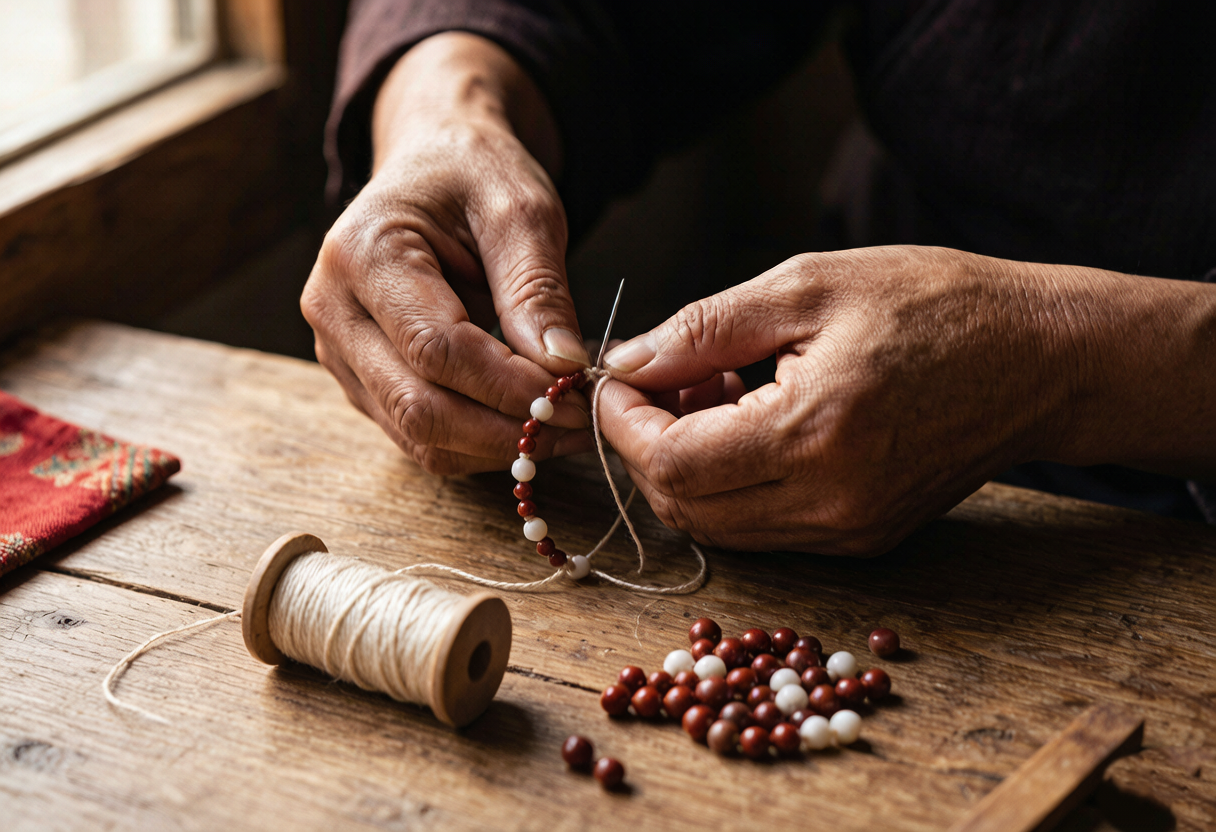
Nature Works Without a Ruler
The materials push the differences further. Waxed cord arrives in small dye lots, and every lot leans its own way — one batch of cream dries warm, almost buttery; the next runs cooler, closer to shell. We plan around the lot in front of us rather than the label on the spool.
And the stones have never read a ruler in their lives. Tiger’s eye carries bands of gold that formed mineral by mineral, over spans no workshop can imitate. Hold two beads from the same strand to the window and their internal maps never match: one flashes in a broad sweep, the other breaks the light into narrow ripples. When we set them along a strand — as in our deep-blue-and-gold handwoven bracelet with golden tiger’s eye — we are arranging two unrepeatable landscapes side by side, the same way this morning’s two bracelets sat on the table.
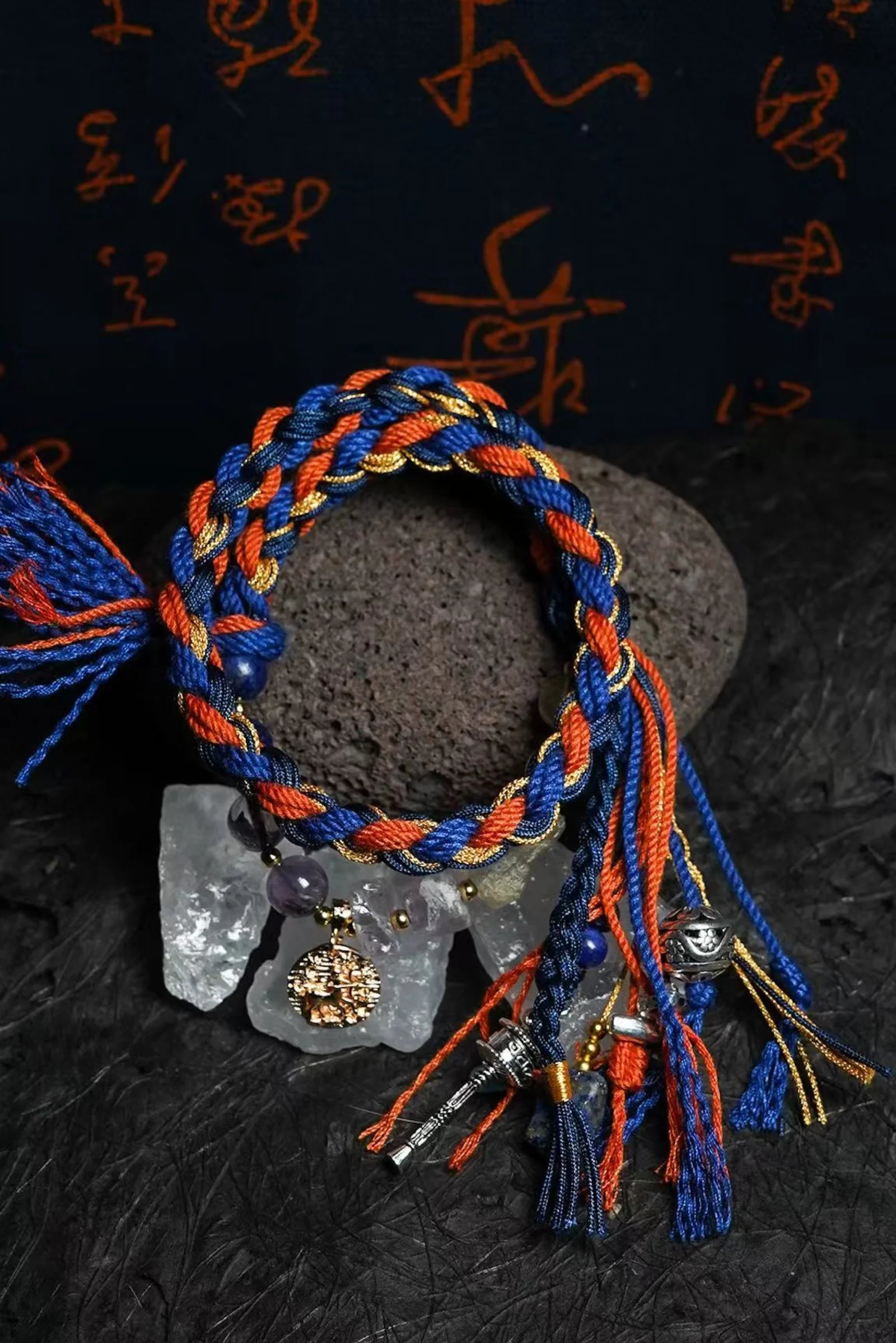
So the side-by-side ritual ends the same way every time: the ruler goes back in the drawer, and both bracelets go into their boxes as they are. The differences stay. Somebody, somewhere, will wear a piece that exists exactly once, and the two millimeters and the rust-veined bead will quietly belong to them alone.
Take a Pair Home
If you would like to run the side-by-side test yourself, everything in our shop is already knotted, photographed, and waiting — you choose from the existing collection, and the piece on the page is the exact piece that ships.
Start with the warm end of the shelf: our terracotta, cream and earth-brown single-strand bracelet carries the same palette as this morning’s pair, and no other strand hands its colors over in quite the same place.
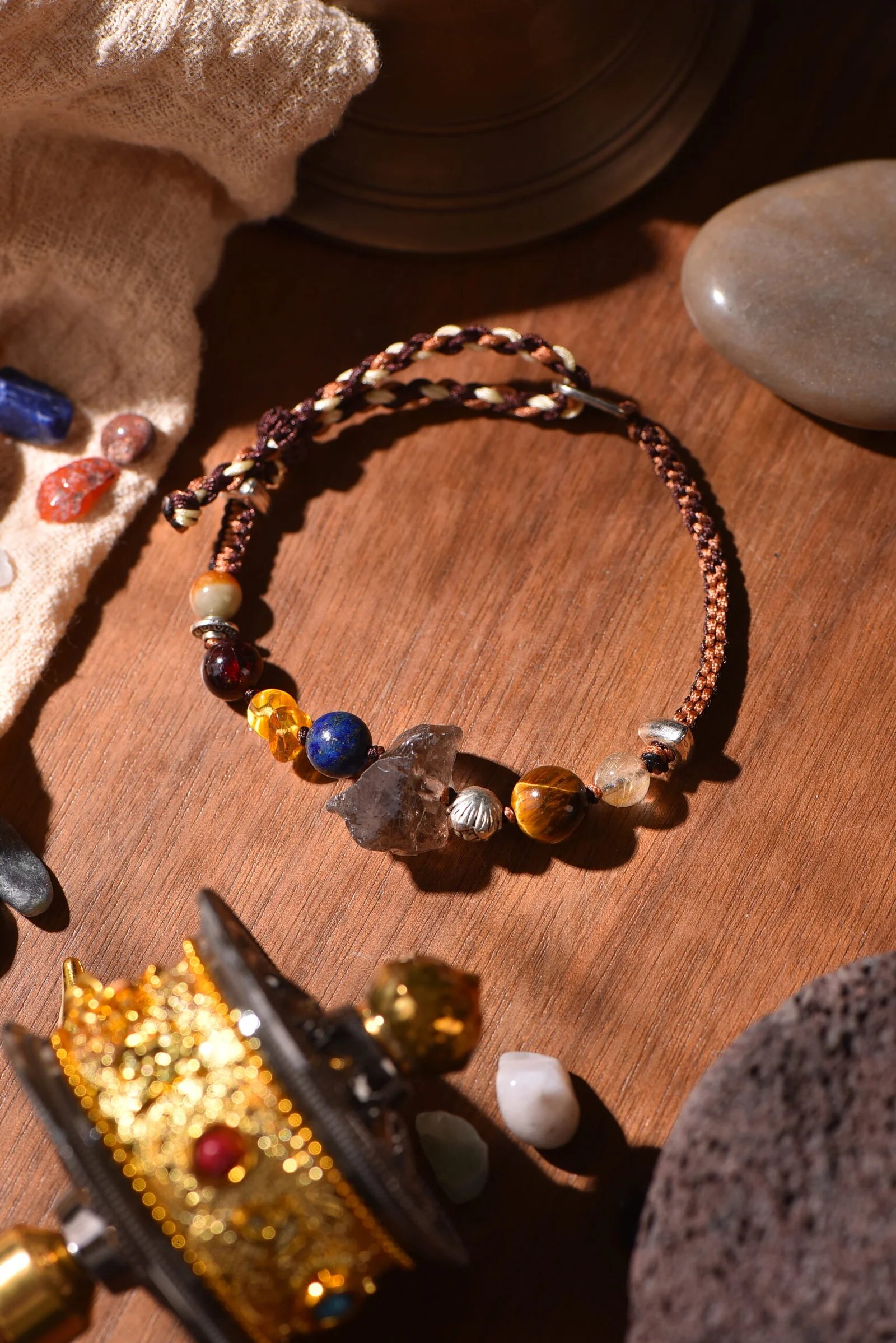
For something cooler and brighter, the white-and-gold single-strand bracelet sets pale cord against warm citrine — two tones that meet differently on every strand we knot.
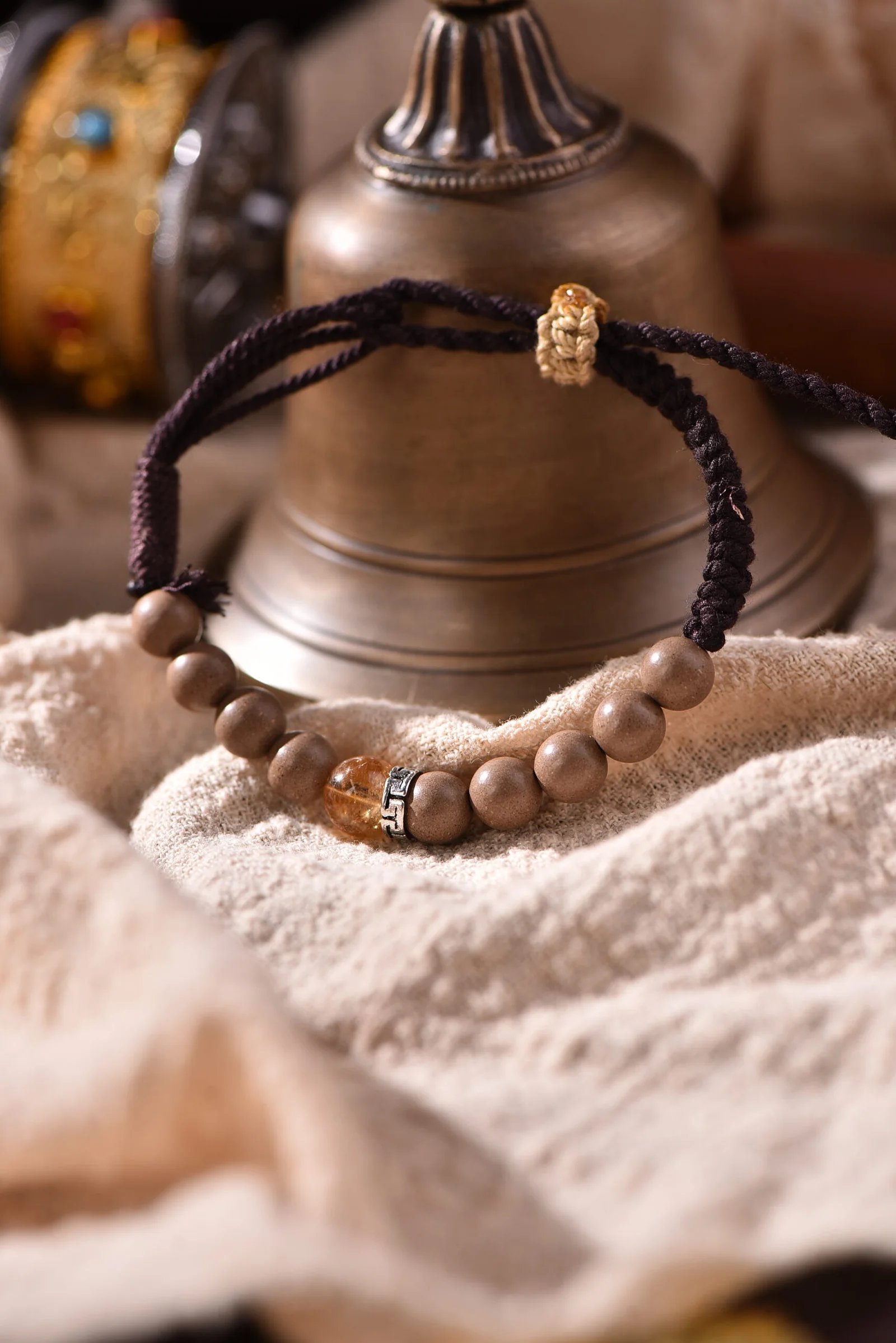
Or browse the full handwoven bracelet collection and pick the palette that matches your own weather. More bench notes like this one live in our Craft & Process journal.
Nature, woven by hand. Color, woven into stories.
Want a first look at new palettes? Join our email list — one short note when a new batch leaves the bench. No noise, just knots.
