 Skip to content
✨ New Year Offer: Up to 20% off ·
Begin 2026 with something handmade ✨
✨ New Year Offer: Up to 20% off ·
Begin 2026 with something handmade ✨

Five Elements Jewelry: Five Palettes, One Day | TibetanTwist

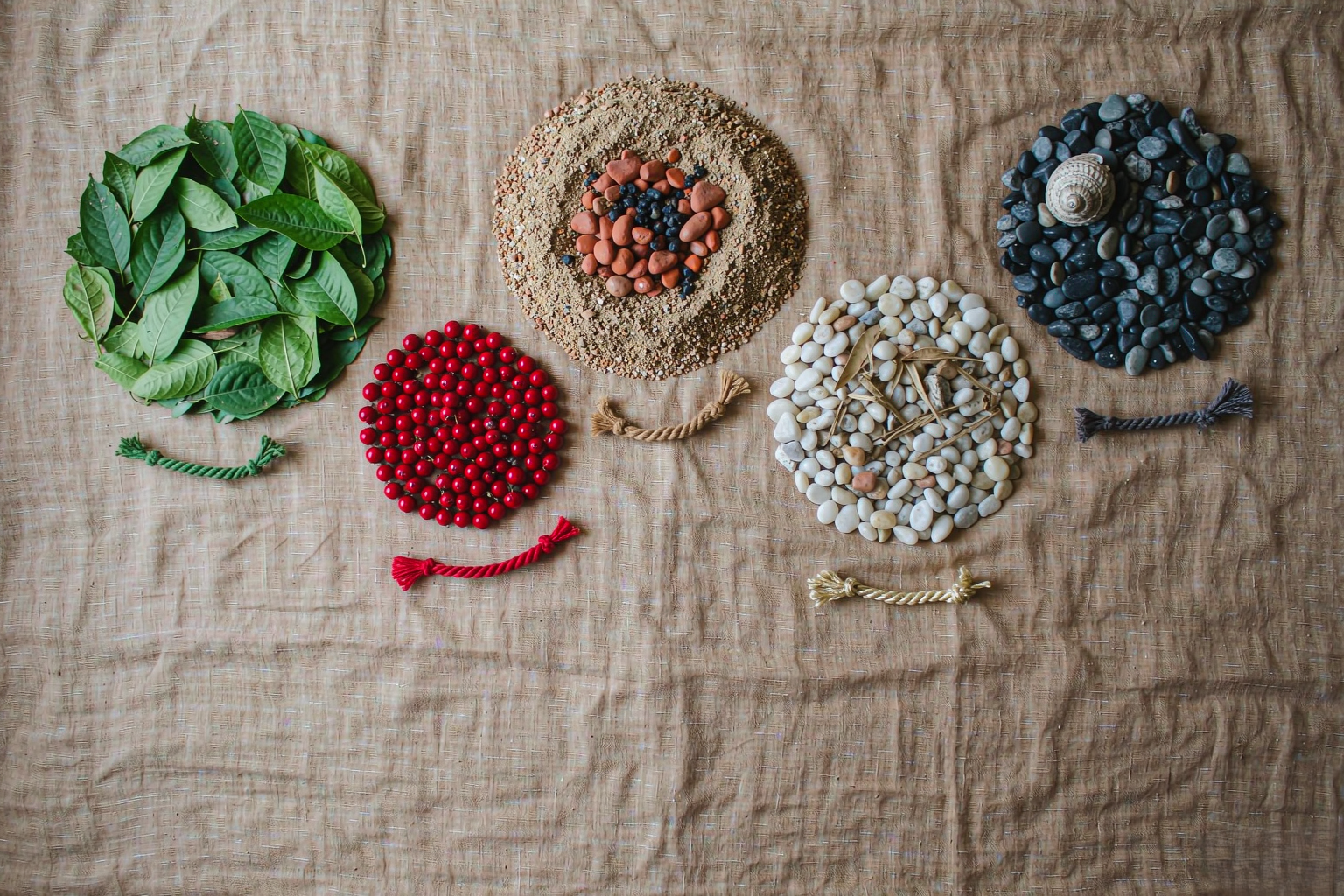
You do not need a mountain valley to meet all five palettes. You need one ordinary day at home. The pale gold of morning coffee, the green of the plant on the sill, the red of jam in a white bowl, the terracotta of a well-used mug, the blue of the hour when the lamps go on. Wood, fire, earth, metal, water — we did not find them on a chart. We found them in a kitchen.
Five Elements Jewelry Begins at the Kitchen Table
People sometimes expect Five Elements jewelry to arrive with rules. A birth chart, a quiz, a verdict. We have never worked that way, because the five elements were never rules in the first place. They were names for things people saw every day: growth, flame, soil, glint, current. The system is old, but the observation is domestic. Anyone who has made breakfast has watched all five move through a single room.
That is how we ask you to read the palettes — not as five personalities to choose between, but as five hours of one day, each with its own color. When a palette matches an hour you already love, the piece never feels like a costume. It feels like the day itself, tied in waxed cord and worn on the wrist.
So walk through a day with us. Nothing special happens in it. That is the point.
Morning Belongs to Metal and Wood
The first light of the day is thin and pale, and the first things it touches go gold. Coffee in a white cup, the edge of a spoon, the rim of a window frame. This is our metal palette: pale gold and white, with one strand of warm brown to keep it from floating away. Metal is the quietest of the five and the easiest to live with — the color of cutlery and early light rather than of anything showy. Our handwoven bracelet in pale gold, white and earth brown is the piece for people who say they never wear color, because metal is not really a color. It is a light.
Wood comes an hour later, once the sun clears the buildings and lands on leaves. The plant on the sill, the stems in a jar, the green shadow a glass of water throws on the wall. Our wood palette knots forest green against bark brown, and the pairing matters: two greens side by side read as mud, but a green with a brown next to it reads as a branch. If your mornings are spent near plants and windows, wood is already your hour.
Midday Turns to Fire, Then to Earth
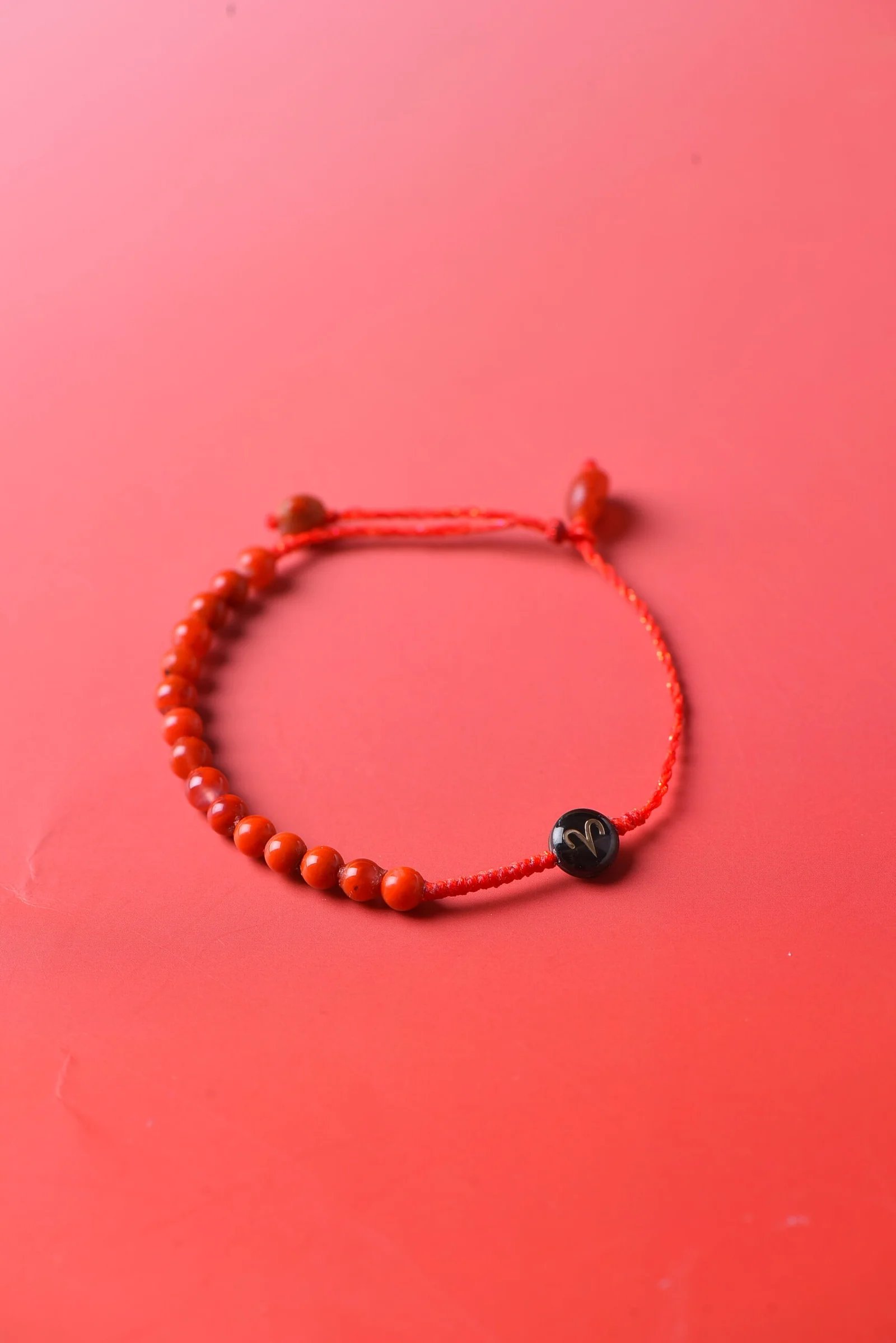
By noon the light has weight. This is when red appears, usually in the smallest things on the table — jam in a white bowl, a tomato split on the cutting board, a jar of chili oil on the shelf. Our fire palette borrows that exact red: a deep ember shade set against cream, so it burns quietly instead of shouting. Fire is the most outgoing of the five, and like noon itself it does not last long at full volume. Worn at midday it reads bright and quick; under evening bulbs it settles into something slower, like coals after the flame.
Then the afternoon eases, and red gives way to the color under the color: terracotta. A clay mug that has been in use for years. Baked earth in a flowerpot. The worn edge of a wooden board. Our earth palette — terracotta, cream, and soft brown — is fire after it has settled into the ground, and it is the steadiest thing we make. Our handwoven bracelet in terracotta, cream and earth brown sits as easily against denim as against linen, and it does not argue with anything else on the wrist.
Dusk Is Water
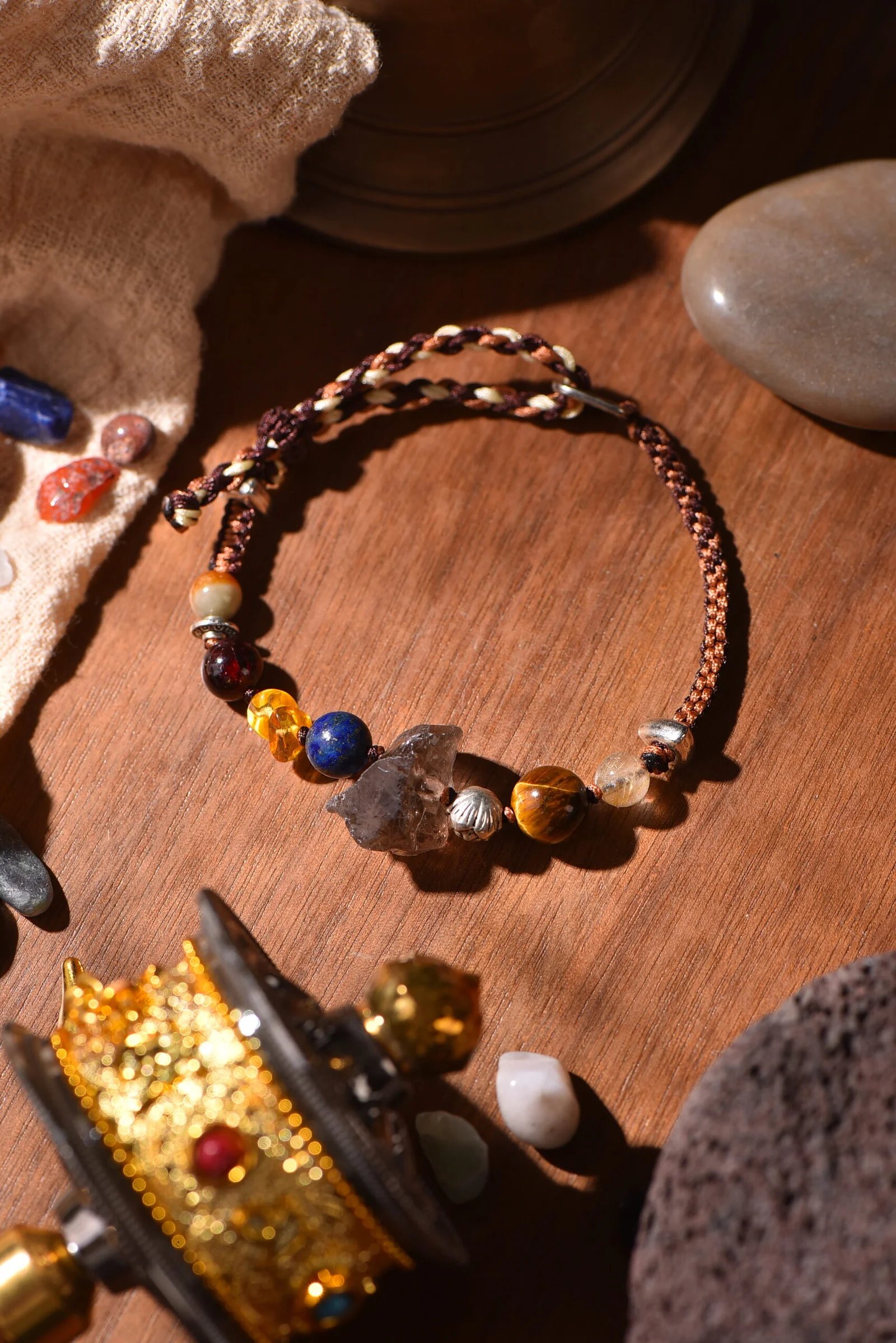
The last palette arrives with the lamps. Somewhere between the end of daylight and the first light you switch on yourself, the whole room goes blue for a few minutes — the window, the water in the sink, the sky through the glass holding its color after the sun has gone. That is water, and it is the quietest hour we knot: river blue laid over white, the white holding a little brightness back the way foam does.
Our handwoven bracelet in river blue and white is the piece for that hour. The blue reads deeper as the day dims, which is why water palettes reward evening wear more than any other. Worn alone it is still water. Stacked beside wood greens or earth browns, it becomes the river running through the whole day.
How to Find Your Palette in Your Own Day
If the valley method asks too much, try the kitchen-table method. It takes one ordinary day and a little attention.
Notice the hour you slow down. Not the hour you are busiest — the one you would keep if you could keep only one. That hour has a palette. Early light and gold spoons are metal. Plants and windows are wood. Noon and its reds are fire. The worn clay of afternoon is earth. The lamp-lit blue before bed is water.
Check your hands, not your wardrobe. The colors you reach for without thinking — the mug, the teacup, the notebook cover — are a more honest answer than the clothes you own. Most people already live inside one palette and never named it.
Wear the palette of the hour you love. The piece will meet you at the time of day you actually live in, which is why it gets worn and not shelved. A bracelet that matches your favorite hour becomes part of the routine, and waxed cord only improves with that kind of repetition.
One palette to start, never five at once. Pick the single palette that matches your day and wear it alone for a few weeks. If you layer later, add one neighbor palette — metal with wood, earth with fire, water beside almost anything — and keep the rest for another season.
When you are ready to look, the full set of five lives in our Five Elements color stories, and every piece in the woven range sits in our bracelets collection. Each one is knotted by hand, one at a time, and no two are alike.
A day holds all five palettes. You only wear one at a time — so choose the hour you would live in twice.
*Nature, woven by hand. Color, woven into stories.*
If you like reading color this way, subscribe to our newsletter — one letter a week on palettes, knots, and the small hours that hold the whole day.
