 Skip to content
✨ New Year Offer: Up to 20% off ·
Begin 2026 with something handmade ✨
✨ New Year Offer: Up to 20% off ·
Begin 2026 with something handmade ✨

Handwoven Jewelry: The Time Hidden in One Bracelet | TibetanTwist

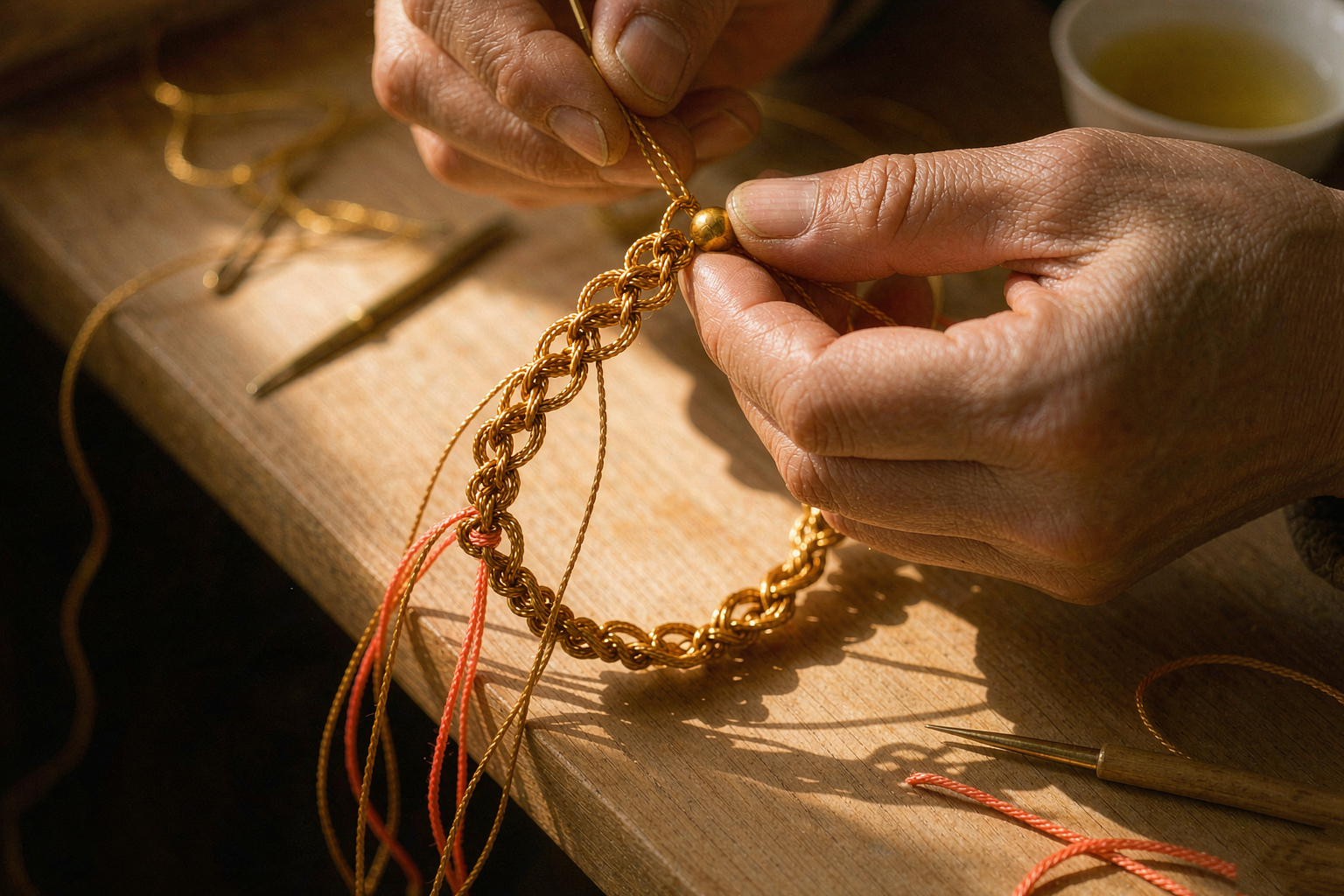
People often ask us how long it takes to knot one bracelet. The honest answer is: a few quiet hours at the table, plus all the mornings that came before. At TibetanTwist, every handwoven bracelet is slow-made, one knot at a time, because speed would undo the thing we are trying to build. The real timeline is not just the knotting. It is the color search, the cord prep, the weather check, and the small decision made by the fingers before the thread ever moves.
Why the Clock Does Not Tell the Whole Story
A stopwatch can measure the hours we spend at the bench, but it cannot measure the years our hands have spent learning to read tension. Machine-made jewelry is counted in seconds per piece. Our handwoven jewelry is counted in gestures: the way the left hand holds the cord steady while the right hand crosses the working end under, then through, then pulls the loop to the exact same size as the one before it.
That repetition is not waste. It is the only way to make something that still looks alive after it is finished. Each knot carries the pressure of that morning. If the air is dry, the waxed cord tightens differently. If the light is gray, the peony pink thread reads cooler than it did yesterday. We slow down to account for those changes instead of forcing the thread to lie.
The bracelet you receive is not just the visible rows. It is also the rejected color pairings, the re-cut length that was two centimeters too short, and the moment we stopped to look at the piece in true daylight before deciding it was ready. That hidden time is what makes handwoven jewelry feel like it was made for a real wrist, not a conveyor belt.
The Three Invisible Stages Before the First Knot
Most of the work happens before knot one. We think of it as three quiet stages that turn raw cord into a wearable palette.
First, color matching. We do not choose colors from a screen. We walk outside with thread samples and hold them against pine bark, river stones, late-summer marigolds, and monsoon sky blue. A palette only enters our collection after it has been seen in real light. That search can take days, sometimes weeks, until the thread and the natural source finally agree.
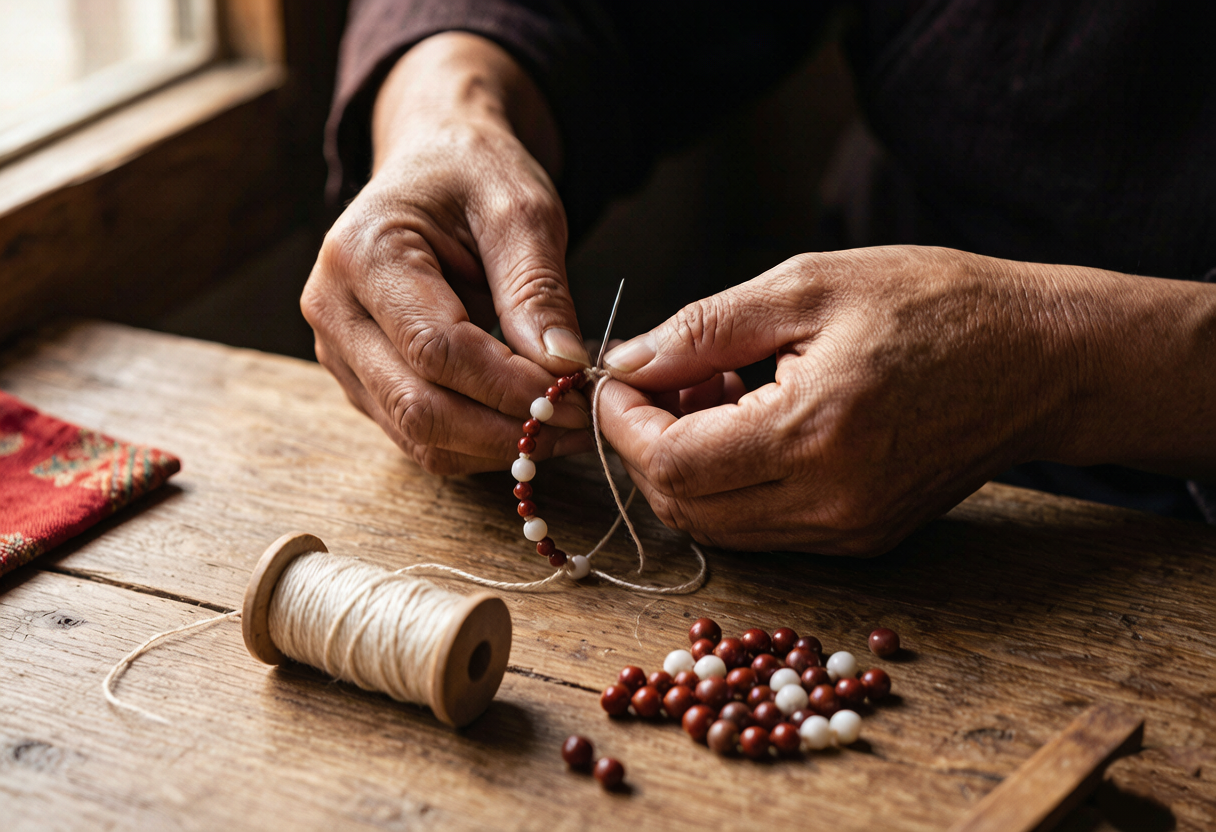
Second, cord preparation. Waxed cord arrives on spools, but it does not arrive ready to knot. We measure each length against a wooden ruler, check the wax coating for evenness, and feel the cord between thumb and finger for stiffness. A section that is too stiff will fight the knot. A section that is too soft will sag. We sort the good lengths from the hesitant ones before the first loop is formed.
Third, pattern memory. The design does not live on paper. It lives in the hands. We knot the first few rows slowly, checking spacing with the eye, adjusting tension by touch, and letting the pattern settle into a rhythm. Once the rhythm is true, the rest follows. Until then, we pause, undo, and begin again. That early repetition is not failure. It is the pattern teaching itself to the fingers.
What the Knots Remember
Every finished bracelet is a small record of its making. If you look closely at the knots, you can read the day they were made. A loop that sits a fraction tighter than its neighbors might mark a moment when the cord was cold from the morning air. A color transition that lands slightly off-center might record the pause when we looked up to watch rain hit the window. These are not flaws. They are the handwriting of the hand.
This is why we say no two pieces are exactly alike. The same pattern, knotted on two different mornings, will carry two different moods. The thread is the same. The hands are the same. But the light, the temperature, and the pace of the day are never the same twice. That variation is the point of slow-made work. It is what separates a handwoven bracelet from a perfectly identical copy.
We do not try to erase those marks. We build them into the design. The spacing, the tension, the slight color shift from one row to the next — all of it is part of the story. When you wear the piece, you are wearing a specific hour of a specific day, captured in waxed cord and knots.
Which One Will You Wear First?
If you are drawn to the idea of handwoven jewelry, the next step is simple: choose a piece that already exists in our collection and let it become part of your own timeline. You do not need to send a story or request a special order. Every bracelet in our studio is finished and waiting for the wrist it belongs to.
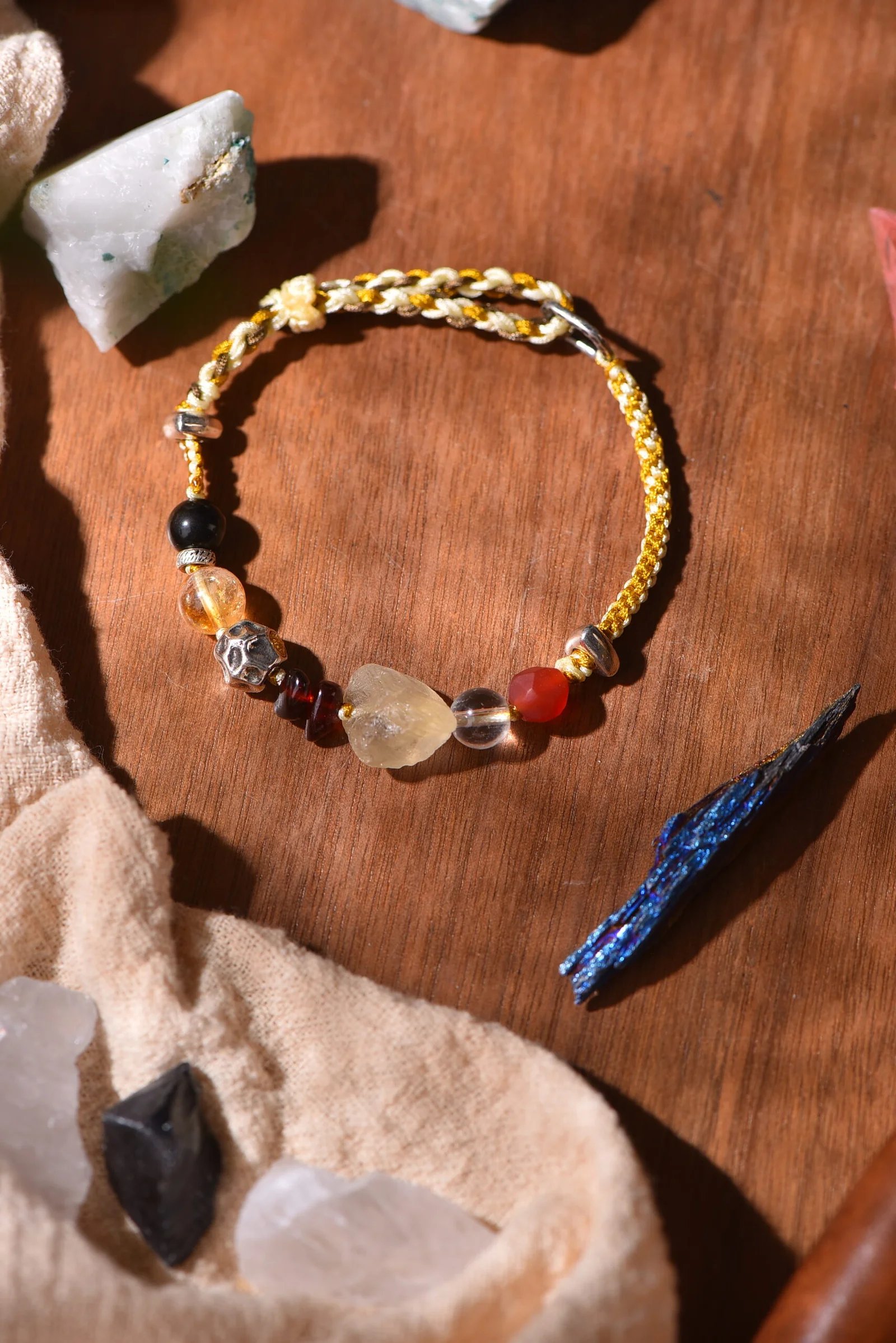
Start with our Five Elements Metal single-strand bracelet in gold, cream, and earth brown — a quiet knot study in warm metal tones. If you prefer something grounded, our Five Elements Earth single-strand bracelet carries terracotta, cream, and clay brown in the same slow-knotted structure. For a two-tone option, the Heartbound dual-tone infinity-knot bracelet in monsoon sky blue and indigo shows how two palettes can meet at a single knot.
Browse more slow-made pieces in our Craft & Process collection and find the bracelet that matches your own daily rhythm.
Nature, woven by hand. Color, woven into stories.
Want early access to new palettes and studio notes? Join our newsletter below and we will write to you when a fresh batch of handwoven jewelry leaves the table.
