 Skip to content
✨ New Year Offer: Up to 20% off ·
Begin 2026 with something handmade ✨
✨ New Year Offer: Up to 20% off ·
Begin 2026 with something handmade ✨

Handmade Jewelry: Where Your Order Goes After Checkout | TibetanTwist

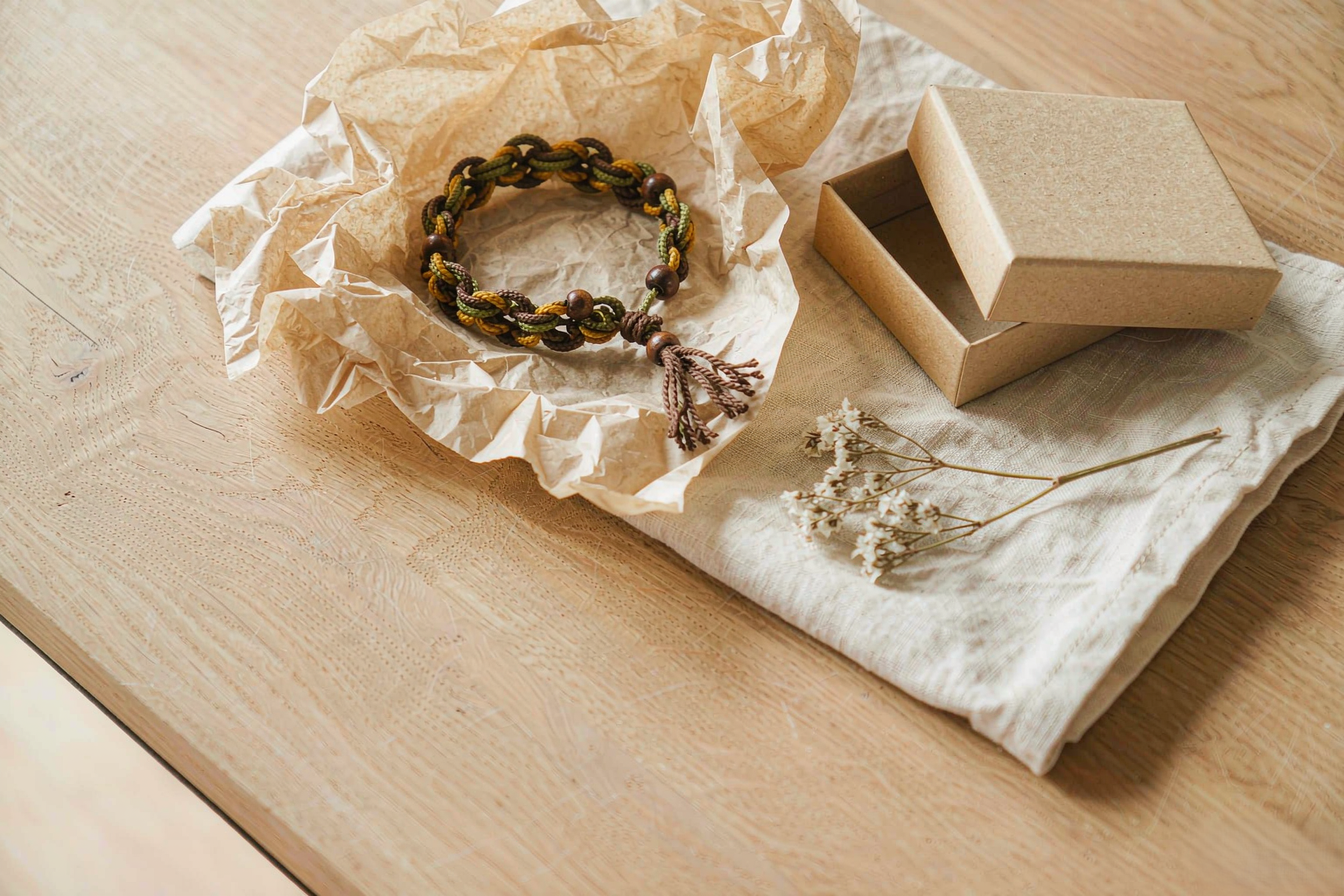
There is a moment, right after a checkout chime, when nothing looks different in our studio. The spools stay where they are. The morning light still crosses the same table. But somewhere on that table, one piece of handwoven jewelry is no longer just a piece — it has a name on a slip of paper beside it.
People sometimes ask what happens after they place an order. The honest answer is: not very much, and then quite a lot. Not much, because every piece is finished before you ever see it — made by hand, one at a time, from our existing collections. Quite a lot, because between the shelf and your mailbox, each piece passes through a small set of checks and rituals that we have built over our first year, and we do every one of them with our hands.
Here is the journey your order takes.
The First Morning: Every Knot Gets Read Again
When an order arrives, we pull the piece from its place on the shelf and set it down in the same window light where it was made. Even though the knotting is done, we go over it again, section by section, the way you would re-read a letter before sending it.
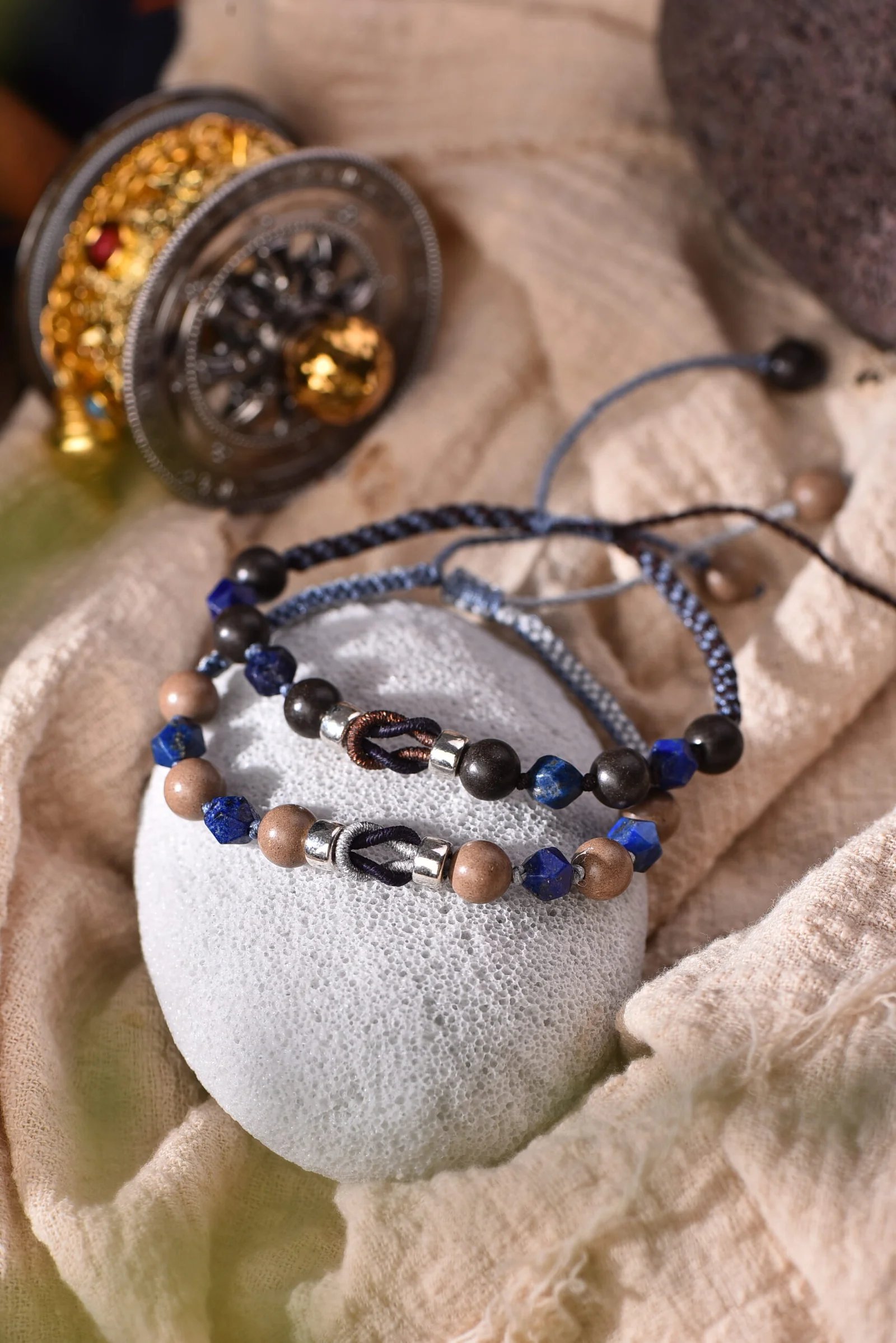
We are looking for three things. First, tension — each knot should sit the same as its neighbors, neither loose nor pinched, so the pattern reads evenly across the wrist. Second, handover points — the places where one color thread gives way to another. On our monsoon sky blue and indigo dual-tone bracelet, for instance, the two blues meet in a single band of knots, and if one knot sits a fraction high, the line looks bruised instead of clean. Third, ends and tucks — every loose thread should be buried exactly where we planned, never peeking.
Sometimes the chosen piece is the last of its palette, and the temptation is to knot a fresh one instead. We understand the temptation, but we have made a rule of it: the piece you chose is the piece we send. A knot from a different morning would be a different piece — different tension, different handover, one of a kind like every other. So we check rather than remake, and if a piece ever missed its check — it has happened twice in a year — we retired it from the shelf and re-knotted the palette before it could be listed again.
Nine times out of ten, the piece passes without a single change. But the check itself is the point. It is how we keep the promise that what we photographed is what you will hold.
A True-Light Color Check, Because Screens Lie
The second stop on the journey is the most quietly important one. Every piece in our collections is photographed as honestly as we can manage — real light, no filters, colors matched to the thread itself. But a screen is still a screen, and we would rather catch any gap between the photo and the piece before it travels eight thousand kilometers than have you catch it after it lands.
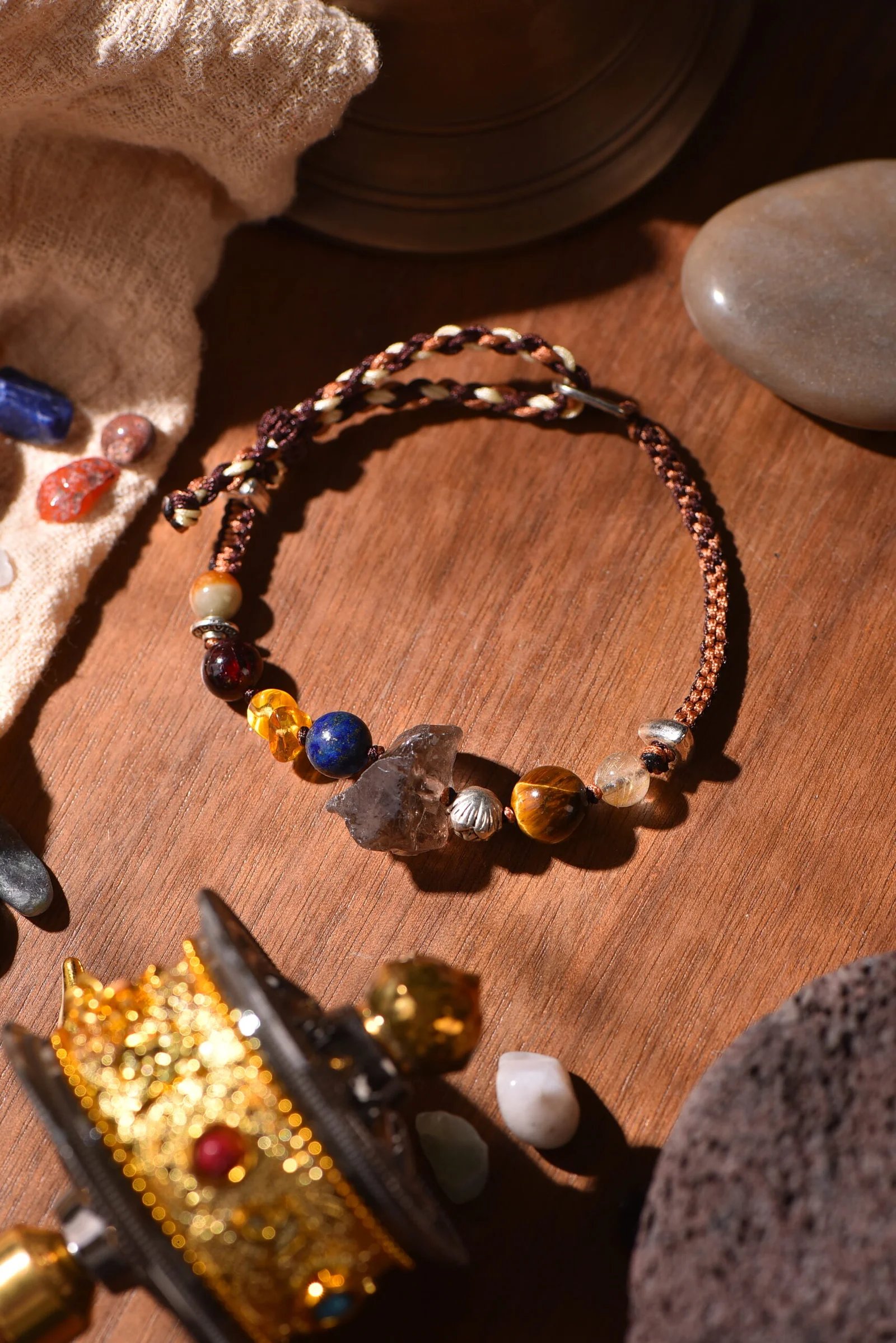
So we take the piece to the same window and read its colors against the day. Terracotta should read warm, the way a clay field reads at late afternoon. Cream should stay cream, not drift gray. On our earth brown, cream and terracotta single-strand bracelet, the three tones sit so close together that a cool morning can flatten the whole palette — which is exactly why we check, and why our product pages lean on plain daylight instead of studio drama.
There was a morning last spring when this check earned its keep. A batch of green thread we had used for months arrived from the dye house a shade cooler than before — nothing a camera would catch indoors, but held against the old spool by the window, it read like moss after a frost rather than moss in spring. We re-shot every piece in that palette and wrote the shade change into the product pages the same week. Slow commerce means slow corrections, made early.
If the piece matches its photos, it moves on. If something has shifted — a dye lot, a bead swap, a note from an earlier repair — we re-shoot the photos before anything else happens. The catalog stays honest, and so does the parcel.
Wax, Wrap, and a Written Note
Once the checks are done, the piece gets one last touch of waxed cord care: a light hand-rub along the cord to even out any shine the shelf may have dulled. Waxed cord is a living material — it softens with wear and earns a gentle patina over the years — so we send it out with its surface even and settled, ready for the first day on your wrist.
Then comes the wrapping, which is where the slow-made promise becomes something you can see. Each piece goes into a small cloth pouch, tied with the same kind of cord we knot into our bracelets, because the parcel should feel like the thing inside it. A card goes in beside it — plain paper, hand-written, with the color name and a line about the piece. Nothing printed in bulk. If you ordered our river blue and white single-strand piece, the card says so in ink, the same way we would say it to a friend.
The note is small, but people write back about it more than about anything else. Perhaps because a hand-written line is the one part of the parcel no machine could have made — a small knot of proof that the whole thing was touched by a person from start to finish.
The pouch goes into a box that fits it with a finger of room on every side, so the knots do not press against the walls in transit. Then the box is taped, addressed, and set by the door with the day’s outgoing stack. From our studio, the parcels travel out once a day, and we walk them to the drop point ourselves. It is not the fastest system in the world. It was never meant to be.
Which One Will You Choose Next?
Because every piece is already finished and photographed, choosing is the whole task — no waiting lists, no back-and-forth, just your own eyes and the collections. If you are drawn to the water side of the palette, our river blue and white single-strand bracelet carries the whole monsoon sky in a thin band. If you want something with more weight and warmth, the earth brown, cream and terracotta piece reads like sun on a clay path. And for a wrist that gets to choose between two blues, the monsoon sky and indigo dual-tone piece splits its palette right down the middle of the knots.
You can browse the full range of palettes and processes any time on our Craft and Process journal, or see what is ready to ship in the collections themselves.
And if this kind of slow path — knot checks, true-light color checks, hand-written cards — sounds like the kind of thing you want wrapped around your wrist, the door is open. Choose the palette that matches a morning you remember, and we will do the rest by hand, starting the moment your order arrives.
Nature, woven by hand. Color, woven into stories.
If you enjoyed this behind-the-knots look at our studio, subscribe to our newsletter for weekly letters about color, botanicals, and the pieces on our table.
