 Skip to content
✨ New Year Offer: Up to 20% off ·
Begin 2026 with something handmade ✨
✨ New Year Offer: Up to 20% off ·
Begin 2026 with something handmade ✨

Botanical Jewelry: The Five Greens of One Pine Branch | TibetanTwist

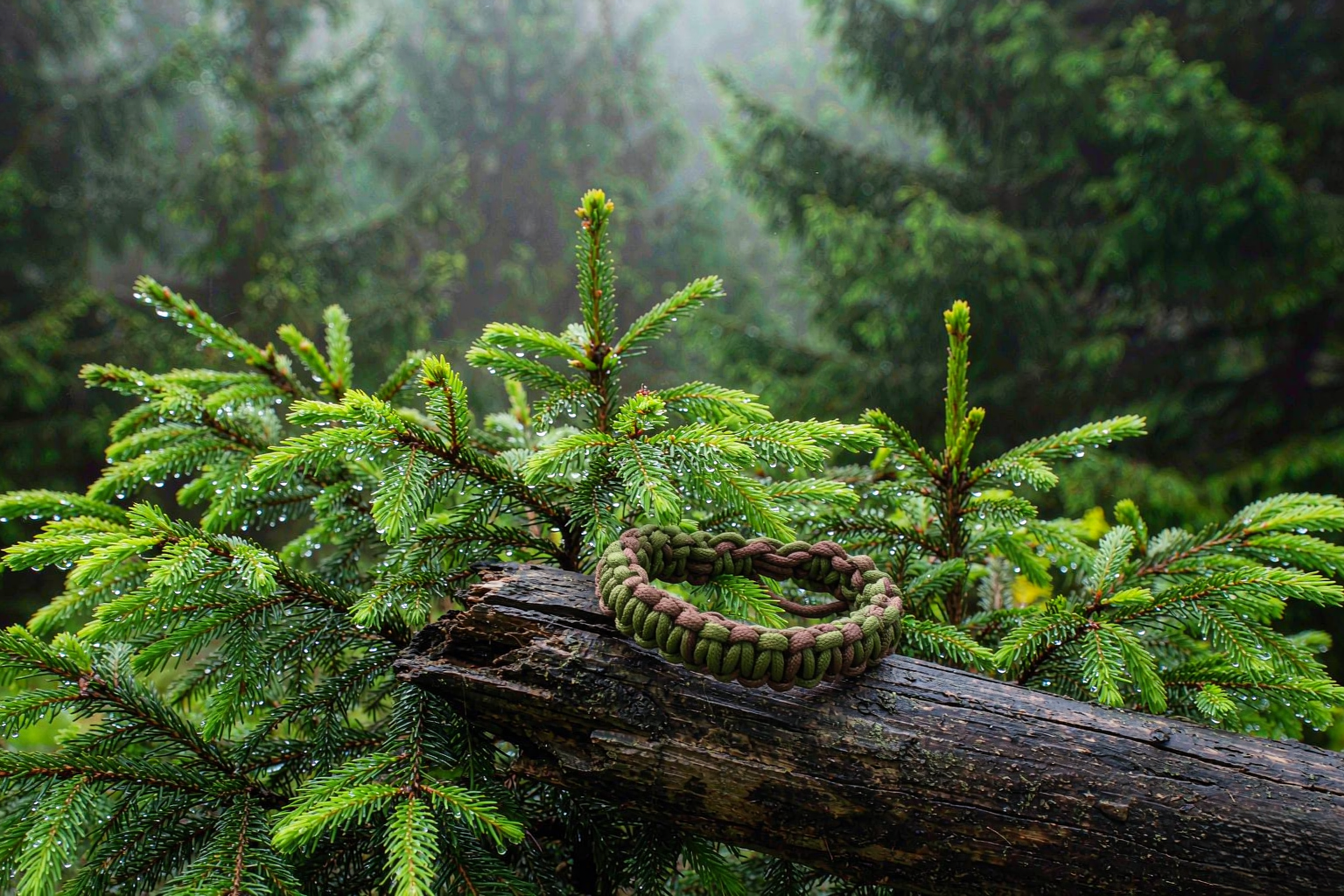
Rain again this morning, and the pine ridge behind the studio turned into a ladder of greens. The new needles at the tips glowed pale jade. The inner branches sat dark and quiet. Moss on the fallen log burned almost emerald where the drops landed. I took out my notebook and made the promise I keep every wet season: never write the word green alone. That is where botanical jewelry begins for us — not with a color chart, but with one wet branch that refuses to be one color.
One Branch, Five Greens
Most people see a pine tree and file it under green. Our thread drawers know better. A single branch after rain holds at least five workable shades, and each one lives in a different part of the plant.
The needle tips carry the lightest green — a pale, almost glassy jade that only shows up on new growth after a soak. Step deeper into the branch and the inner needles turn a grey-green, the shade of leaves that never see direct light. Under the needles, the bark shadow reads nearly black, a green so deep it behaves more like a dark neutral. Where rain pools on the fallen log, moss flares emerald — the loudest green on the whole branch. And on the oldest limb, lichen spreads a dusty sage, half green and half stone.
The five greens do not all make it into thread. Our cones hold three of them well: a needle-tip jade, a mid moss green, and a deep bark green. The other two we borrow from beads — a pale grey-green stone for the inner-needle shade, a near-black bead for the shadow under the boughs. That is the practical side of a botanical palette: the thread carries the greens the dye pot can reach, and the beads fill in the ones it cannot. Between the two materials, the branch fits.
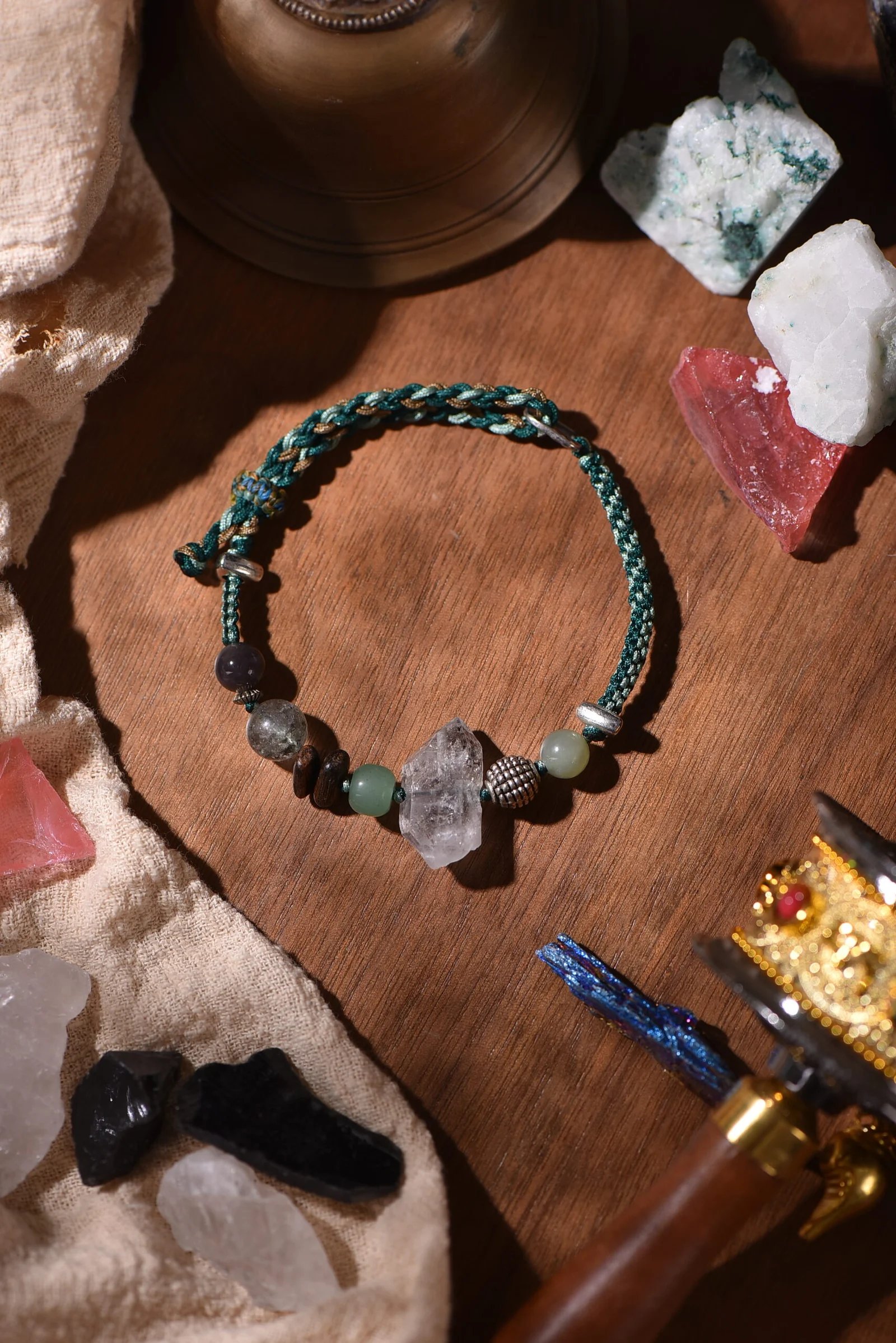
When we knot a botanical piece, we do not pick one of these and call it done. We ask which two or three of them can sit next to each other on a wrist the way they sit next to each other on the branch. The fern-green handwoven single-strand bracelet holds a lighter needle-tip green against a warm earth brown — the same pairing the branch makes between new growth and old bark. Read it in daylight and you can almost find the moss.
Green Never Sits Alone
Here is the second thing the wet branch taught us: green reads deepest when something warm leans on it. A green knot ringed by cream looks brighter. Green beside terracotta looks earthier. Green with a single oxblood-red thread running through it turns moody, almost like a forest just before dusk.
This is why our green pieces rarely travel alone. The deep-brown and forest-green knotted bracelet is built exactly on this rule — the brown does not compete with the green, it holds it down, the way wet bark holds the needles. And the jade-green sparkle cord bracelet pairs that same family of green with pale stone beads, so the green behaves like the moss after rain: deep at the knot, lifted at the bead.
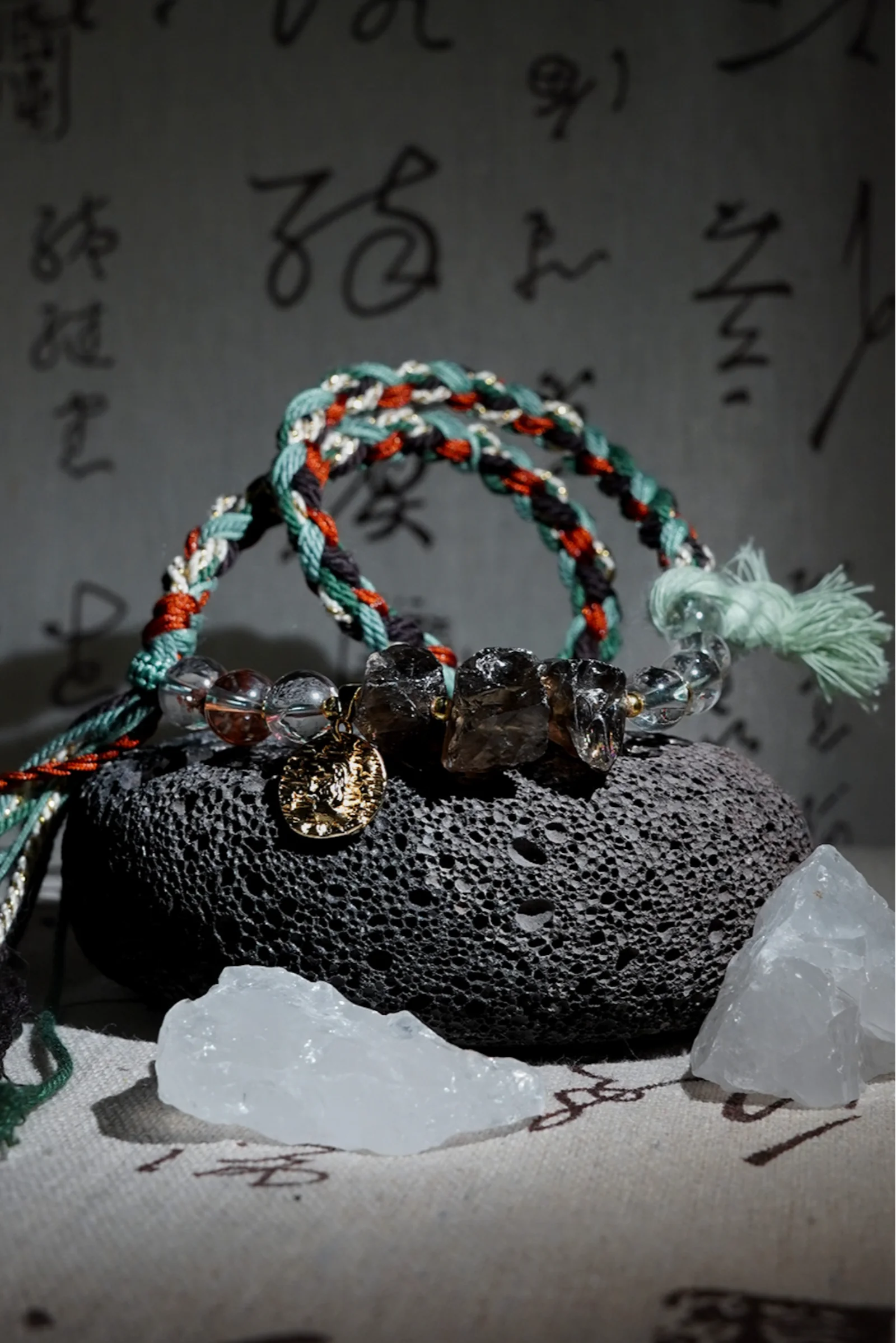
If you are choosing a botanical piece from our existing collections, try this: hold the green you like next to the color you wear most. Green next to cream opens up. Green next to brown settles down. Green next to denim goes cooler. None of these is wrong — but each pairing changes which green you are actually seeing, and it is worth knowing which one you want before you pick.
Green also changes with the seasons around it, not just the colors beside it. In spring, a moss green on the wrist sits quietly under light jackets and pale linen. In autumn, the same green deepens beside rust and oatmeal knits. We have watched one bracelet read as three different greens across a single year, and the piece never changed — only the world around it did. This is the part we cannot photograph and you cannot preview: you have to wear a green through a season to know which green it is.
<img src="
” alt=”handwoven single-strand bracelet in fern green and earth brown resting on a mossy branch — Botanical Journal by TibetanTwist” />
The Rain-Day Notebook
Every wet season we keep a green notebook. After each rain, someone walks the ridge and writes down what the branch is doing that day: how pale the tips are, how dark the bark shadow runs, whether the moss has flared or settled. Then we pull thread cones from the drawer and lay them beside the notes, cone by cone, until the drawer agrees with the tree.
It sounds slow. It is slow. But this is how a botanical palette stays honest. Thread dye lots shift from batch to batch — the same forest green can come in a hair warmer or a hair cooler — and if you match threads by eye at the table alone, all your greens drift into one flat shade within a season. The notebook keeps pulling us back to the real branch, with its five greens and its warm bark, so the woven version keeps its depth too.
This is also why no two of our green pieces sit at exactly the same shade, even when they come from the same week of work. We make every piece by hand, one at a time, and each one borrows its green from a slightly different morning. No two alike — the branch said so first.
Buyers sometimes ask which cone matched which morning. We keep the answer simple: the notebook pages carry a dated swatch of thread next to the written note, so every green cone in the drawer can point to the day it was chosen. When a piece sells, its page stays in the book — a record of the rain that colored it. If you ever wonder why your green piece does not match the photo on the shelf exactly, this is why. The photo holds one morning. Your piece holds its own.
Which Green Do You Reach For?
If you want the lightest read — the needle-tip jade, the moss flare — start with the fern-green handwoven single-strand bracelet. If you want the deep end of the ridge — bark shadow, wet needles, old wood — the deep-brown and forest-green knotted bracelet is the one that lives there. And if you like your green with a little light caught in it, the jade-green sparkle cord bracelet carries the moss-and-rain pairing best.
You can walk through every green we have ever woven in our handmade bracelets collection. Look for the pieces that name a landscape — pine, moss, jade, forest — and you will find the whole ridge, knot by knot.
One question to leave with: next time it rains, step outside and find one branch. Count the greens. Then tell us which one you would wear — the tip, the shadow, or the moss.
A last note on wearing them together. Two greens stack well when they come from different parts of the branch: a bark-deep green under a moss-light one, never two of the same distance. Add one warm piece — cream, terracotta, or a single brown strand — and the pair reads like a walk instead of a swatch.
Nature, woven by hand. Color, woven into stories.
Want our next palette first? Join the slow letter — once a fortnight, no selling, no pressure — to read what is on the table this season.
