 Skip to content
✨ New Year Offer: Up to 20% off ·
Begin 2026 with something handmade ✨
✨ New Year Offer: Up to 20% off ·
Begin 2026 with something handmade ✨

Zodiac Jewelry: A Handwoven Color for Every Sign | TibetanTwist

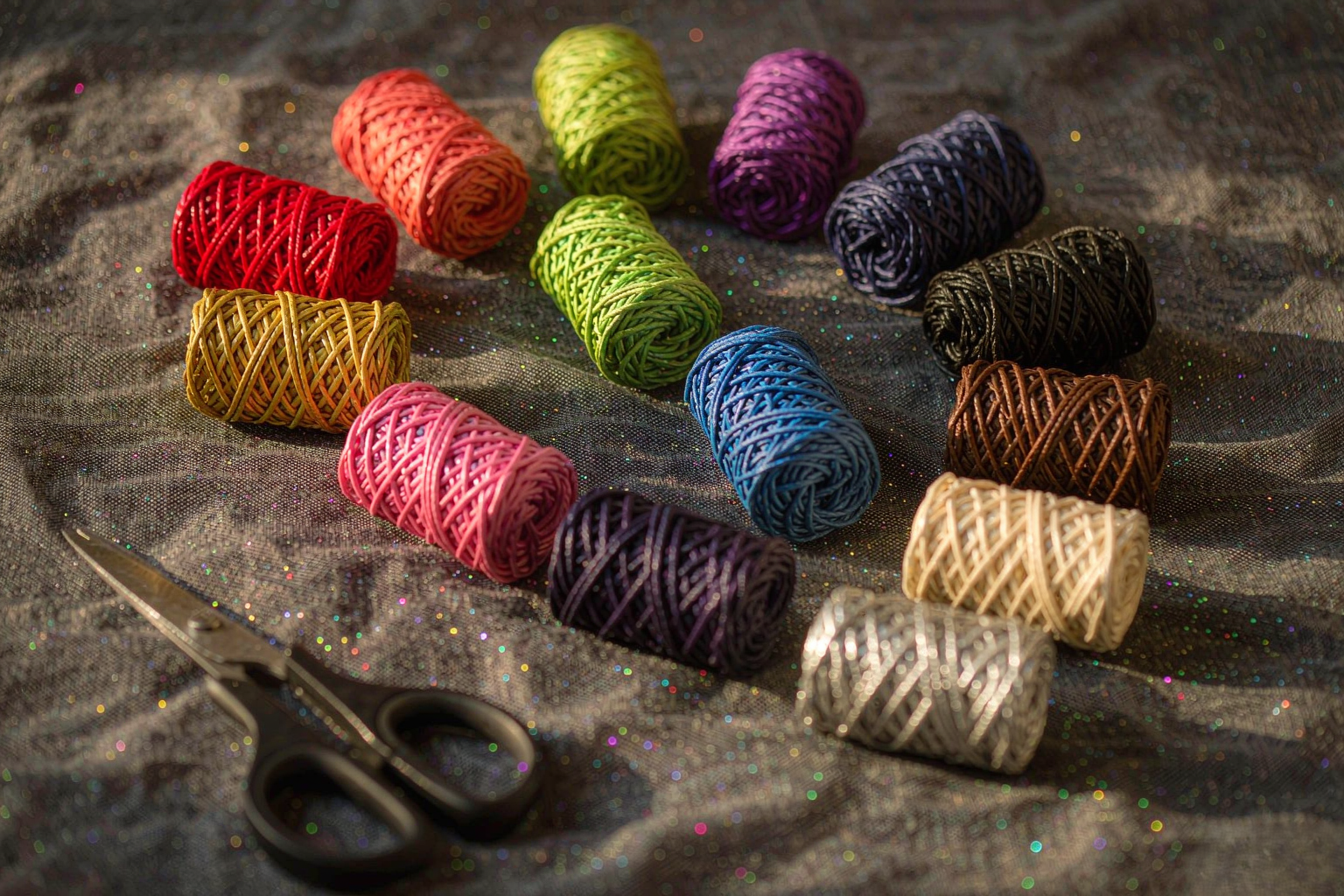
Some palettes arrive before we name them. A hillside in late February, a tide line at dusk, a field of dry grass going gold under a high sun. When we sit down to knot the zodiac series, we are not inventing colors. We are copying them — twelve birth seasons, twelve landscapes, one waxed cord at a time.
One Knot, Twelve Palettes
Every bracelet in our zodiac series starts from the same place: a simple knot, tied by hand, over and over, until the cord becomes a band. The structure never changes. What changes is everything the eye notices.
The cord color comes first. For a winter sign we reach for field browns and forest greens — the quiet palette of frozen ground. For a sign born when the rivers rise, we mix tide blue with a soft shell blush. For a midsummer sign, saffron and gold, the exact shade of late light on dry grass.
Then the beads. A pale stone reads like morning fog. A deep stone reads like wet soil after rain. Two beads of the same hue sit differently on a handwoven band than they would on a metal chain, because the waxed cord holds them with a little give — the way soil holds a stone.
This is the part we love most about zodiac jewelry as a color exercise. Twelve palettes, one knot. The constraint is the freedom. Because the structure stays fixed, every small decision of hue shows up clearly, the way a single cloud shows up in a wide sky.
Each Sign Is a Landscape
We do not match signs to colors from a chart. We match them to places and months. The question we ask at the workbench is simple: what does the world look like in the weeks this sign rules?
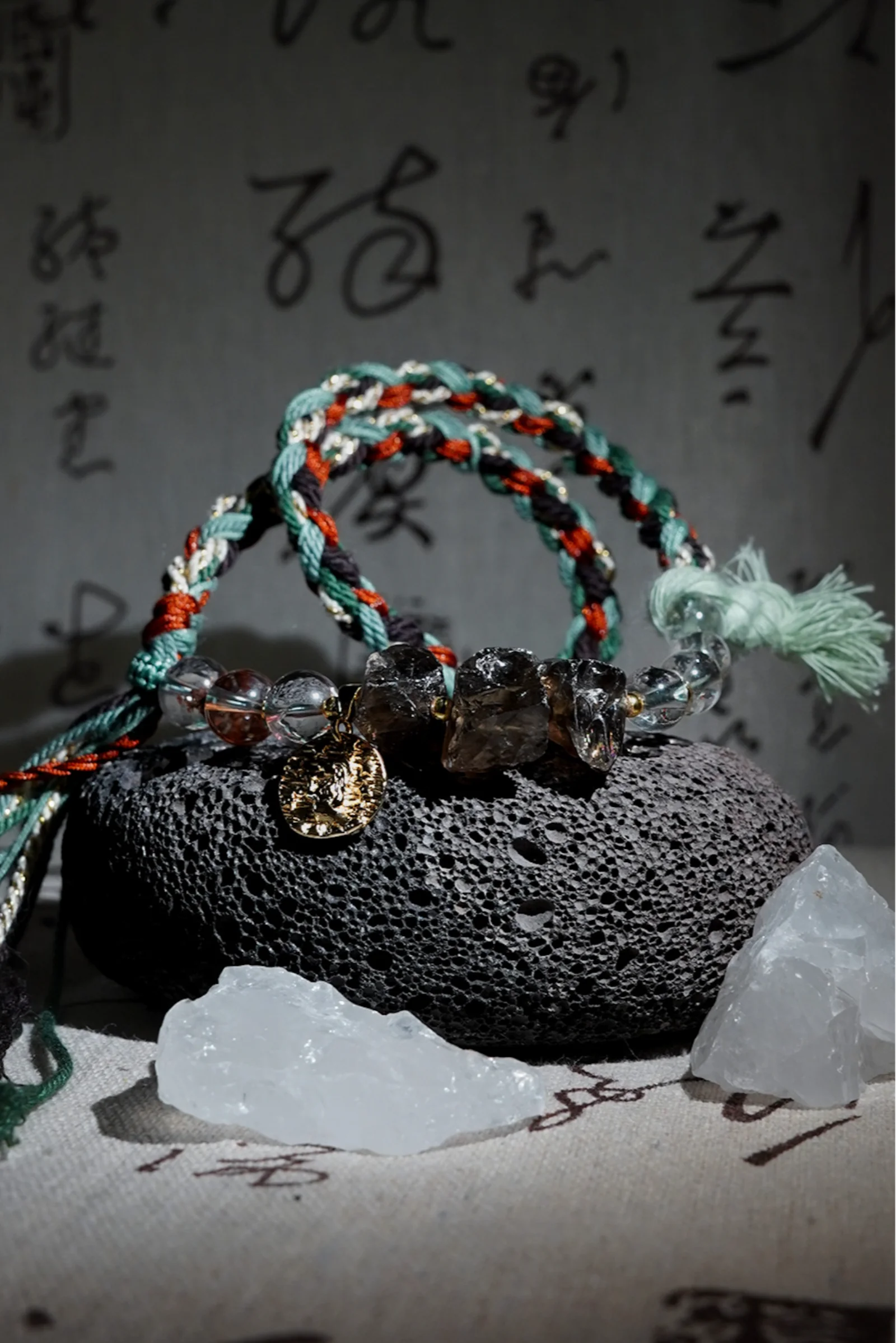
Take the deep-winter sign. Its weeks are brown fields, black branches, the first green holding on under the frost line. So its bracelet carries an earth-brown cord with forest-green knots and steady, dark beads — a palette you could lift straight from a January walk.
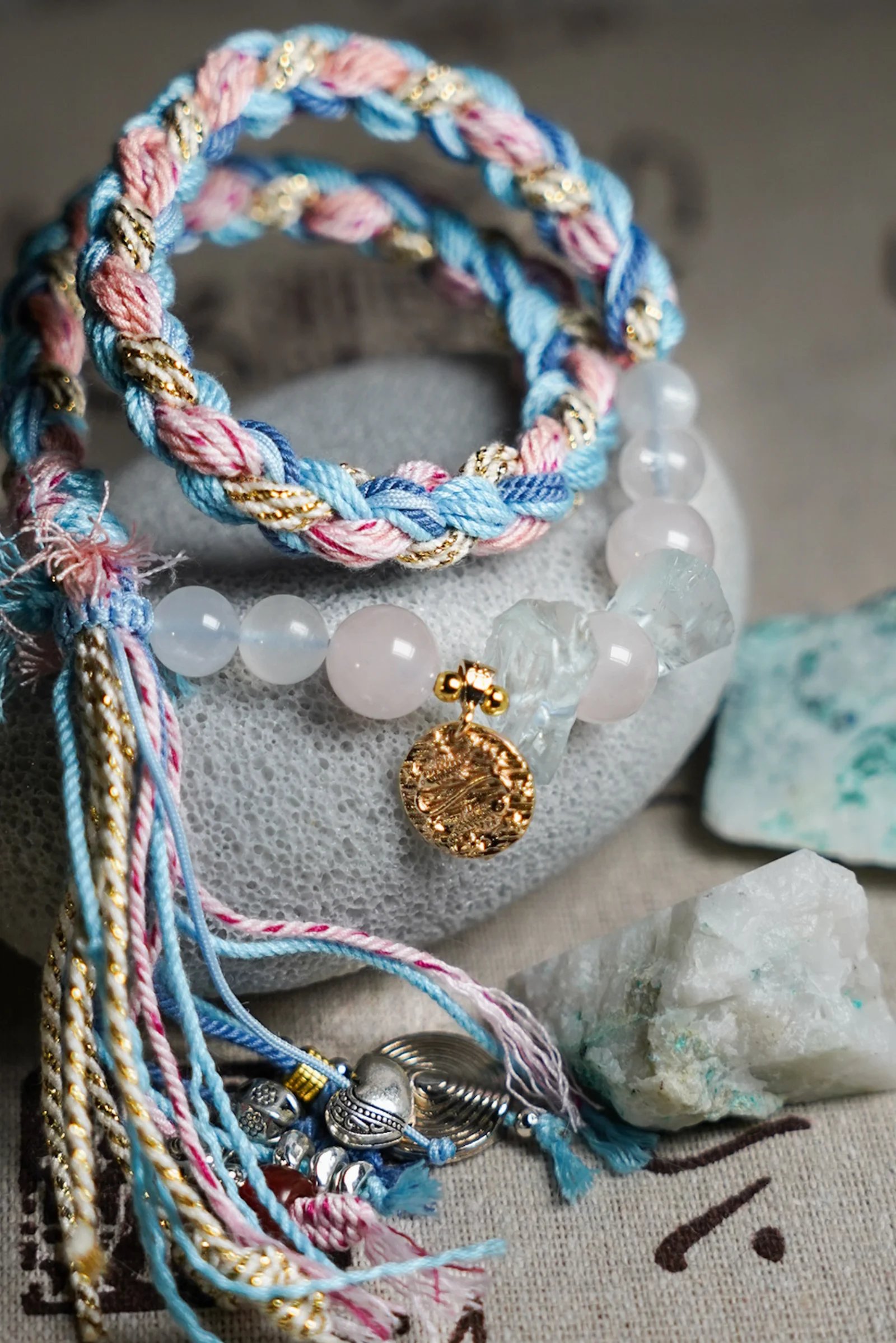
Take the tide sign at the edge of winter. Its season is thin blue water over pale sand, gulls, a sky that cannot decide between gray and pink. Its palette runs light blue into shell blush, with beads that catch the light the way wet sand does.
And take the high-summer sign. Its weeks burn gold — dry grass, warm stone, dust hanging in the light. Its palette is saffron orange running into warm gold, the boldest band we knot all year.
You can read the whole zodiac this way, as a calendar of landscapes rather than a list of traits. The palette is not a prediction. It is a place, worn small on the wrist.
We keep a notebook of these landscapes, one page per sign, started the first year we knotted the series. Each page carries a swatch of cord, a note about the month it came from, and one sentence we trust more than any chart: what we saw from the window that week. The pages have grown honest with use. Some shades were replaced after a season outdoors taught us they went flat by afternoon. The chart we never had would have missed all of that.
How We Build One Palette: Cord, Bead, Light
Building a sign palette takes longer than knotting one. We lay out the cord in three or four near-shades and walk them to the window. Natural light sorts them fast: one shade goes flat, one goes muddy, one goes exactly where we wanted.
The cord carries the landscape. The beads carry the light. We pick one or two stones per band and stop there — too many and the palette turns into noise, like a meadow photographed without a horizon. A single pale bead against a deep cord does the same work as the moon over a dark field: one bright point, and everything around it grows quiet.
Tension matters too. Pulled tight, a knot reads crisp, almost graphic — good for bold palettes like the midsummer golds. Left a touch softer, it reads relaxed and worn-in — right for the fog palettes of the tide signs. The same hands, the same waxed cord, and the mood of the band shifts by a few millimeters of pull.
No two finished bands come out identical. The wax takes dye differently from spool to spool, and our hands set each knot by feel. Every piece in the series is one of a kind — made by hand, one at a time.
Which Sign Is Yours?
If you already know your sign, look for it in the palette you would have picked anyway. That small moment of agreement — I would have chosen this color, and it happens to be mine — is the whole point of the series.
If you are choosing for a friend, pick by their landscape instead of their label. The friend who is always cold in January might wear the deep-winter browns and greens better than their own band. The friend who lives for the first warm week of the year belongs in the saffron and gold.
Here are three from the current series, each knotted by hand in our studio:
- Our earth-brown and forest-green handwoven zodiac bracelet, steady winter colors with dark grounded beads — see it here.
- Our light-blue and shell-blush handwoven zodiac bracelet, thin tide water over pale sand — see it here.
- Our saffron-and-gold handwoven zodiac bracelet, dry grass and warm stone in high summer — see it here.
Browse the whole range of handwoven pieces in our zodiac collection journal, where each new sign palette is documented as it leaves the workbench.
Whatever you choose, it will not match the photo exactly. It will match the morning we knotted it — the light in the window, the cord in that spool, the hour our hands were in. That is what one of a kind means here.
Nature, woven by hand. Color, woven into stories.
If you would like a new palette to arrive in your inbox, join our newsletter — one quiet letter, now and then, straight from the workbench.
