 Skip to content
✨ New Year Offer: Up to 20% off ·
Begin 2026 with something handmade ✨
✨ New Year Offer: Up to 20% off ·
Begin 2026 with something handmade ✨

Keepsake Jewelry: One Small Thing Is Enough | TibetanTwist

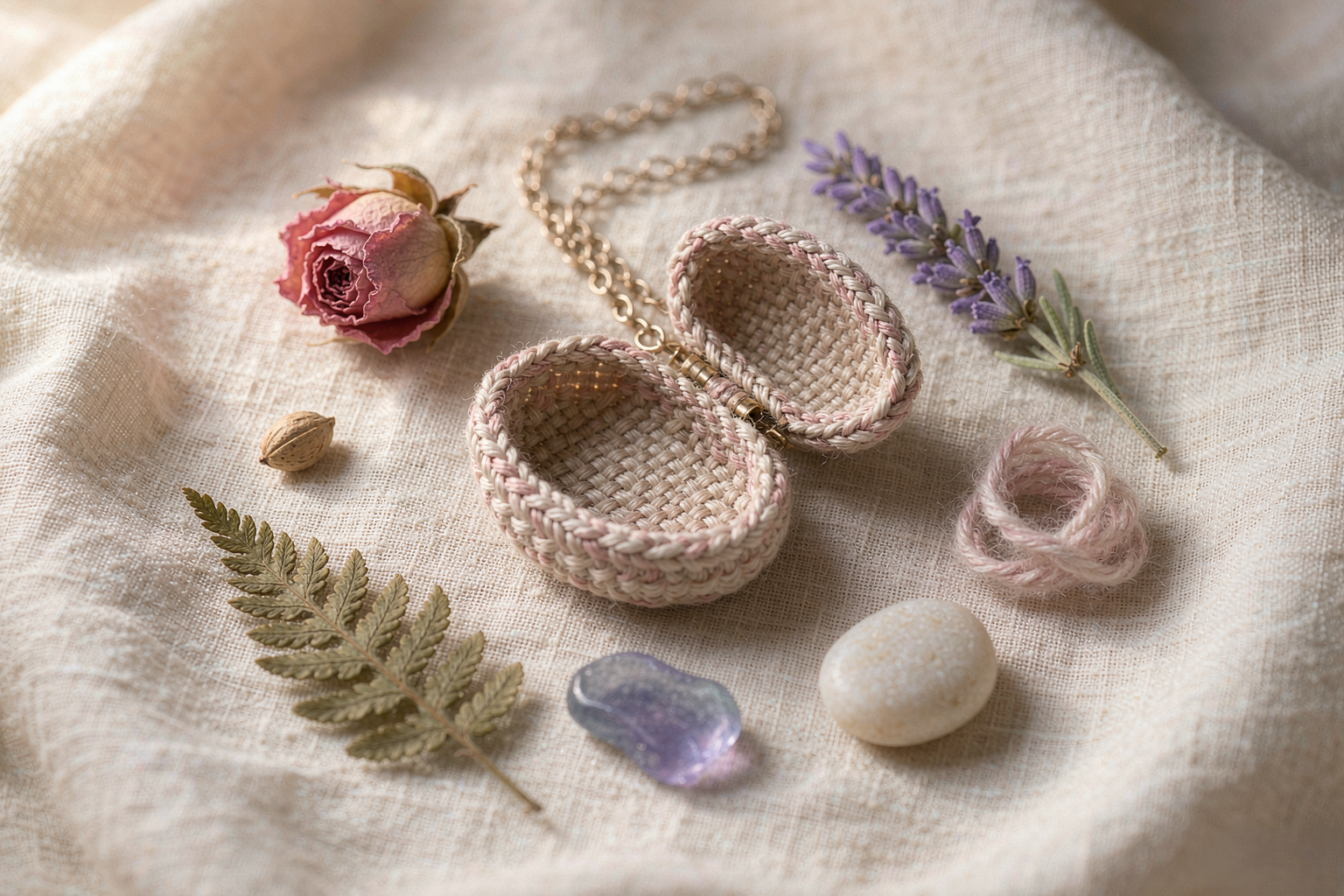
There is a corner of our bench where small things wait: a pressed petal, a paper-thin shell, a slip of paper folded twice, a twist of thread saved from a finished bracelet. Beside them sits a pendant that opens. People often ask what should go inside. Our answer surprises them: one thing. One small thing is enough.
Why One Object Reads Better Than Seven
A keepsake chamber is about the size of a thumbnail. It can hold a sentence. Fill it with seven things and the sentence disappears. You get a crowd, a drawer in miniature, noise pressed behind glass. The eye does not know where to rest, and neither does the memory.
Think of a bud vase. One stem shows the flower. A handful hides every bloom behind the next. The same logic holds here. An openable pendant is a frame, not a jar. When one object sits alone inside it, that object becomes legible: this petal, this shell, this folded line of writing, this exact day.
A single object also ages better. A chamber holds one guest snugly; seven things rub against each other, and a pressed petal crumbles faster when it has to share the room. One guest has space to lean against the glass and keep its shape. Loneliness, in this case, is good architecture.
We practice the same restraint on the bench. When we lay out candidate palettes for a new piece, we do not use every thread we like. We choose one story and let the rest go back to their drawers. Choosing one is the act that makes a thing matter. It is also the act that keeps a keepsake readable years later, because you will remember why it was the one.
The row of small natural things we photograph for this piece tells the same story. Seven candidates, laid out in a line, and one pendant that can host only a single guest. The row is the menu. The pendant is the order you place. A row of options is generous. A single choice is intimate.
What Fits Inside — and What Should Stay Out
Scale first. The chamber favors things between a grain of rice and a thumbnail: a dried lavender bud, a fern leaflet, a petal pressed flat for a week, a scrap of fabric cut from a hem, a name written small on paper. Flat beats fat. Dry beats damp. Smooth edges are kinder to the cord around the chamber than sharp ones. If you are not sure, rest the object on your thumbnail. If it hides the nail completely, it is one size too big.
Dried botanicals are our favorite tenants. A lavender bud keeps a whisper of its scent for a season, then settles into keeping shape and color instead — a small, permanent shadow of the plant it was. When the season turns, open the pendant, let one thing leave, and let another arrive. The frame stays. The sentence changes.
Written slips deserve a note of their own. Use firm paper, cut it small, and write in pencil if the piece will travel; ink can feather after a humid week. One line, folded twice, holds more than it seems: a name, a place, a date, a single promise for the year ahead.
What should stay out: anything moist, anything powdery, anything that sheds or stains. Sand from a beach trip sounds romantic until it migrates into the hinge. A better translator for that day is a small shell, or a thread tied in the exact color of that water. The object does not have to be the literal thing. It only has to point at the day clearly enough for you.
People have always known this economy of smallness. A lock of hair tied with thread, a pressed flower inside a letter, a button from a worn-out coat: the oldest keepsakes in the world are all one-object keepsakes. The form is old. The chamber is simply a new way to wear it.
What We Keep in Our Keepsake Jewelry
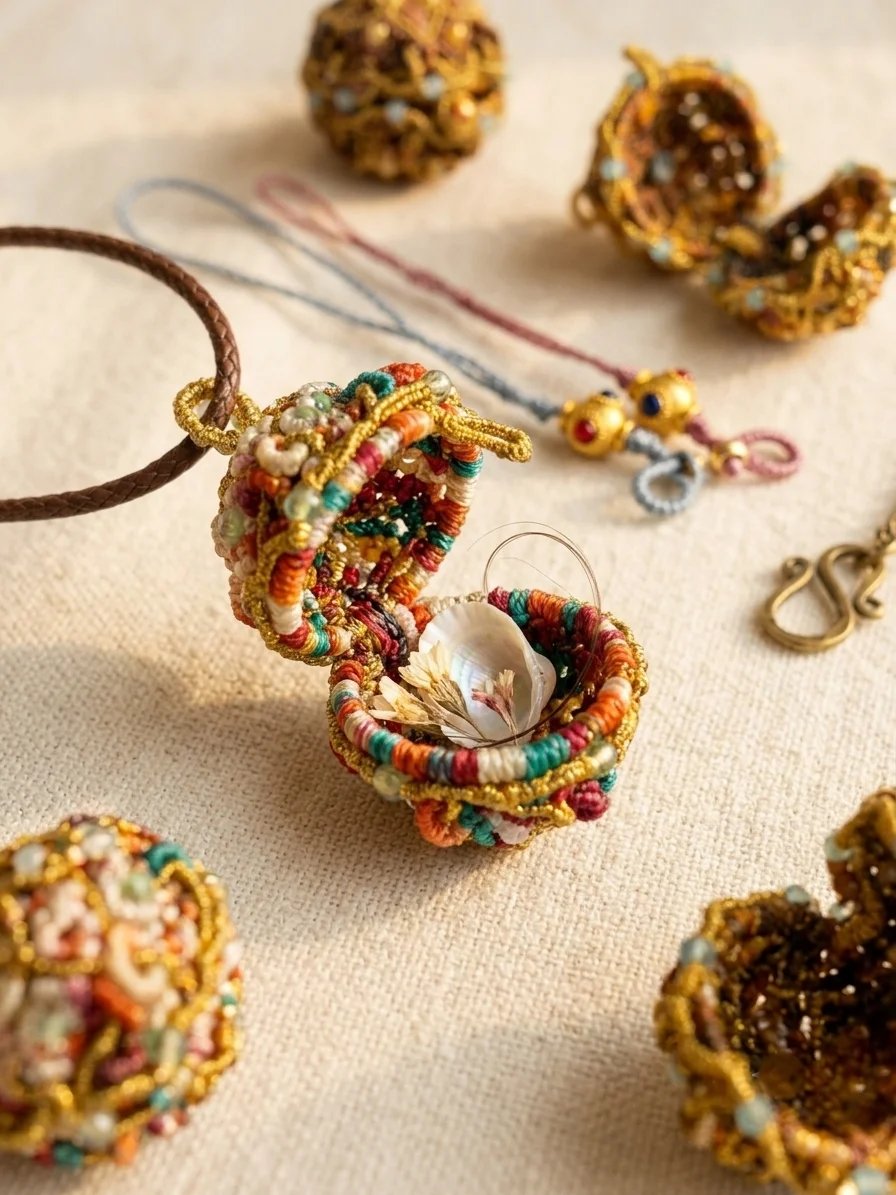
In my own pendant there is a geranium petal from the pot on the studio windowsill, dried down to a soft oxblood red. Another chamber holds a twist of indigo thread clipped from a finished bracelet, the leftover breath of a monsoon-sky palette. In the drawer under the bench lies a slip of paper with the knot count of the very first bracelet I ever finished, a number so small it almost embarrassed me, kept anyway. A friend of the studio keeps a shell from a morning walk after a storm, the day the whole street came out to see what the water had left behind.
None of these are grand objects. That is the point. Ordinary things, kept deliberately, become a calendar you can hold. The petal does not need to explain itself. Six months from now I will open the pendant and the whole windowsill will come back: the light, the slow drying, the month it happened. This is the quiet work of keepsake jewelry: it does not invent meaning, it makes room for the meaning an object already holds.
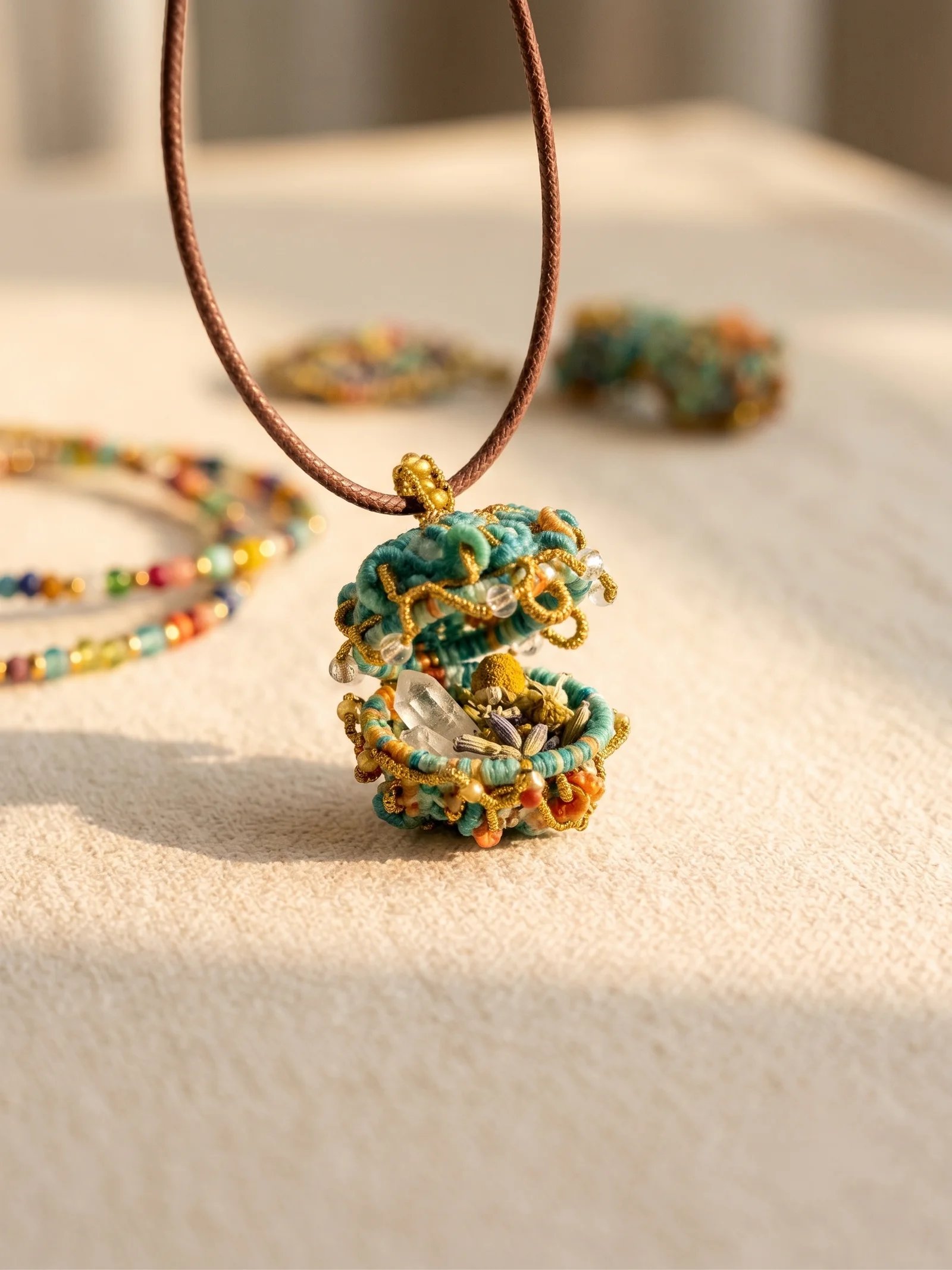
Our pine-green keepsake box was made for exactly this kind of smallness. The woven lid opens onto a hidden chamber sized for one true thing, and the cord around it is dyed the deep green of pine shade. Our keepsake pendant necklace with a woven lotus lid works the same way in miniature, teal and gold, sized to wear and to open.
Which One Thing Would You Keep?
Here is the question we leave with you, and it comes before any talk of color or style. What one thing would you keep?
If nothing answers at once, walk through an ordinary day slowly: the jacket you always wear, the book on the nightstand, the plant you have kept alive for three years, the ticket stub in a coat pocket. Small things gather around us constantly. One of them is waiting to be chosen. Keep the bar low: the first thing that surfaces is usually the right one, because memory does its own editing before you ever open a drawer.
Then let the object choose the piece. A petal dried to soft red asks for a warm palette. A shell asks for blues. A folded line of writing goes with anything quiet. You can choose from the pieces already on the site, each one made by hand, one at a time, no two alike. Our dual-tone handwoven bracelet with dried botanicals tucked into the knots carries the same idea for the wrist: a garden hidden inside the weave, no chamber required.
Gifts work well this way too. Give the frame and let the other person find their own sentence. For an anniversary, two people can each place one object inside the same piece: one for the year that passed, one for the year ahead. A keepsake that arrives empty is an invitation, and the first object placed inside it will say more than any engraved plate could.
Browse the Keepsake & Memory collection to find the frame for your one small thing.
Nature, woven by hand. Color, woven into stories.
Stay close to the studio. Subscribe to our newsletter for new palettes, behind-the-knot notes, and first access to fresh drops.
