 Skip to content
✨ New Year Offer: Up to 20% off ·
Begin 2026 with something handmade ✨
✨ New Year Offer: Up to 20% off ·
Begin 2026 with something handmade ✨

Zodiac Jewelry: Birthstone Colors, Translated Into Thread | TibetanTwist

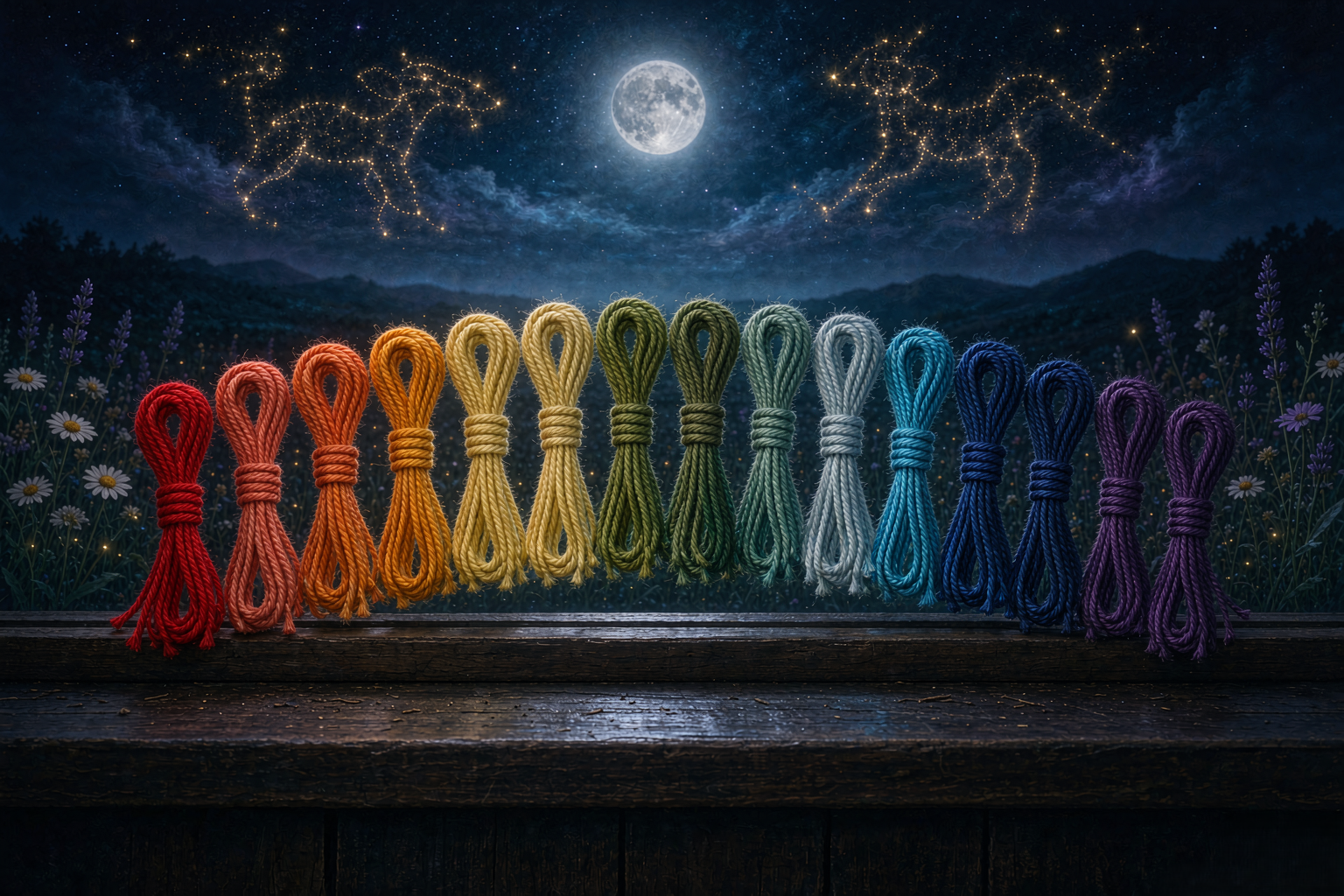
Birthstones are usually introduced as stones: rare, cut, set behind glass and sold by the carat. We meet them another way, as colors. Twelve hues arrive one per month, the way light moves across a garden from January to December, and at our worktable the whole calendar has been translated into waxed cord — one palette at a time, knotted by hand.
Your Birthstone, Translated Into Thread
Every month of the year carries a birthstone — garnet for January, amethyst for February, aquamarine for March, on through the violet blues of December. Jewelry shops usually present the list as a shopping guide for gems. Our studio reads it as a color assignment: what does January look like when it becomes thread? The stone may stay in the display case, but the hue comes home with us. Facets become knots. Carats become cord.
When someone searches for a birthstone zodiac bracelet in our shop, what they find is the same twelve-month story told in cotton. February is not a purple gem here; it is the violet of crocus tips pushing up through thawing soil. September is not a deep blue stone; it is a lake one hour after sunset, when the far shore goes dark first. We hold each month’s color against photographs of the real thing and adjust the thread until the two agree under daylight. It usually takes two or three tries.
One promise before the calendar begins: everything described below already exists as a finished piece. You choose your month from the shelf, not from a worksheet — the knots are tied, the colors are set, and the bracelet is ready to wear. No two are alike, because each one is made by hand, one at a time.
January to June: From Garnet Red to Pearl
January runs deep. Garnet reads like the inside of a pomegranate split open on a winter table — a red with weight and a little wildness at the edges. On the shelf it lives next to mulberry and oxblood, the two darkest reds we knot. If your month is January, expect a palette that flatters wool coats, grey scarves, and every cold-weather fabric you own.
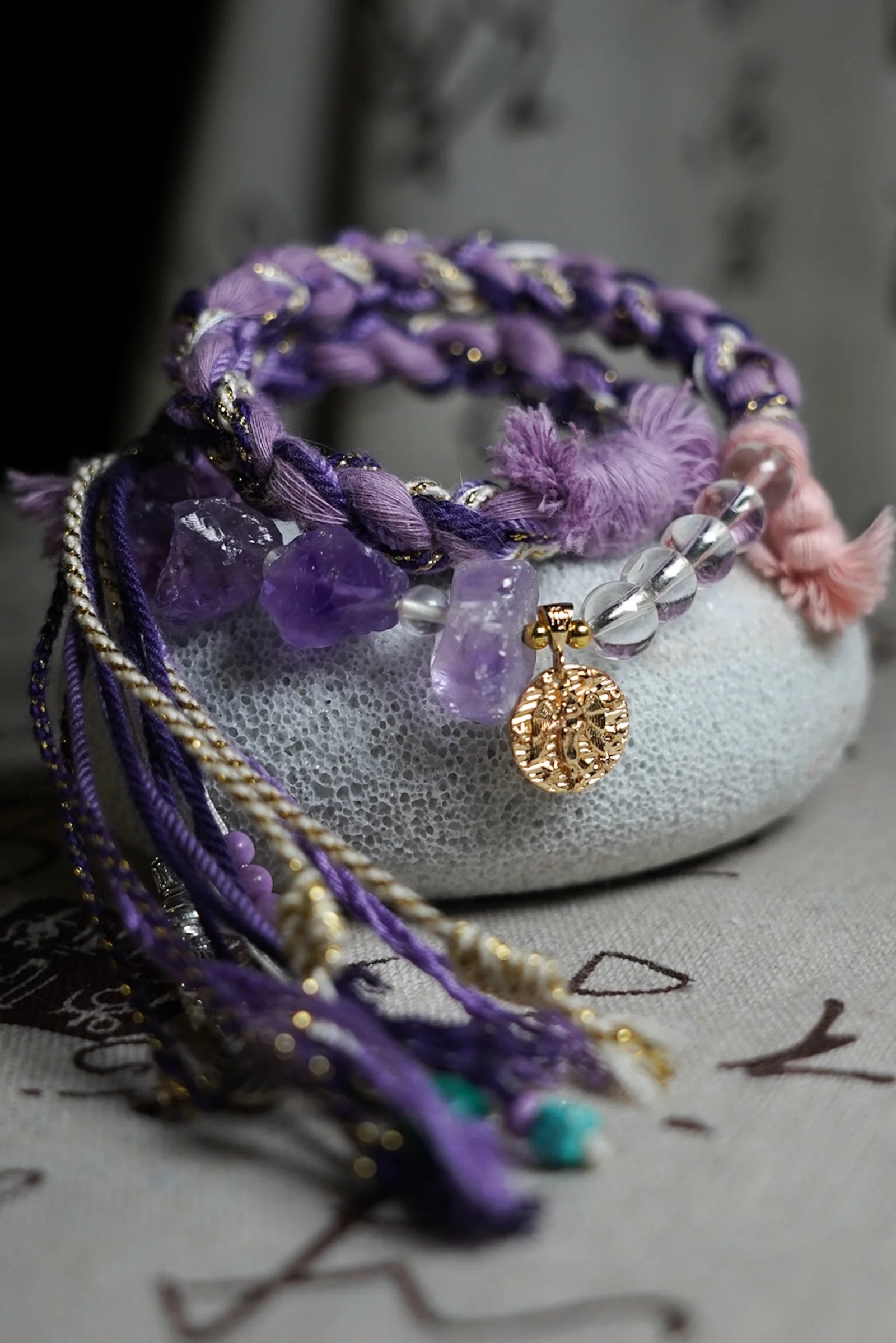
February is amethyst, and it is the quiet star of the first half. Our version is a soft violet softened further with cream — the color of crocus tips in thawing soil, or the last band of dusk before the streetlights come on. You can see it in our purple-and-cream handwoven bracelet, the palest violet piece in the shop. It sits well against grey knitwear and white linen alike, which is rare for a purple that light.
March belongs to aquamarine, which we read as meltwater: the thin, clear blue of a stream just released from ice. April, the diamond month, is color at its most transparent — white frost thread with a breath of morning light. Both palettes meet in our white-and-gold-blue handwoven bracelet: almost colorless at first glance, then gold-blue like dawn after a short shower when you look twice.
May turns the page to green. Emerald in our hands is the deep, wet green of the first full leaf after a week of rain — closer to pine shadow than to bright spring grass. June cools everything down again. Pearl is not white so much as moon-white: the inside of a shell, fog before sunrise, cream carrying a single breath of grey. The first half of the year ends in the quietest palette we make.
July to December: From Poppy Red to Winter Blue
July is ruby, the loudest month on the calendar: poppy-petal red at noon, raspberry thick on the branch. It is the only month where we let a palette run fully warm-red without a thread of cream to soften it. Worn in summer it reads festive; worn in winter it reads like a wood stove in the next room.
August answers with peridot, which we read as olive: new oil, sun-bleached grass, the exact green of a meadow the week the hay is cut. It is a dusty, friendly green, far less precious than the gem suggests — and it is the color most likely to look better after a month of wear, once the cord settles against your wrist.
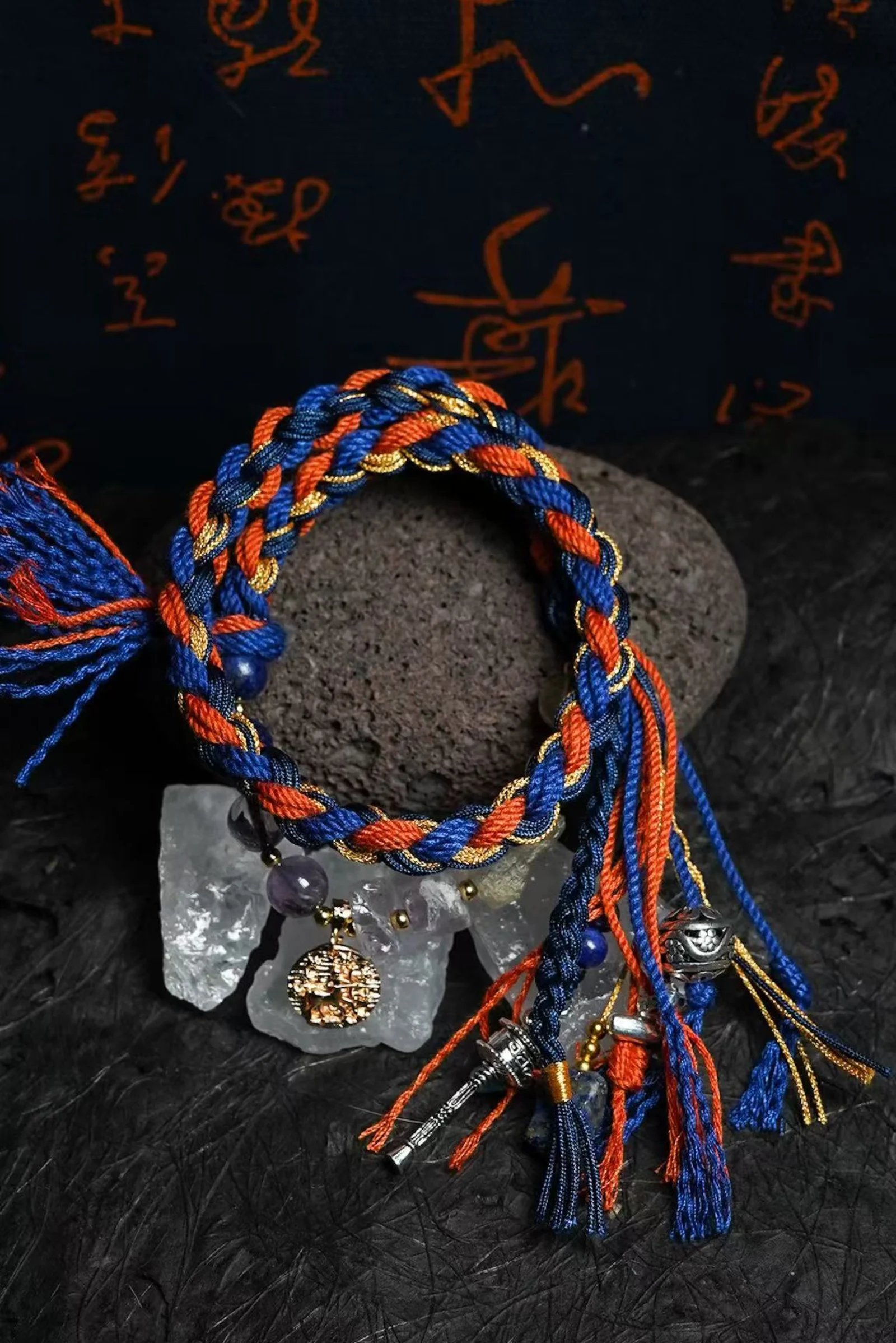
September is sapphire, and this is where our deep-water blues begin. Not bright blue — the blue of a lake at dusk with the far shore already dark. Our deep-blue-and-gold handwoven bracelet carries this month: indigo cord braided with a strand of old gold, like a single lantern lit on the water. It is the palette we recommend most often as a gift, because it suits nearly everyone who prefers dark colors anyway.
October turns milky. Opal is dawn haze over a pink field — every color present, none of them loud. November is topaz: honey, marigold, the late-afternoon sun lying flat across a wooden table. And December closes the year in blue-violet, the tanzanite hour when mountain shadow goes violet just after the sun drops. Then the calendar starts over at garnet red, and we begin tying January again.
How to Wear Your Zodiac Jewelry by Birth Month
Pick your month and start there. The simplest way to choose handwoven jewelry is to let the calendar decide. Find the palette above that matches your birth month, then try it against your wrist in daylight. The right month-color looks like it belongs to you within a week — softer on day thirty than on day one, the way waxed cord always settles.
Pair the color with quiet company. Birthstone hues are specific, so let them carry the outfit alone: one knotted bracelet against linen, denim, wool, or a plain watch strap. The matte cord will not compete with metal, and the color will read cleaner for it. Matte against matte works well too: wool, suede, raw linen — a birthstone palette sits closest to fabrics that came from plants and fields in the first place.
Weave two months together. For couples and close friends, stack your month beside theirs on one wrist. A violet February next to an indigo September tells more of a story than either color alone, and it makes a gift that needs no wrapping card to explain itself. That is the meaning we knot into every piece of zodiac jewelry: not a chart, but a small calendar of the people you keep close.
Let the color age with you. Waxed cord deepens slightly with wear; a January oxblood will look softer by spring, and a June pearl will pick up the faint warmth of your wrist. Birthstone colors are meant to be lived in — the palette you chose in your birth month becomes more yours every time you wear it.
Everything mentioned here is finished and waiting in the shop — you choose from existing collections, try the color on, and wear it home. To see how each sign pairs with its palette, visit our Zodiac & Astrology journal, or browse the full range of handwoven pieces already in the shop.
Nature, woven by hand. Color, woven into stories.
Want new palettes and studio notes in your inbox? Join the TibetanTwist newsletter.
