 Skip to content
✨ New Year Offer: Up to 20% off ·
Begin 2026 with something handmade ✨
✨ New Year Offer: Up to 20% off ·
Begin 2026 with something handmade ✨

Five Elements Jewelry: Two Elements, One Wrist | TibetanTwist

Five Elements Jewelry: Two Elements, One Wrist — TibetanTwist
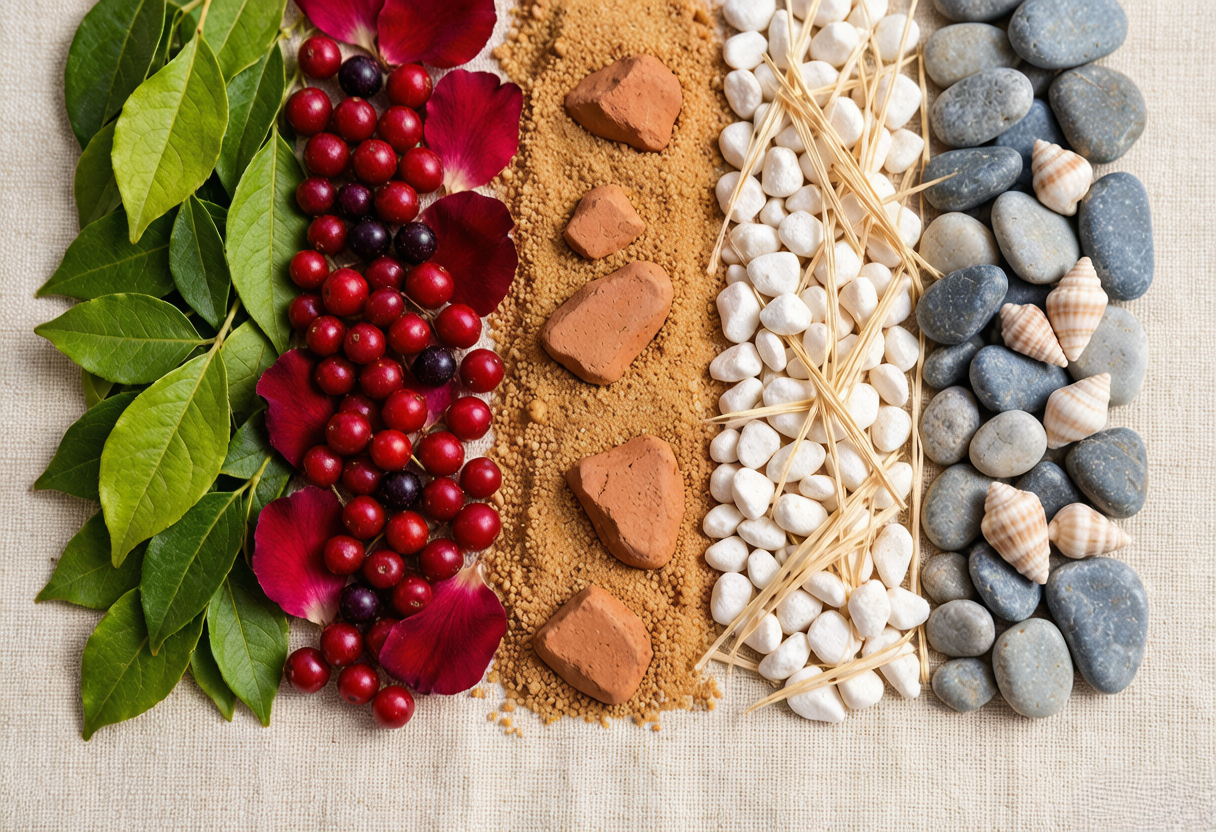
Nature never wears one element at a time. A riverbank keeps wood and water in the same frame — roots leaning into the current, moss spreading where the spray lands. A mountain path after rain is earth and metal together, ochre soil flecked with pale stone. At TibetanTwist, we think wrists work the same way. Five Elements jewelry does not have to be a single decision. Two palettes, knotted by hand and worn side by side, often say more than one alone.
In the studio, the pairing habit started by accident. We stack finished pieces on a wooden tray while they rest, and one morning a green wood bracelet landed on top of a blue water piece. The two colors leaned into each other the way a birch leans over a stream. Neither disappeared. Both got deeper. Since that morning, we test most new palettes in pairs before we knot them into a final piece, because two colors tell us more about each other than a color wheel ever could.
Why We Pair Elements Instead of Stopping at One
Element systems are old, and almost none of them treat the five as solo acts. Wood drinks water. Fire feeds on wood. Earth settles where fire has burned down to grey. Metal hides inside earth. Water pools against metal and slowly turns it, and the story circles back to the beginning. We are not philosophers — we are knotmakers — but we read those old relationships the way we read a garden: as pairs of colors that have been getting along for a very long time.
When you wear two element palettes together, you borrow that long history without having to explain it. A green-and-brown cord beside a blue-and-white cord reads as a riverbank, and everyone who sees it understands the sentence, even if they have never heard of the five elements. That is the kind of meaning we like best in handwoven jewelry — visible, touchable, and worn without a single word of setup.
Pairing also solves a problem we hear all the time: choosing. Five palettes is a lot to decide between, and many people stand in front of the shelf for twenty minutes, holding one piece and then another. We stopped treating that as hesitation and started treating it as taste. If two pieces keep coming home together in your hands, that is not indecision. That is a pairing asking to happen.
Three Pairings the Studio Reaches For
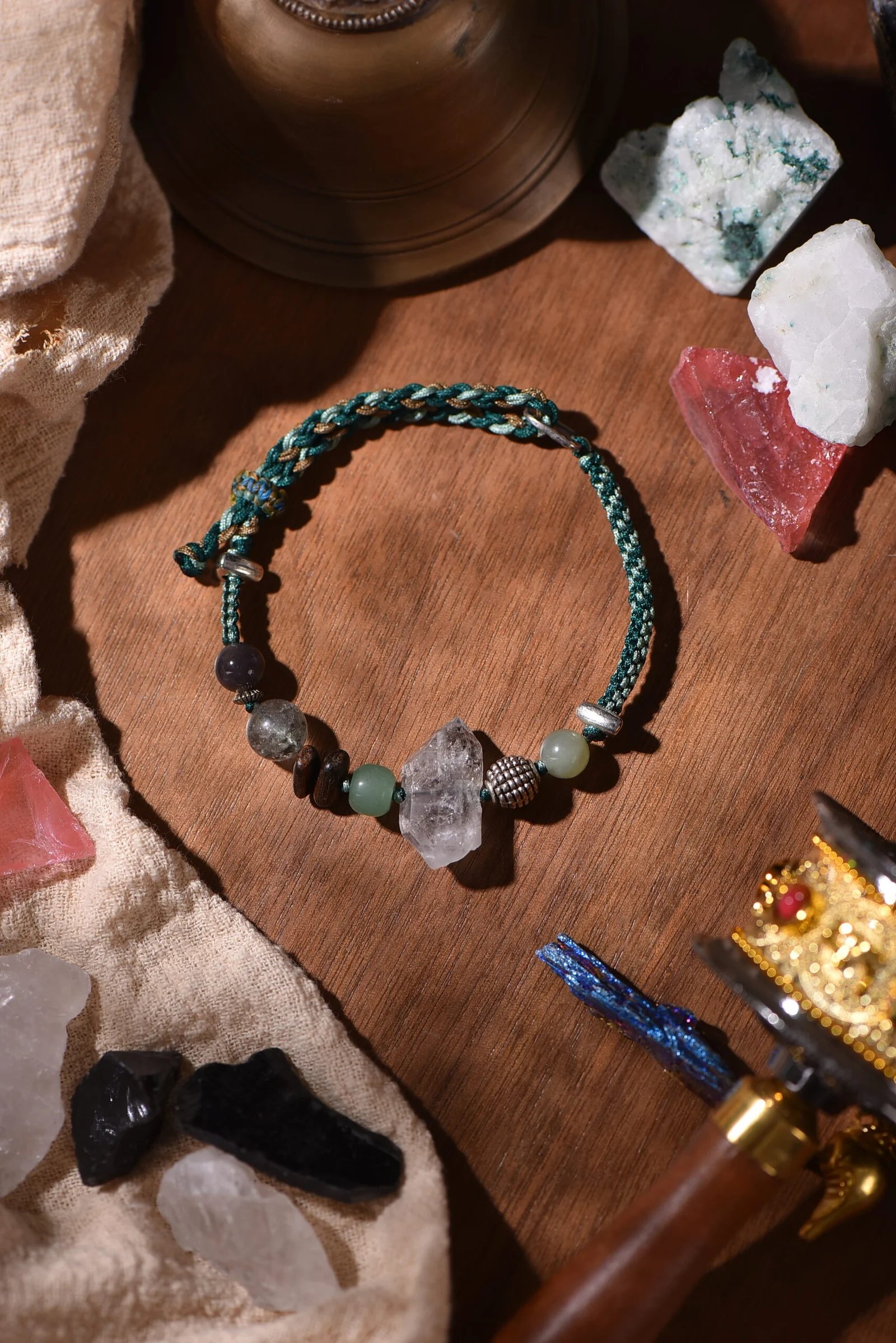
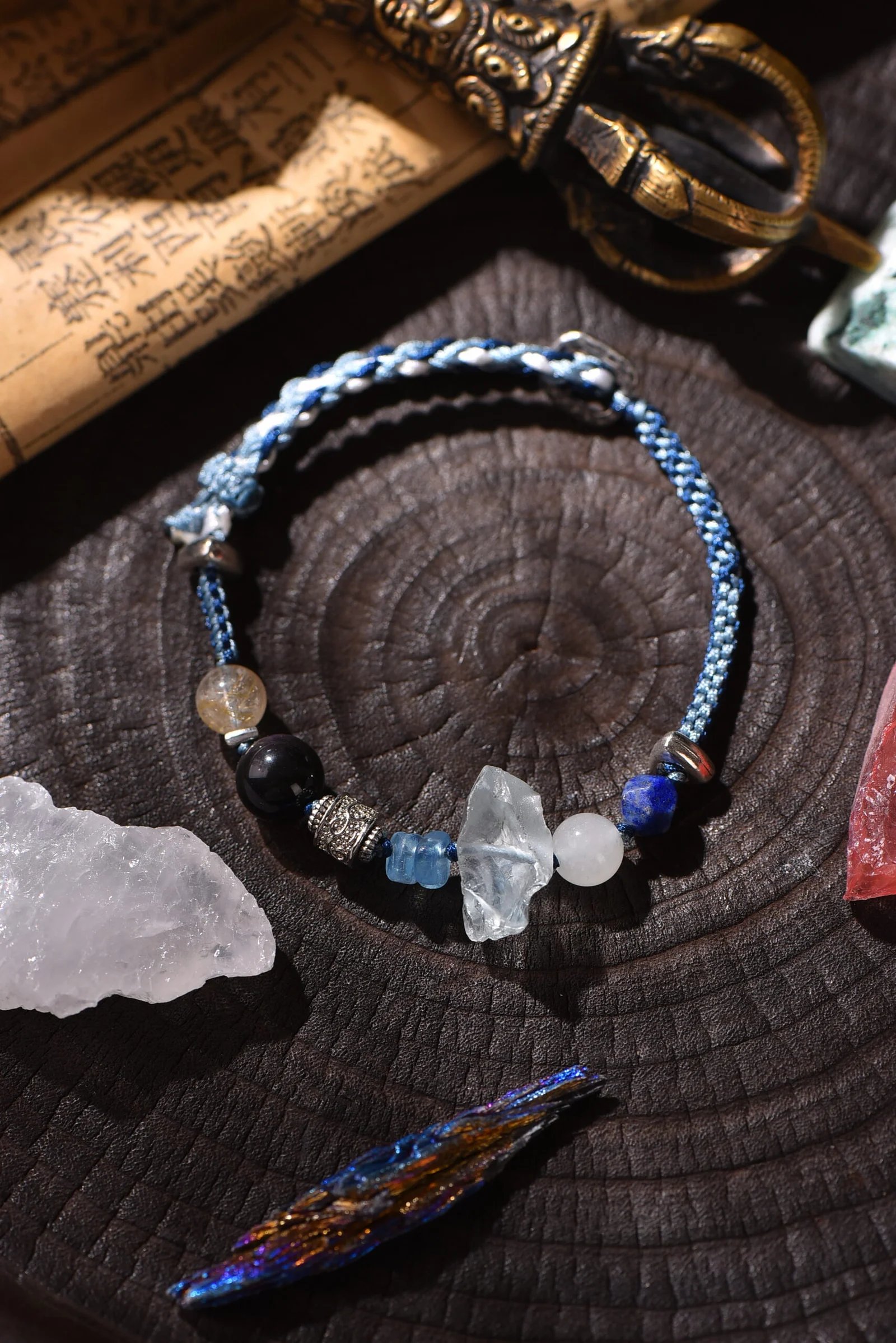
Wood and water is the combination we knot most often. Forest green beside monsoon sky blue is the riverbank pairing — growth meeting flow. Our forest-green-and-bark-brown handwoven bracelet sits well against the monsoon-sky-blue-and-river-white piece; the brown thread in the wood palette gives the blue a shore to wash up on. Worn together, the two read as one landscape instead of two accessories. Worn apart, each one still holds, but the story loses its second character.
Fire and earth is the second pairing we reach for, especially once the air turns cold. Oxblood red against terracotta and cream looks like an ember resting on clay — warm colors that keep each other from getting loud. The red flashes; the earth tones hold it in place. We describe this one as a hearth built from thread: one color burns, the other one is the hearthstone. If your winters run grey, this pair does more for a wool coat than any single bright piece can.
Metal is the third pairing tool, though it works less like a partner and more like a bridge. Pale gold, white, and soft brown sit quietly between two louder palettes. If wood and water feel too familiar, try wood and fire with a metal piece between them — the pale gold thread separates the green from the red the way frost separates a leaf from the ground. Our pale-gold-and-white handwoven bracelet is the piece we reach for when someone says they do not know where to start. It goes on first, and the rest of the wrist arranges itself around it.
The Knot Is What Makes Two Palettes Agree
Color is only half of a pairing. The other half is texture. Two bracelets with the same knot pattern can look flat together, like two copies of the same sentence. Two bracelets with different rhythms — one tight and even, one loose and wavy — read as a conversation. That is why our water pieces use a looser diagonal flow while the wood pieces knot tighter and more upright. Side by side, your eye reads current and trunk, not duplication.
Waxed cord is what makes this possible. It holds a hard-wound knot without slipping, and it lets a looser knot stay open without sagging. When you stack two pieces, they rub against each other all day, and cheap cord frays at exactly that point. Ours softens instead. After a few weeks, two paired bracelets begin to wear in together, taking on the shape of the same wrist and the same days. We like that a lot. A pairing should not just start well; it should age well, the way a path ages under the feet that use it.
How to Style Two Elements on One Wrist
Start with the element that matches your day, not your birth chart. Some mornings call for wood green; some call for the hush of water blue; some call for the last warmth of earth tones before a storm. Pick that piece first. Then add a second palette that either shares one thread color with it or sits far enough away to make a clean contrast. Green and blue are neighbors — they merge into one soft landscape. Red and cream are opposites — they spark against each other. Both approaches work. Mixing them at random is the only path we advise against.
If you are unsure, let metal be the bridge. Put the pale-gold-and-white piece between two stronger palettes and let it do the quiet work of spacing them out. Keep the knot widths different so each element stays legible on the wrist. And wear the pair for a full day before deciding — a combination that looks right on a wooden tray can feel entirely different after eight hours of real life. The wrist is the honest judge.
Pairings rotate with the seasons, too. Spring belongs to wood and water — new green beside snowmelt blue. High summer is the moment for water and metal, pale and bright, like light landing on a lake at noon. Autumn pulls fire and earth back out of the drawer, and deep winter suits fire with metal, one warm color against a cold shine. Nothing in the system expires. The palettes simply take turns being useful, the way a garden does.
If you want to build your first pairing, begin with our forest-green-and-bark-brown handwoven bracelet, then add the monsoon-sky-blue-and-river-white piece for the riverbank look, or the pale-gold-and-white piece for a cleaner, brighter pair. Browse the full handwoven bracelet collection to see every palette on the bench right now — no two pieces are alike, and each one is made by hand, one at a time.
Nature, woven by hand. Color, woven into stories.
Join our email list for new palette pairings, studio notes, and first access to seasonal drops.
