 Skip to content
✨ New Year Offer: Up to 20% off ·
Begin 2026 with something handmade ✨
✨ New Year Offer: Up to 20% off ·
Begin 2026 with something handmade ✨

How Long Does It Take to Knot One Bracelet? — TibetanTwist

How Long Does It Take to Knot One Bracelet? — TibetanTwist
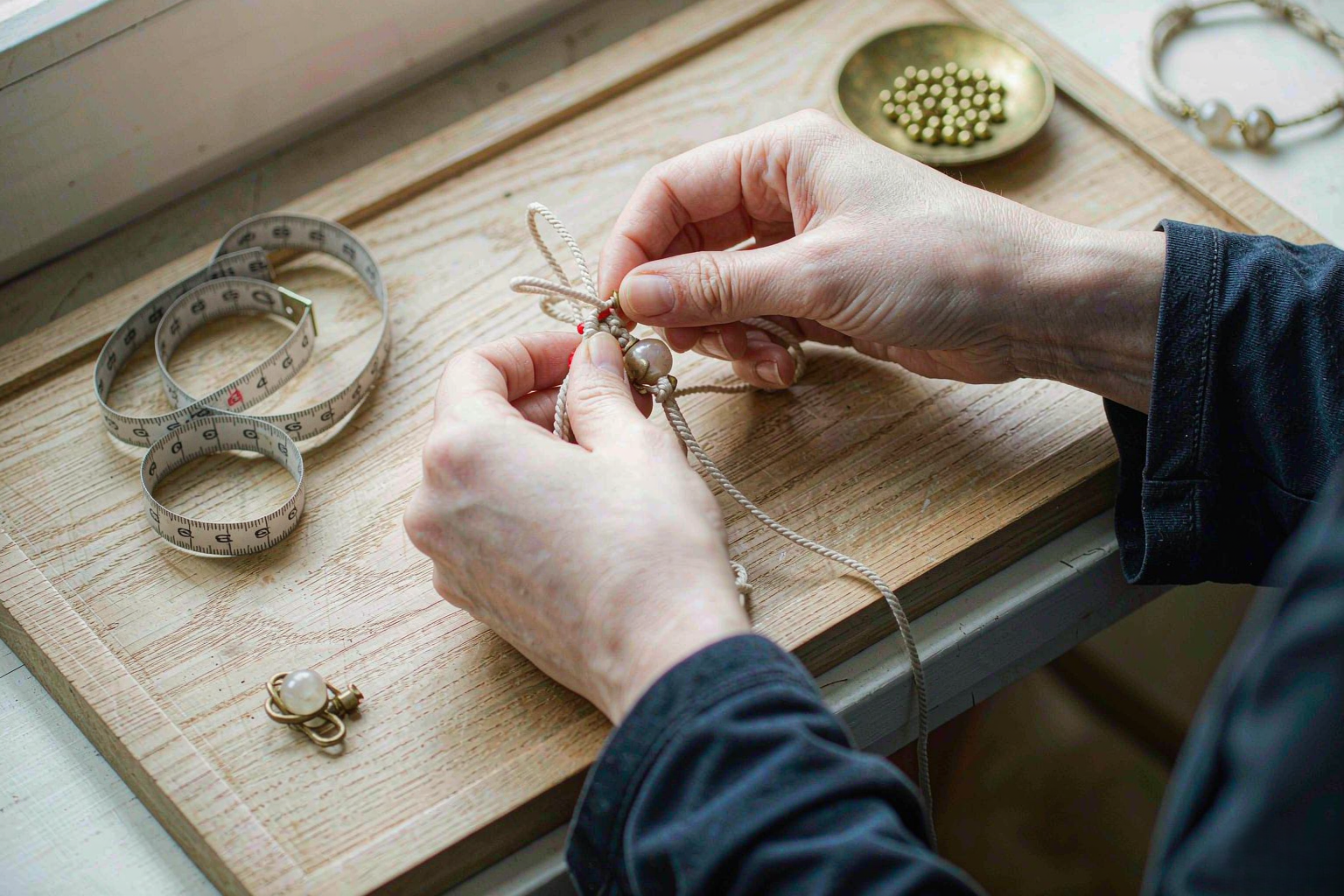
Every bracelet in our studio finishes the same way it began: two hands, a wooden board, and a length of waxed cord under window light. That is the short answer to the question we hear most often. The long answer — knots counted, cord changes explained, hours totaled honestly — is the better one, and it is the reason a handwoven piece feels different the day it arrives.
Here is the number up front, because you deserve the honest version first. Most of our single-strand bracelets take about two hours of pure knotting. Add the palette decisions, the setup, and the finishing, and a simple piece claims half a working day. Wider or dual-tone designs take longer. Now let us show you where those hours actually go.
Counting the Knots: Where the Hours Go
A handwoven bracelet looks delicate, but structurally it is hundreds of the same small decision, repeated. Square knots, half knots, the interlocking pattern that gives a macramé bracelet its texture — each one takes a second to form and a moment more to check. Pull too loose and the line ripples. Pull too tight and the cord complains under your fingers. Our hands know the right pressure the way you know the weight of a watering can: by feel, built over years.
Here is an honest breakdown for one single-strand piece, start to finish:
- Choosing the cord and the palette: ten to fifteen minutes. This is where the garden comes in. We lay spools side by side and ask whether this green reads as pine or as moss, whether that blue is morning sky or monsoon sky. The name is the standard; if the cord does not match the picture in our heads, it goes back on the shelf.
- Cutting and anchoring: ten minutes. We always cut cord longer than the pattern requires, because you cannot splice waxed cord mid-knot and expect the piece to last for years.
- The knotting itself: about two hours. A single-strand bracelet carries hundreds of knots, and the count rises with every color the design asks for.
- Color changes: a few minutes each. Every change is a small negotiation about where one shade should hand over to the next.
- Finishing: thirty minutes. The adjustable closure, the trim, a first fit around a wooden form, and one last look down the whole line.
Add it all up and the morning is gone — happily gone, we would add. None of it includes the dye sessions that happened before this day, or the years of practice that keep tension even through hour three. That part of craft never appears on any clock, but you can feel it in the finished piece.
And sometimes the clock runs the other way. A knot that refuses to sit flat, a cord that kinks, a palette that suddenly reads wrong against daylight — any of these can send us back twenty minutes to undo and re-knot a section. We accept that. Unknotting is part of knotting, the way pruning is part of gardening. A piece that left the studio carrying a rushed section would cost us more later: it would loosen, fray, and find its way home. So the honest answer is a range, not a minute count.
Why Dual-Tone Handwoven Jewelry Takes Longer
A single palette flows. Two palettes have to talk. When we build a dual-tone handwoven bracelet — sky blue leaning into deep indigo, the way a cloud bank leans into a storm front — every cord change is a deliberate pause. We knot the first shade, lift it into the daylight, and decide exactly where one color hands over to the other. Too abrupt and the piece looks chopped into segments. Too gradual and the two shades muddy into grey.
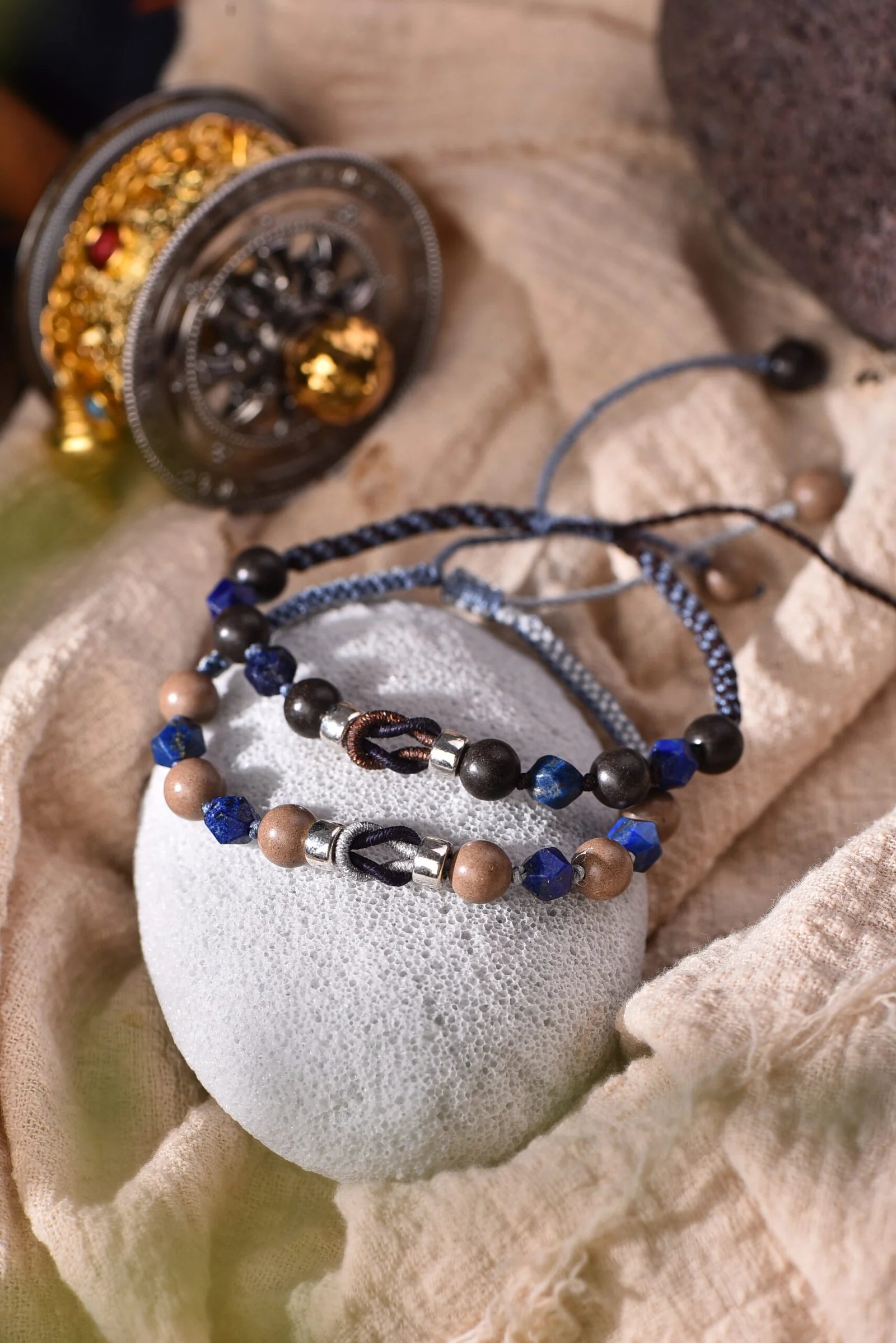
Our dual-tone infinity-knot bracelet takes this the furthest. Two cords travel together for the entire length, knotted as one continuous line, so every single knot has to keep both shades in step. If one cord runs even slightly looser than its neighbor, the pattern shows it immediately. This is the piece that takes most of an afternoon — not because the knots are harder, but because the conversation between the two colors never stops needing attention.
There is a garden version of this lesson. Anywhere two plants meet — salvia against silver artemisia, poppy red against sage — the edge between them is where the eye lands. Color-blocked jewelry works the same way. The transition line is the design. We spend the extra hours there because that is where the meaning sits.
What the Extra Hours Buy You
Machines tie knots faster than we ever will; that has never been the point. What a machine cannot do is read tension by touch, adjust for a slightly thicker stretch of cord, or notice that this particular blue sits better beside cream than beside white. Speed is exactly what would erase the one-of-a-kind character that makes a handwoven piece worth keeping. No two hands pull a knot the same way, so no two bracelets come out alike. That unevenness is not a flaw. It is a signature.
The hours also buy durability. Waxed cord jewelry earns its longevity from compression: every knot squeezes the cord beneath it, and time is what lets us set that squeeze properly. We finish a piece and let it rest overnight before the final trim. The cord relaxes, the knots settle into each other, and only then do we decide where the ends get cut. Rush that step and the piece loosens within a month. Respect it and it holds for years, aging the way a favorite footpath does — softer where it is walked, darker where it is held.
Even our simplest design, the monsoon-sky-blue and cloud-white single strand, carries this quiet overhead. Two colors, one clean line of knots, and still the better part of a morning. Hold it up to the light and you will see the rhythm: even without being mechanical, regular without being printed. That rhythm is the trace of a hand paying attention for two straight hours.
Which One Is Yours?
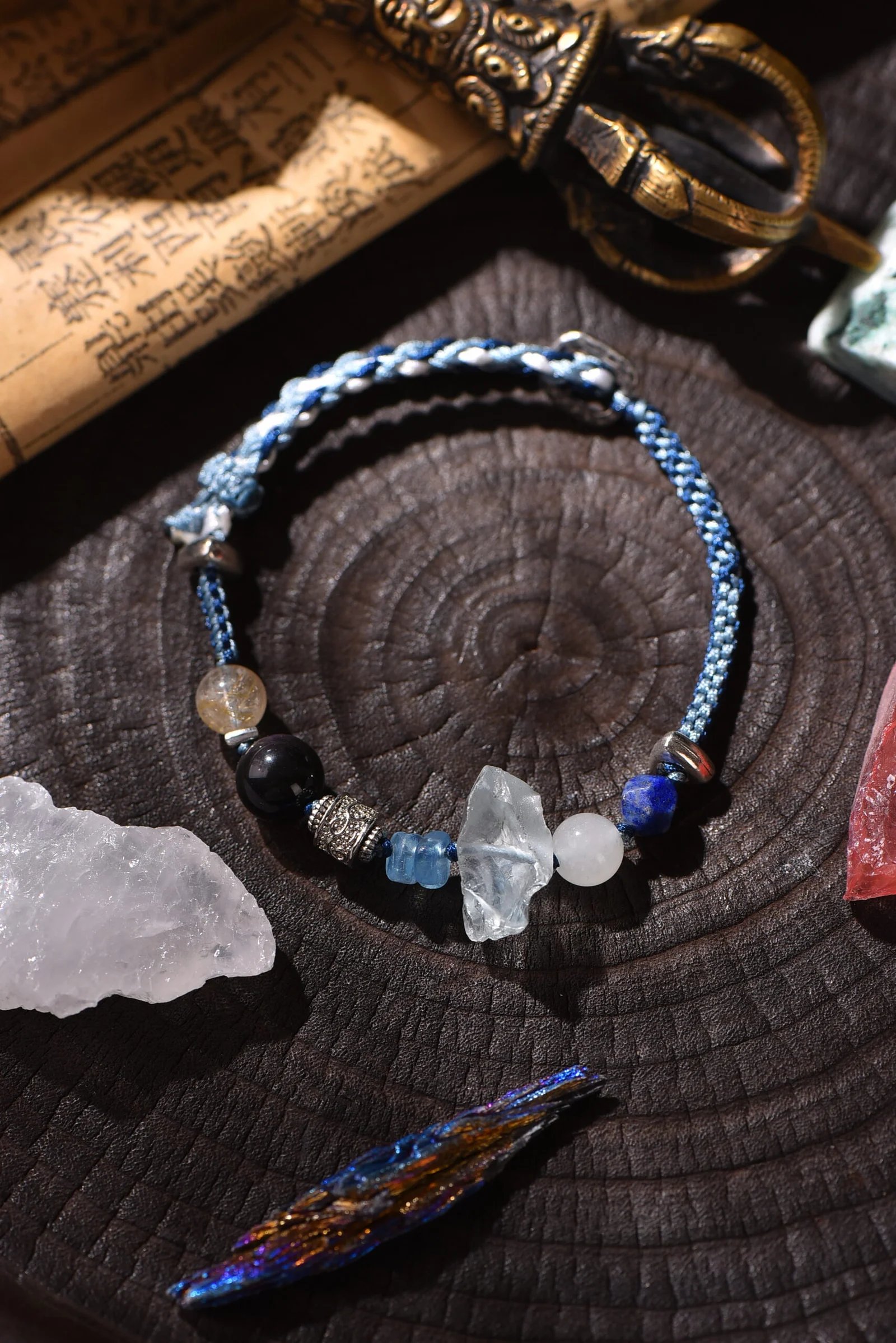
Now that you know what the hours look like, choosing gets easier. Pick the palette you already reach for outdoors. If you like clean lines, start with a single strand — every knot stays visible, and it layers well with a watch or a slim bangle. If you want a piece that carries a conversation, choose a dual-tone design and look closely at the transition. That line is where the whole afternoon went.
For a closer look, start with our sky-blue and indigo dual-tone bracelet, the piece that gives the infinity knot its slow, continuous line. The monsoon-sky-blue and cloud-white single strand shows the quiet rhythm of one palette, and the moss-green and bark-brown single strand pairs the two shades of a pine hillside into one weave. Browse the full bracelets collection — every piece there was made the slow way, and each one is one of a kind.
So — how long does it take to knot one bracelet? A morning, usually. Half a day, sometimes. A little longer when two colors insist on talking it through. Inside those hours sit hundreds of knots, a garden’s worth of decisions, and a small, stubborn refusal to hurry. We think you can feel all of that the moment you tie it on.
Nature, woven by hand. Color, woven into stories.
Want more stories from the studio? Join our newsletter for craft notes, color stories, and first access to new pieces.
