 Skip to content
✨ New Year Offer: Up to 20% off ·
Begin 2026 with something handmade ✨
✨ New Year Offer: Up to 20% off ·
Begin 2026 with something handmade ✨

What Goes Inside a Keepsake Pendant? 7 Things to Hold


Open the small latch, and a pendant becomes more than something you wear. It becomes a pocket. A quiet place for the things you do not want to misplace or forget. At TibetanTwist, our handwoven keepsake pendants are built around that idea: color, knot, and a tiny chamber for what matters.
Keepsake jewelry is not about display. It is about carrying. A dried petal, a folded note, a pinch of soil — these objects weigh almost nothing, yet they hold whole days. People have worn small containers for centuries, threading them on cord or chain to keep something private close to the body. Sailors carried miniature portraits in lockets. Travelers pressed foreign soil into tiny vials. Grandmothers tucked prayer slips into woven pouches. The openable pendant is simply the latest shape of that old habit. It is small enough to wear every day and generous enough to hold a real object, not just a photograph. Below are seven things our hands have seen tucked inside one.
1–3. Botanical Traces: Petals, Seeds, and Leaves
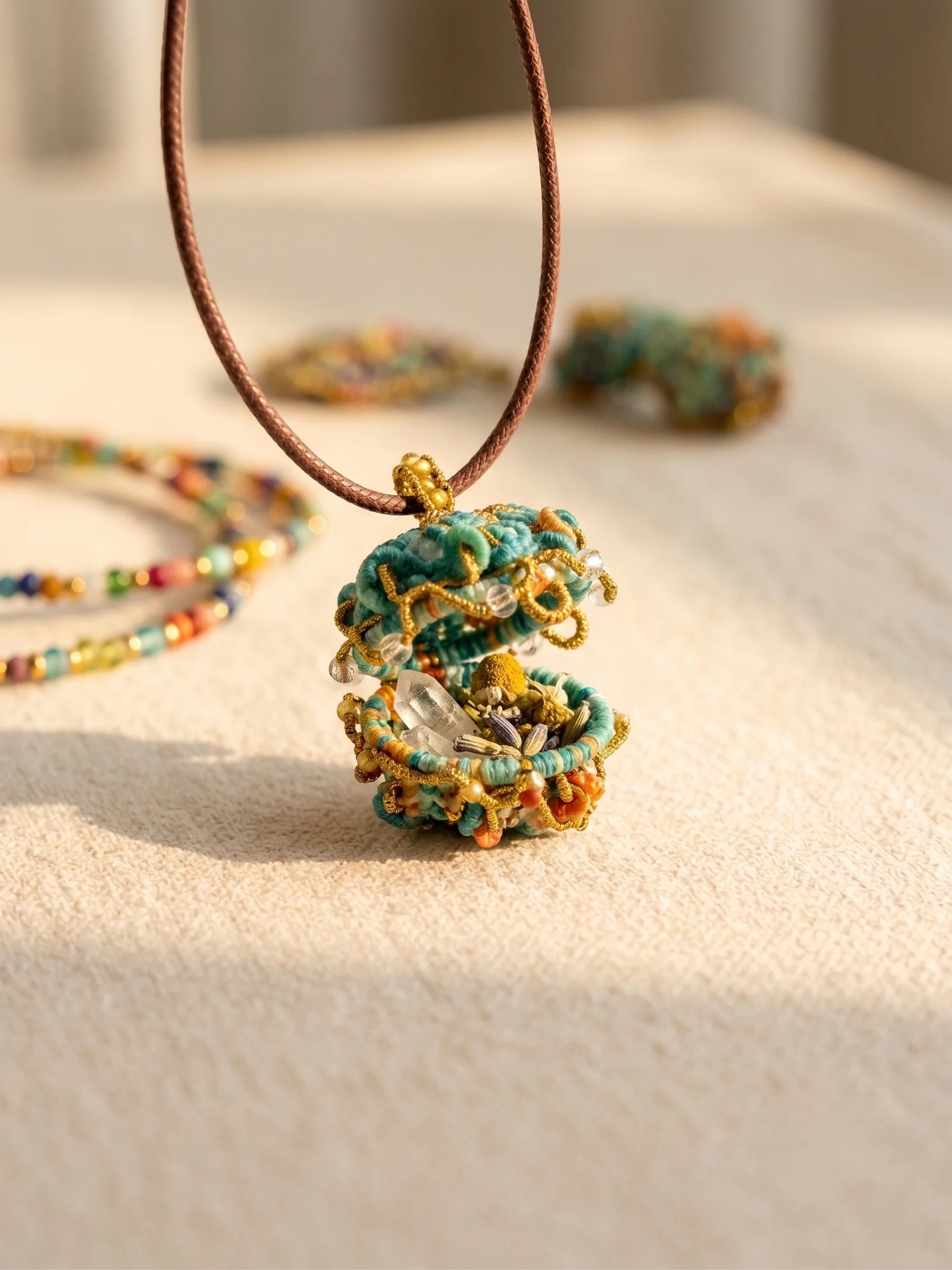
Flowers fade. Color does not have to. A petal pressed from a garden walk, a birthday bouquet, or a roadside bloom keeps the hue of a moment long after the stem has dried. Our lotus-inspired handwoven pendant was designed with this in mind: a shallow brass bowl, a threaded back, and a woven collar in soft botanical tones that frames the bloom instead of hiding it. When the light hits it, the petal shows through the opening like a small window of garden color.
Seeds work too. A single seed from a plant you raised, a seed head gathered on an autumn walk, or a few grains from a favorite kitchen herb fits neatly into a keepsake chamber. Seeds are small promises. They say, “This grew once, and it can grow again.” Wearing one close to your skin is a quiet way of keeping that promise visible without explaining it to anyone.
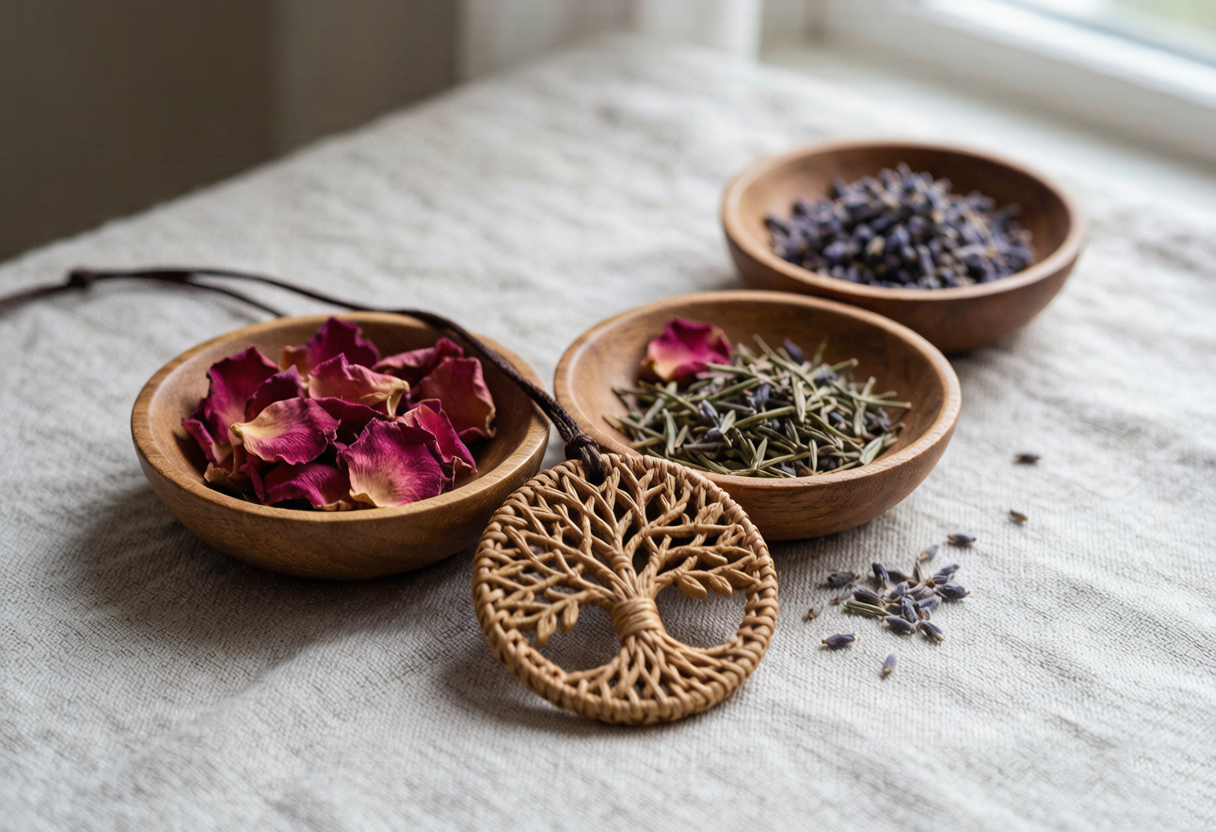
Leaves and sprigs complete the botanical trio. A fern pressed flat, a eucalyptus leaf clipped small, or a sprig of dried lavender can hold color and fragrance for months. We do not call this scent work — we call it memory in plant form. The Secret Garden pieces lean into this idea: color pulled from stems and petals, then woven into waxed cord that softens with wear.
The trick with botanical keepsakes is dryness. A damp petal will darken and curl; a thoroughly dried one will keep its shape for years. We recommend pressing flowers between the pages of a heavy book for a week before they go inside. Once dry, they become almost weightless, which means the pendant stays comfortable against the skin while still carrying the color of the garden.
4–5. Words on Paper: Names, Dates, and Small Letters
Screens copy words, but they do not carry them the way paper does. A line from a letter, a date written in someone else’s hand, or a name folded small can turn a pendant into a private archive. Our pine-green handwoven keepsake box closes with a threaded cap and a woven collar in pine green and cream, giving a folded slip of paper just enough room to stay safe without being crushed.
Some people write their own words. A reminder. A set of coordinates. A single sentence from a poem. One person told us she keeps the first line of a song her mother used to hum. Another keeps the date of a long walk. The paper ages — it yellows, it softens — but the knot stays tight. That contrast is part of the point. The pendant is new each time it is made by hand; the paper inside grows older with you.
Handwriting matters. A word typed on a phone is replaceable. The same word in ink, especially in a hand you recognize, becomes proof of a real person and a real moment. That is why a keepsake pendant can feel heavier than its size suggests. It is not the metal or the stone that gives it weight. It is the letter.
Paper also changes over time in a way that digital files do not. It yellows, it softens at the folds, it takes on the warmth of the body that wears it. A note that has traveled inside a pendant for a year looks different from one that sat in a drawer. It has been carried. That visible wear becomes part of the story, a record of the days the pendant has seen.
6–7. Found Objects: Sand, Stone, and Fabric
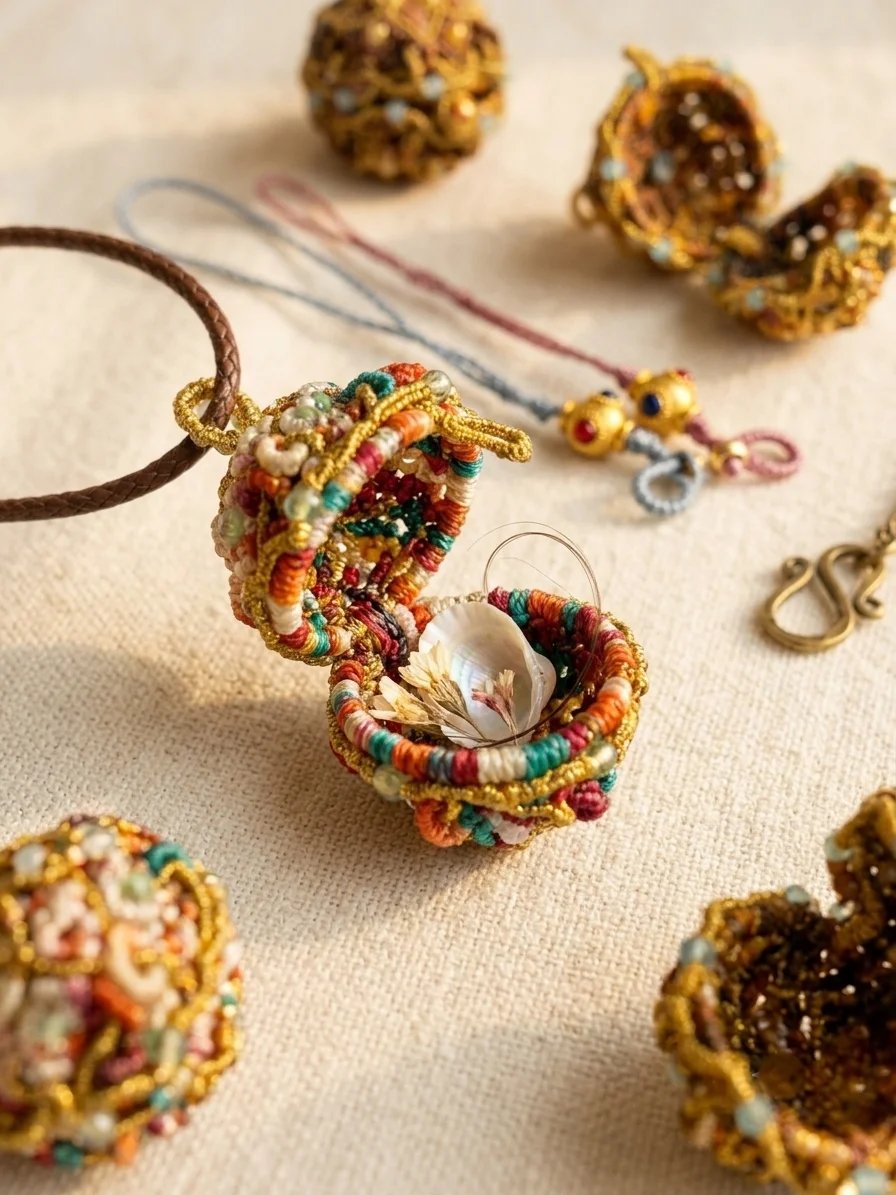
Place leaves traces. A scoop of sand from a first coastline, a pebble from a riverbed, a shell no bigger than a fingernail, or a coin from a foreign market — these objects prove you were there. They do not need explanation. The deeper handwoven keepsake chamber has room for one small talisman, and the waxed cord frame keeps it close without claiming too much attention. We have seen people carry sand from deserts, gravel from mountain paths, and soil from hometown gardens. Each grain is a coordinate.
Fabric carries texture and memory in a way photographs rarely match. A thread pulled from a grandmother’s scarf, a ribbon saved from a celebration, or a patch from a favorite coat can all be folded small. The weave of the fabric and the weave of the pendant talk to each other: both are made of threads, both hold shape through tension. Our hands knot the waxed cord around the chamber so the outside of the piece has the same tactile honesty as the object inside.
Found objects also make the pendant interactive. You hear them shift when you move. You feel the slight weight against your chest. The piece becomes less like an ornament and more like a companion — something that traveled with you and now travels on you.
There is no right object. One person carries a pebble from the river where she learned to swim. Another carries a single thread from a weaving workshop. A third carries nothing yet, keeping the chamber open for whatever comes next. The empty pendant is not incomplete. It is simply waiting, and the waiting itself can be part of the ritual.
Which Keepsake Holds Your Story?
Not every shape suits every object. The lotus-inspired openable pendant opens like a small flower, best for flat petals, pressed leaves, and thin notes. Its shallow bowl keeps the contents partly visible, so the piece changes depending on what you choose to show. The deeper keepsake box closes with a threaded cap, better for sand, seeds, stones, and thicker fabric scraps. Its chamber is more private, hiding the object until you decide to open it.
Both are handwoven, one at a time, in palettes drawn from gardens and skies. No two are exactly alike. The cord color, the knot tension, the slight variation in the brass — these details belong to the piece you receive.
Caring for a keepsake pendant is simple. Open the latch now and then to let air move through the chamber, especially if you are carrying something organic. Wipe the brass with a soft cloth if it darkens, and keep the waxed cord away from harsh soaps or prolonged water. The cord is waxed to resist daily wear, but a little attention keeps the knots clean and the color vivid.
If you are choosing your first keepsake, start with the object you want to carry. Then find the pendant that fits it. Browse our pine-green-and-cream handwoven keepsake box, our botanical openable pendant, or the full handwoven bracelets collection to see which shape feels like yours.
Nature, woven by hand. Color, woven into stories.
Join the list for new palettes and studio notes.
