 Skip to content
✨ New Year Offer: Up to 20% off ·
Begin 2026 with something handmade ✨
✨ New Year Offer: Up to 20% off ·
Begin 2026 with something handmade ✨

Wood, Fire, Earth, Metal, Water — Five Palettes You Can Wear


Every color in our studio starts outside. We do not invent palettes — we find them in pine needles after rain, in ochre soil, in the blue-grey of a monsoon sky, in the white ash left after a fire burns down. The five elements are not abstract ideas here. They are thread colors, laid side by side on a wooden table, waiting to be knotted into something you can wrap around your wrist and carry into the world.
We work with a small set of waxed cords in colors that took months to choose. Each shade had to earn its place. It had to appear somewhere in nature first — not on a screen, not in a catalogue, but in the world we walk through. When we talk about wood, fire, earth, metal, and water in the studio, we are not talking about philosophy. We are talking about specific greens, specific reds, specific blues that we have seen with our own eyes and matched, strand by strand, until the thread told the same story.
How We Read the Five Elements as Color
The old system of wood, fire, earth, metal, and water was never meant to stay on a page. It was a way of naming what already existed — the green of new leaves, the red of embers, the brown of river clay, the pale gold of dry grass in late sun, the deep blue of still water. These were not symbols. They were observations made by people who spent their days outside, watching the land shift through seasons.
When we sit down to weave, we translate those observations into waxed cord and natural stone. Each element becomes a palette. Each palette becomes a bracelet. The work is slow. We test thread against thread, checking how forest green looks next to bark brown, how cream softens terracotta, how white thread separates red from skin. A palette is not a formula. It is a conversation between colors, and every conversation takes time.
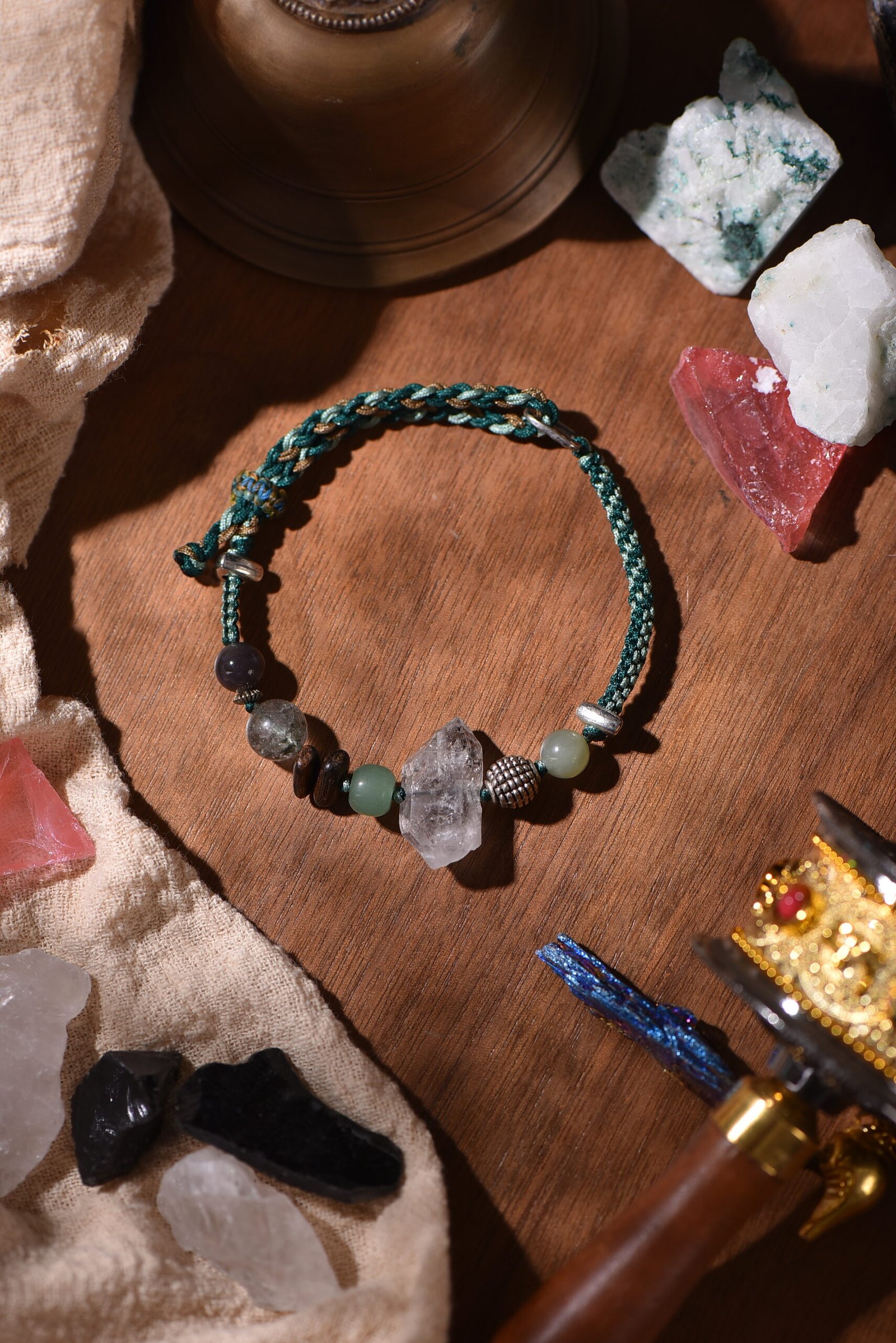
Wood is where we usually begin. It is the color of growth, of stems pushing through wet soil, of moss spreading across the north side of a tree. We weave it in deep forest green and dark bark brown, threads that look as though they were cut directly from a living branch. The knot pattern matters here. We use a tighter weave for wood palettes, something that holds its shape the way a young tree holds its trunk against wind.
The five palettes live in separate baskets on our shelf, but they are always in conversation. Someone will pull a water-blue thread and hold it against an earth-ochre spool, just to see what happens. Usually nothing. But sometimes the two colors lean toward each other in a way that suggests a new piece, a combination we had not planned. That is how the system stays alive. It is not a rule book. It is a set of starting points.
Wood and Earth — The Grounded Palettes
Wood and earth sit close to each other on our workbench, and sometimes we have to move them apart to keep them from blending into one brown-green conversation. Wood is the lighter voice — new growth, fresh needles, the pale underside of leaves. Earth is heavier. It speaks in ochre, in cream, in terracotta, in the color of dry riverbeds and sun-warmed clay.
Our earth palette came from a walk along a plateau trail. The soil there was not one color but many — red at the surface, yellow below, white where salt had dried. We collected none of it. We only looked, memorized the layers, and returned to the studio to mix threads until something matched. The result is a bracelet that carries the weight of a landscape. Not literal weight — the piece is light on the wrist — but visual weight. The kind of color that makes people stop and ask where you found it.
When you wear wood green against your skin, you carry a piece of forest. The green is not bright. It is the green of shade, of depth, of places where sunlight filters through canopy and lands on fern. When you wear earth ochre, you carry a handful of soil from a place you have never been. Neither palette asks for attention. Both earn it slowly, the way ground earns grass.
The thing about grounded palettes is that they change in different light. In morning sun, the wood green looks almost black. In late afternoon, the earth ochre warms into something close to copper. We have customers who photograph their bracelets at different times of day, tracking the shifts. We do the same in the studio. A palette is not fixed. It breathes.
Water, Metal, and Fire — Three More Notes
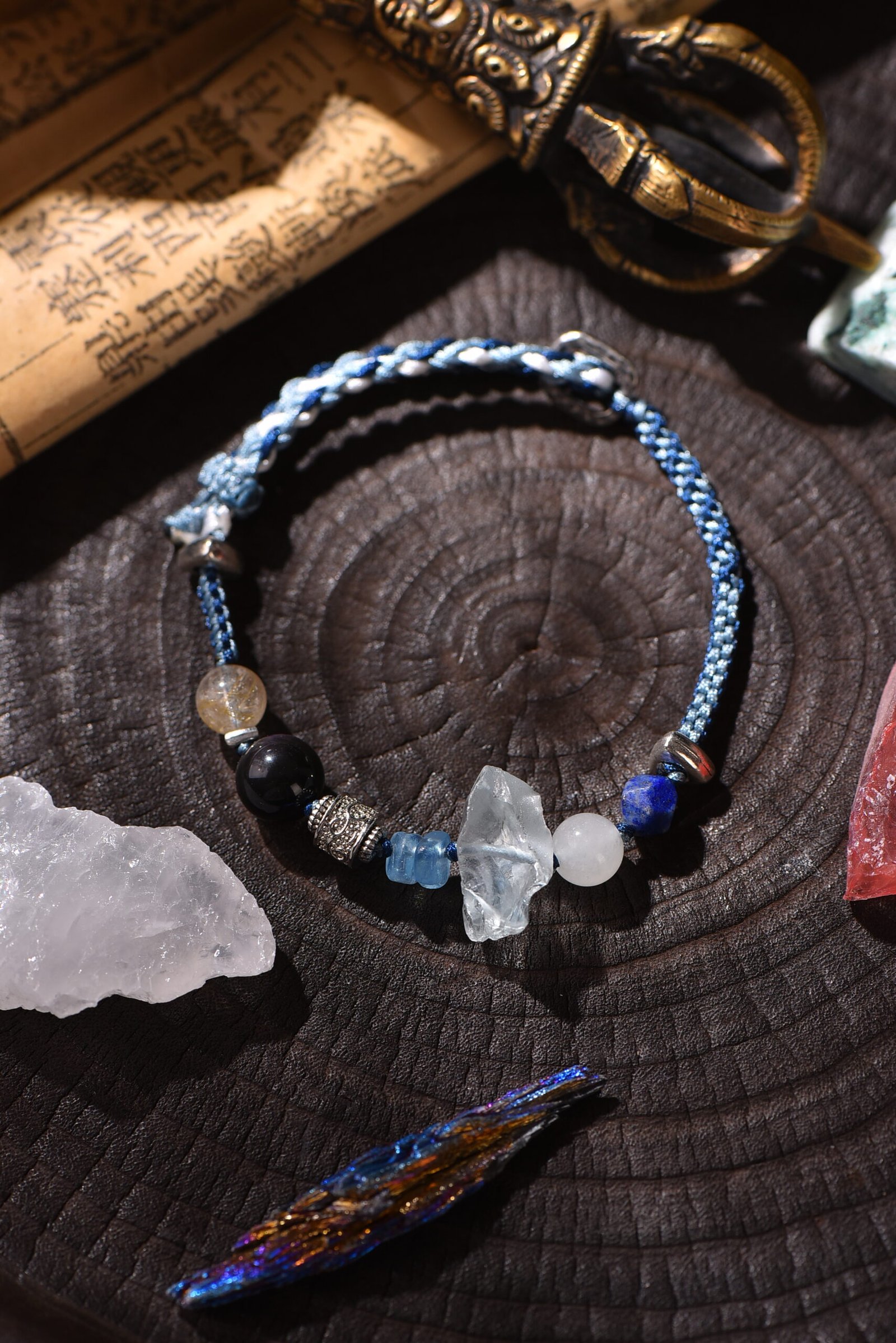
Water is the quietest palette we weave. It is monsoon sky blue and white, the color of rain on glass, of deep pools in mountain shade, of the moment before dawn when the sky is neither dark nor light but some held breath between the two. We use a looser knot for water bracelets. The thread needs to move the way water moves, with a slight give, a softness that metal and wood do not allow.
Metal sits near water on our table, though they are different in almost every way. Metal is pale gold, white, and warm brown. It catches light the way dry grass catches late sun — not reflective, exactly, but awake. The metal palette is the most neutral we make. It goes with almost anything because it is the color of wheat fields, of sand, of the soft interior of a shell. People who do not usually wear color often choose metal first. It is a way of entering the palette system without stepping too far from what feels familiar.
Fire is the exception in every way. It is red and white, the color of embers and cooling ash, of heat rising from stone at noon. We knot fire with more tension than any other palette. The thread wants to spring apart — red is a restless color — and we have to hold it in place, row by row, until the pattern settles. A fire bracelet does not apologize. It sits on the wrist like a small flag, announcing that the person wearing it has made a choice.
These three palettes — water, metal, fire — are the ones people hesitate over longest. They are less predictable than wood and earth. Water can look too quiet in some lights. Metal can disappear against certain skin tones. Fire can feel too loud for a Tuesday. We tell people to wear them for a day before deciding. A palette that feels wrong in the morning can feel inevitable by evening. Color moves with context. It needs your life around it before it reveals itself.
Which Palette Feels Like Yours?
There is no test to take. No chart to follow. You simply look at the colors and see which ones your hand reaches for before your mind has time to explain why. Some people collect palettes the way others collect stones from different rivers — one from each element, worn in a stack that moves through the day like weather. Others find one palette and stay with it for years, adding only new knots, new stones, new variations of the same color story.
The question is not which element you were born under. The question is which color you want to carry today. Wood for walking through trees. Earth for standing still. Water for moving through crowds. Metal for quiet rooms. Fire for days when you need the thread to hold as much tension as you do.
We have seen people wear a single palette for years, their wrist becoming a kind of landscape they no longer notice until someone asks about it. We have also seen people who change palettes with the season, stacking wood on wood in spring, then switching to water and metal when the heat arrives. There is no correct way. The bracelets are made to be chosen, worn, and lived in. They are not messages to the world. They are reminders to yourself of where you have been and what you want to carry forward.
Browse the green-and-brown handwoven bracelet from our Wood palette, the earth-toned woven piece from Earth, or the blue-and-white bracelet from Water. See the full handwoven bracelet collection to find the palette that matches your next story.
Nature, woven by hand. Color, woven into stories.
Want studio notes and new palette drops in your inbox? Join our newsletter.
